December 1, 2025

5 Tips to Better Racing by Kristie Cranford, CPT

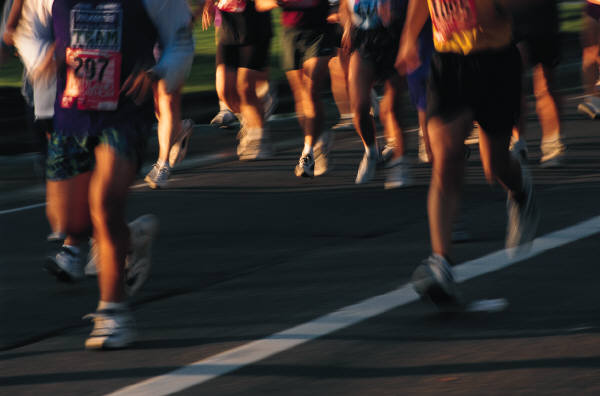
Knowing how to race is just as important as logging all your training. There are specific actions to take, and just as important, specific actions to avoid before you toe the line. Here are your 5 expert tips to better racing:

Do train within your ability

If you truly want to exceed in racing, do train within your ability.  Find the race distance and estimated time that fits within your current or achievable ability.  Training for a pace you cannot realistically achieve can lead to burnout and injury.  Training for a distance your life schedule does not allow time for can lead to burnout and unnecessary stress.  You want to enjoy the training process, not stress about it.  Set yourself up for success, not failure.

Don’t do anything new race day

Experiment with food, drink, clothing, shoes, and everything well before race day.  Have it all down to a science.  You want to be a practiced well-oiled machine race day and not risk digestive, energy or clothing issues.

Don’t start out too fast

Don’t burst out of the gate with all you have, once that energy is expelled you will never get it back.  On the back end of the race you’ll come up short with the extra energy burned during an over exuberant start.

Do pick the right race for you

If you have a specific goal in mind, find a race that will help you to reach your goal.  Find one with an optimal course and entrant size to assist you.  A race that is too crowded or has a lot of elevation challenges may be a fun race, but may put too many odds against you.

Do allow for rest between races

Allow your body recovery time between races.  Your body gets stronger and repairs at rest and recovery.  Too much racing will lead to declining performance, burnout and injury.

This article is written by Kristie Cranford, CPT. A wife, mother, multiple cancer survivor and competitive athlete, Kristie is an ACE Certified Personal Trainer as well as a Certified Running/Triathlon Coach for PRS FIT. Living in Las Vegas, she is 2012 Coolibar sponsored athlete, 2013 Training Peaks Ambassador and Raw Elements Sunscreen Ambassador. Contact information: Email: CoachKristieLV@yahoo.com, http://www.coachkristie.com, www.prsfit.com.
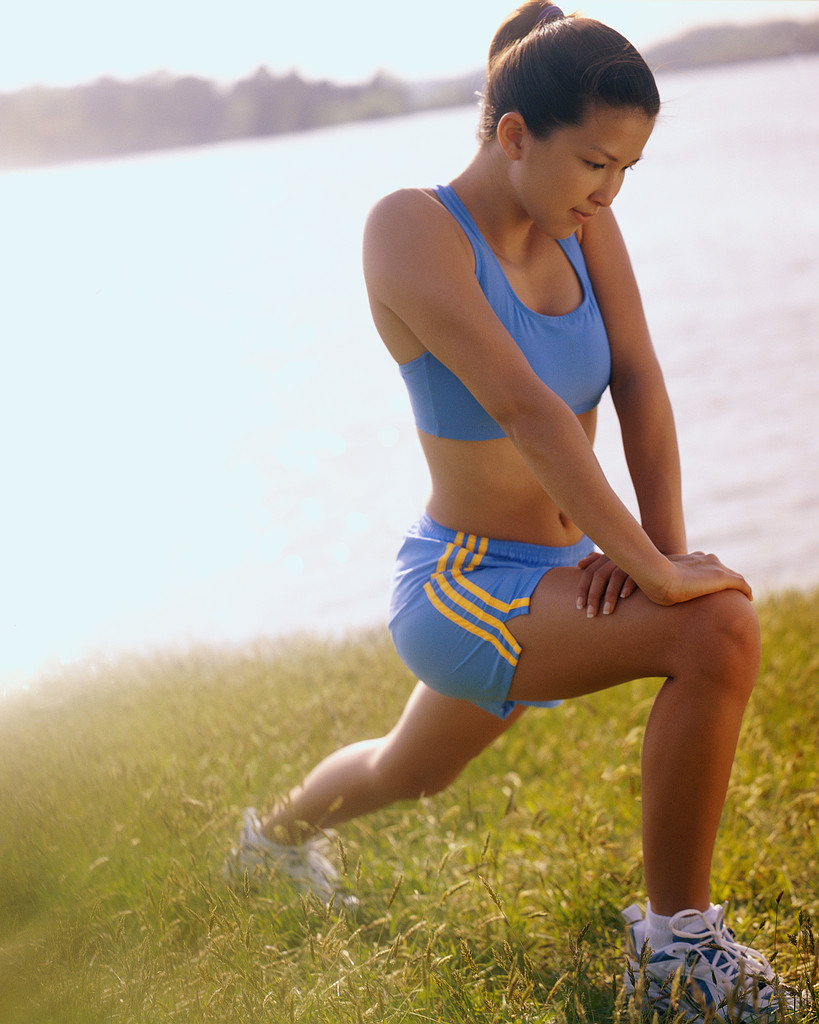
Fitness on the Road by Brett Klika C.S.C.S

You’ve worked hard to establish a workout routine. You have your running routes, your favorite pieces of equipment in the gym, and a consistent program that’s been delivering results! What happens when you have to take this “show” on the road and leave your usual routine? The good news is, “the show can go on!”  You just need some adaptable, fun, and effective exercise strategies that can be done anywhere.

Below are common features found in parks, rest stops, and other outdoor areas that can be used to create a challenging exercise program. As always, consult your physician before beginning any exercise program.

Park Bench

1.    Push-ups
Depending on your level, you can put your hands on the bench (beginner) or your feet (advanced) and perform push-ups.  To make them even more challenging, lift one leg off the ground or bench while you do them.
2.    Step-Downs
Start by standing on the bench with both feet.  Attempt to step down to the ground slowly with one foot, only allowing the heel to touch the ground before standing back up.  Touch the ground as lightly as possible.  Repeat on both legs.

Parking Stall Curbs

1.    Balance squats
Standing on the parking stall curb so your feet are perpendicular to the curb, perform body-weight squats without falling forward or backward.
2.    Calf raises
Standing on the parking stall curb so your feet are perpendicular to the curb and heels are off the curb, raise up to our “tip toes” and return to your start position.
3.    Quick steps
Start by standing on the ground, facing the curb.  Step up with the right foot then the left foot as fast as possible.  Repeat as fast as possible stepping down as well.  Repeat at the highest rate possible.
 

Put the above exercises together and combine them with running, jogging, swimming, or any other activity to get a fun, diverse, and effective workout on the road!

Make sure to warm-up by jogging, skipping, or moving at a moderate intensity for about 5 minute prior to starting your program.


Brett Klika C.S.C.S., Director of Athletics at Fitness Quest 10 and founder of www.brettklika.com, is a world- renowned human performance specialist, motivational speaker, author, and educator. He uses this knowledge and experience to motivate individuals and audiences around the world through his writing, speaking, DVD’s, and personal correspondence. For more information and video on exercises, programs, and any other information on losing fat and creating the body you have always wanted, check out The Underground Workout Manual – Exercise and Fat Loss in the Real World at www.undergroundworkoutmanual.com.

Holistic Health Defined by Rachael Roehmholdt

When you think of the term health, what comes to mind? Do you immediately think of what you eat or whether or not you exercise? What about if you’re fulfilled on a deep level each and every day? Or if you have a desire to do something bigger than yourself when you get out of bed every morning?

This is exactly what the holistic health approach takes into account. Holistic health is the idea that your health is not a separate entity from any other area of your life. It takes into account all facets of your life and how they all work in an interconnected fashion to create who you are – in your body, your health, and your life as a whole.

What’s different about a holistic approach to getting healthy is that you can look into each and every area of your life to look for improvements, as opposed to just assuming that eating more fruits and vegetables every day and getting moving will make you healthier.

The basic idea is that your health isn’t just determined by what you eat every day and whether or not you made time to exercise. It also is affected by your job, and whether you enjoy or dread going to it every day. Your relationships are considered and if they support and nourish you or drain you to your very core. Even your spirituality can have an affect on your health. Feeling a sense of being connected to something bigger than yourself or making a difference in the world can change how you interact with the world. All of these things, including the food you eat and the exercise you get each day work together to determine how healthy you are and how you feel on a daily basis.

You can eat all the right things and exercise every day and still be unfulfilled in your career and relationships. Or you could have an amazing life in all other areas than your diet and be healthier than any marathon runner out there. Health is subjective so take a holistic approach and look for areas in your life that can be improved upon – even if it’s not in your diet or exercise routines.

Rachael Roehmholdt is a certified holistic health coach and founder of Be More Healthful. With a passion for good food and living a healthful and balanced life, she believes that small changes to our everyday lives can set us up for a lifetime of health and happiness.

Friendly Competition? By Mollie Millington

Participation in organized races, from 5Ks to half-marathons, has increased tremendously in the last few years.  People now have triathlons on their bucket lists and run marathon to raise much needed funds for charities. 

Why should you get involved?

Increases motivation- If you have trouble finding a reason to get up and run in the morning (or after work), a race will give you purpose.  It provides a deadline which will motivate you to train within the time frame allotted.  If you register for a charity team, that is another powerful motivator to complete the race as your donors expect you to do so.

Structures training- When you have a specific distance and/or discipline to work on, your training will need to be tailored.  Working with a coach or personal trainer, they can provide you with a schedule that will take the guesswork out of your preparation.  It makes it easier when you can just hop on a bike or lace up your sneakers without worrying about what you need to do. You will have a time or distance to complete and just need to get it done.

Provides you with a new community- Not all of your friends will understand why you are leaving the party early to get up and run on a Saturday morning. When you befriend other runners in the park or on the track, you will meet like-minded people who know exactly what you are going through. These people enjoy the same thing you do- exercise and competition. They might also be good motivators and mentors in the end.

Improves your fitness- This is a no brainer.  If you start running, swimming, or cycling regularly, you will feel healthier.  This will improve your mood, increase strength, decrease stress, and lower blood pressure.

Sense of pride and achievement- When you have your first medal around your neck, it will be an amazing feeling.  You will think back to when you started and how much you have overcome to cross the finish line.  A smile will be on your face for days.  You will feel unstoppable and ready to register for your next event, and maybe even bold enough to increase the distance.

Registering for a race can be scary but it can also be unbelievable motivation to exercise regularly.  It will help focus your exercise sessions, introduce you to new people, make you fitter, and give you a sense of accomplishment the second you cross the finish line.  If you haven’t done so yet, find a race near you and register today.  Look for a realistic distance and be sure to give yourself enough time to train properly.

By Mollie Millington. For more information, go to www.ptmollie.com or via Twitter @PTMollie.

Should Kids Lift Weights? By Brett Klika C.S.C.S.

“How old should my child be to lift weights?”

In working with a large number of youth, this is one of the more common questions I get from concerned parents. Urban legends of stunted growth, fractured growth plates, and prematurely inflated physiques have made parents, and society for that matter, reticent to involve youth in weight training.

The fact is, there is no scientific evidence to suggest that there is a perfect chronological age to start weight training. Research has not demonstrated any negative health consequences for weight training in youth, assuming proper movement is introduced and enforced concurrently with appropriate progressive increases in training load.

Despite what myths have been created around the subject, the current data suggests youth weight training injuries are primarily due to equipment accidents (weight falling on them, tripping in the weight room, etc.) or overzealous coaching rendering improper program introduction and progression.

Proper resistance training in youth has been demonstrated to improve fitness, favorably affect bone density, improve movement ability, and decrease the likelihood of athletic injury. Weight training is merely loaded movement.  More simply put, it’s challenged movement.  If basic movement becomes easy, we can challenge by adding something extra to continue to provide a training effect.

If a child can do a squat pattern perfectly for repetitions, holding a 2- pound medicine ball adds additional load.  Once they can overcome this load with proper movement, they can hold a 4- pound ball.  All semantic hubbub aside, this is weight training.  One doesn’t have to be lifting barbells and dumbells to be training with weight. If a child can’t do a squat pattern perfectly, adding additional load would make no sense.  They have demonstrated they do not need any additional challenge.  The movement pattern itself has provided enough load.

The critical questions in regards to youth and weight training become:
1.    Are they able to focus on the proper execution of task?
2.    Are they able to execute and repeat an unloaded task with proper movement and cadence?
3.    Are they mature and coordinated enough to respond to coaching cues?
4.    Are they interested in weight training?
5.    Is the person in charge of their program experienced and knowledgeable about movement and progression?

If the answer to any of the above is “no” it doesn’t matter the age of the human, they are not ready for weight training.  In this case, I would focus on merely learning how to move properly through a variety of movement patterns without additional challenge or load.

The best answer to “When should my child begin lifting weights” is “when they need to.”  When a child is able to focus on an organized training in which they execute and repeat all of the involved skills and drills correctly, add a challenge and slowly progress over time.

Brett Klika C.S.C.S., Director of Athletics at Fitness Quest 10 and founder of www.brettklika.com, is a world- renowned human performance specialist, motivational speaker, author, and educator. He uses this knowledge and experience to motivate individuals and audiences around the world through his writing, speaking, DVD’s, and personal correspondence. For more information and video on exercises, programs, and any other information on losing fat and creating the body you have always wanted, check out The Underground Workout Manual – Exercise and Fat Loss in the Real World at www.undergroundworkoutmanual.com.

5 Factors for Triathlon Fitness written by Mark Kleanthous

This article is sponsored by RecoFit. FREE SHIPPING through April 30, 2013- simply enter the word “health” upon ordering!  Want to perform better and recover faster? Get to know RecoFit Compression Gear! Their technical-fit and uniquely designed gear helps you get more oxygen to your muscles, reduce swelling and delay fatigue. RecoFit is the only compression gear that cuts their fabric in a cross-grain process; this means effective compression and no-slip positioning! Their breathable material disperses body heat and moisture, and has a negative ion charge to help oxygenate blood. As an American-made durable product, RecoFit’s specific manufacturing method allows users the exact amount of compression, exactly where they need it most. They offer 4 cost-effective products targeting legs, as well as arms. Founded by an athlete, tested on athletes, and made for everyone! Contact your compression experts directly at Recofit@gmail.com or via phone 303/415-0580. And be sure to join the RecoFit Facebook community at www.facebook.com/recofit and follow their Twitter feed via http://twitter.com/recofit. Discover the RecoFit difference for yourself!


5 Factors for Triathlon Fitness written by Mark Kleanthous
 

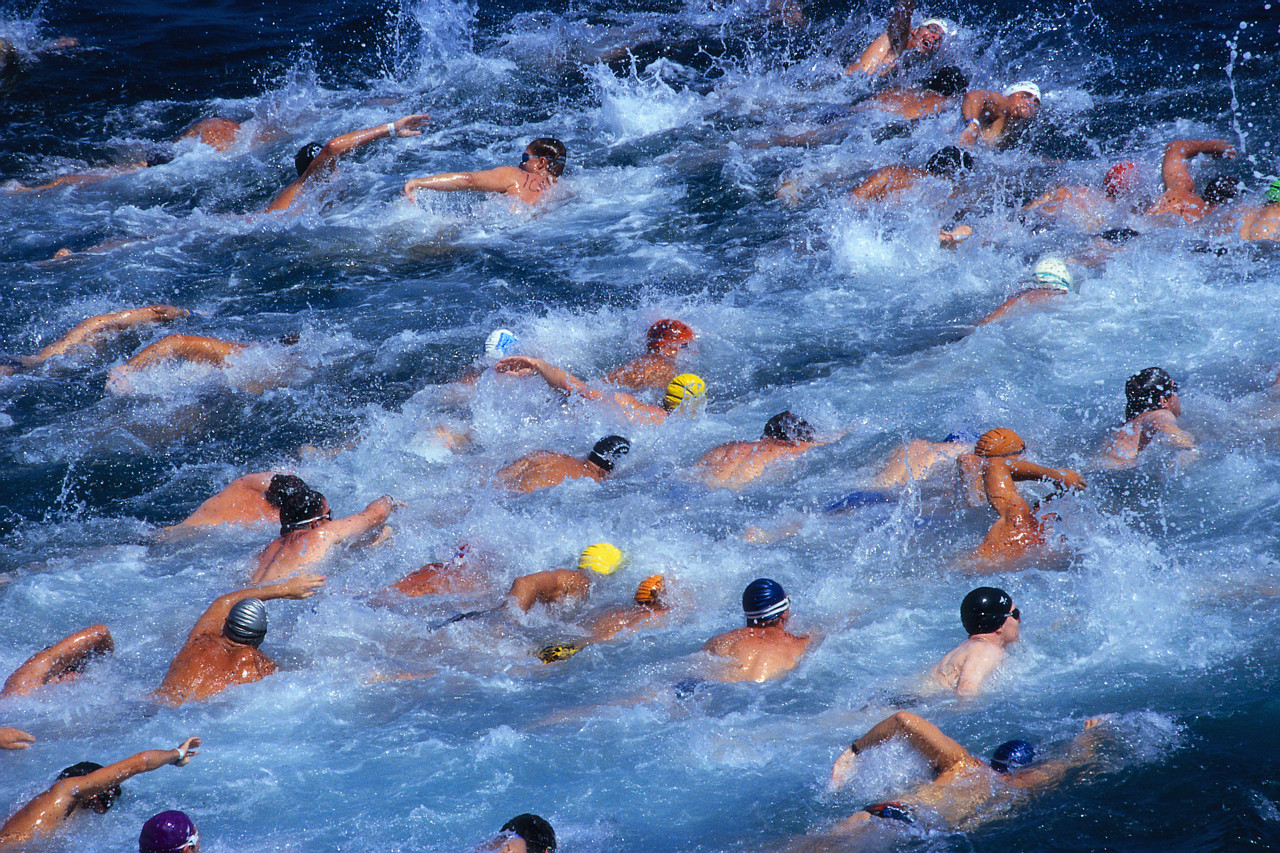
There are five main factors that contribute to fitness in triathlon – aerobic threshold endurance, nutrition, economy, strength and recovery – but your approach to them has to be balanced. Neglect one and your performance will suffer.
 

Aerobic threshold endurance

The use of intense aerobic-threshold training (which effectively, means training at your predicted triathlon pace) is perhaps the best way to get fit – the more you do the easier the training session gets and the faster you become. However, the problem is that we have a limited tolerance to it, and the result can be over-training. Therefore, not all your training should consist of intense, aerobic-threshold work-outs, also known as a ‘key work-outs’. Unfortunately, it is a common mistake to do too many of them with more than eight weeks to go before a triathlon.

Nutrition

In order to compete successfully in any triathlon event you must be able to load your body with all the fuel necessary to propel yourself across the required distance at the desired speed. But this factor isn’t only important when racing, because in order to complete your training successfully your body must be constantly carrying the correct amount of fuel. By that I mean the type of carbohydrate that can be accessed and fed to the muscles during training, as well as when racing.

Economy
 
Top triathletes all have one thing in common – they don’t waste energy doing things they don’t need to do. Having 10% extra energy is not good if you use up 15% more running compared to a fellow competitor. Economy of movement is something that can be learned early and needs to become automatic.

Strength

Strength is important in all sports. However, what is required in triathlon is sport-specific strength to the level required. For example, resistance training using hand paddles, cycling up hills and running off road is more specific than weight training.

Recovery

Full-time athletes are obviously more successful than those who work full time because they can dedicate more time to training, but another equally important reason is because they are able to take more recovery time. Most injuries and illnesses are caused more by the lack of consistent sleep, regular massages, healthy food, stretches and cool downs than anything else. These recovery essentials  not only help you recover from work-outs, but more importantly they allow you to tolerate a greater amount of training. Fitness is about being able to recover as you train; the quicker the recovery the greater the effect it has on fitness.

This article is written by Mark Kleanthous. Mark has competed in triathlons for 30 consecutive seasons and crossed the finish line in more than 450 triathlons including 35 ironman events. He is author of The Complete Book of Triathlon Training and is a full time sports and nutrition coach. Mark can be contacted via www.ironmate.co.uk

Exercise Tips for New Moms by Tatum Rebelle

5 Essential Exercise Tips for New Moms

Get back to the basics:
Before resuming your exercise program post-delivery, always seek medical clearance from your doctor! It seems like there is always a new fitness trend promising quick and easy results. Do not fall for the marketing gimmicks! Stick to the fundamentals that have been proven to work.

For example, by exercising larger muscle groups you will burn more calories. Doing intervals is a great way to add intensity for even faster results. Walking each day is great exercise for both the mind and body.

Work smarter not harder:
Finding time to exercise as a new mom can be tough! Your daily workouts can be included in the activities that you’re already doing by learning exercises that include your baby.

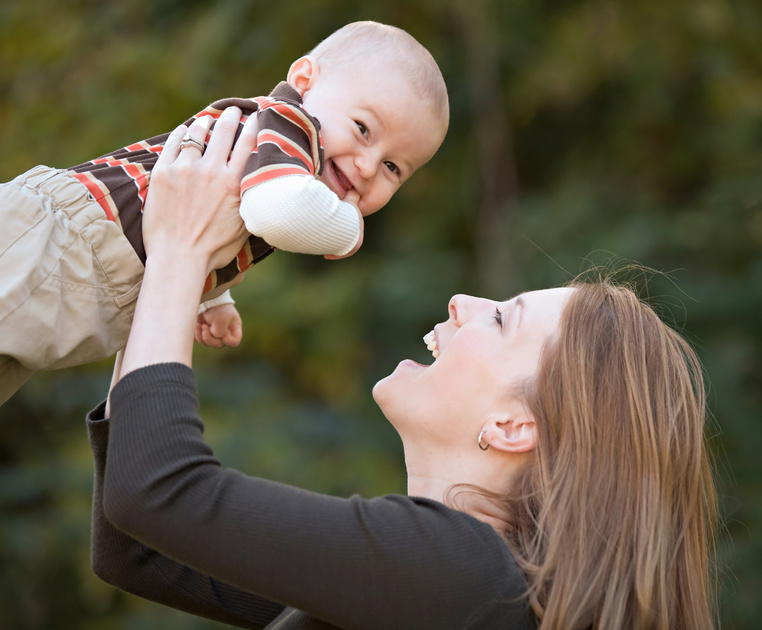
Squats are tough on your thighs, and soothing for your baby. They can be done as you hold him or her against your chest and benefit you both. Exercises like pushups, plank, cat-cow, and bird-dog can be performed with your baby is lying underneath while giving them kisses and smiles. It’s a fun way to enjoy time together while also doing something good for you.

Invest in inexpensive equipment for your home like a stability ball and resistance band. That way there is no excuse not workout when you can’t get to the gym.

Walk before you run:
Build slowly back to your pre-pregnancy fitness routine. Do not simply jump right back in to what you were doing before.

It is necessary to repair the deeper ab muscles that have been stretched first. Do not start with crunches. You can begin to rehab your abs with deep breathing exercises, plank, bridge, and pelvic tilt.

If you were a runner then start with walking and jogging before returning to running. If you lifted heavy weights, start lighter and do high repetitions.

Simply going back to your old routine will do your body a disservice if you end up injured and can’t do anything at all.

Don’t compare:
Be patient and nice to yourself. Don’t compare your body or weight loss to celebrities. It is not fair to measure yourself next to someone who probably has a full-time trainer and chef, and whose profession possibly requires them to be a size 2.

Remember that it took 9 months to put the weight on, and to drop it overnight is not healthy or realistic. Steady, consistent exercise and weight loss is the best way to decrease fat and keep it off permanently.

Kegels:
Do them! I can’t stress this enough. Keeping your pelvic muscles strong is often overlooked, but so important.

Tatum Rebelle is a pregnancy and new mom fitness and nutrition expert. She founded of Total Mommy Fitness in 2005 after seeing an unnecessary tread of women opting out of exercise once the became pregnant and had young children. Find more  at www.totalmommyfitness.com and twitter @tatumrebelle.

At-Home Core Strength by Chanda Fetter

3 Effective Ways to Strengthen Your Core  Muscles At Home

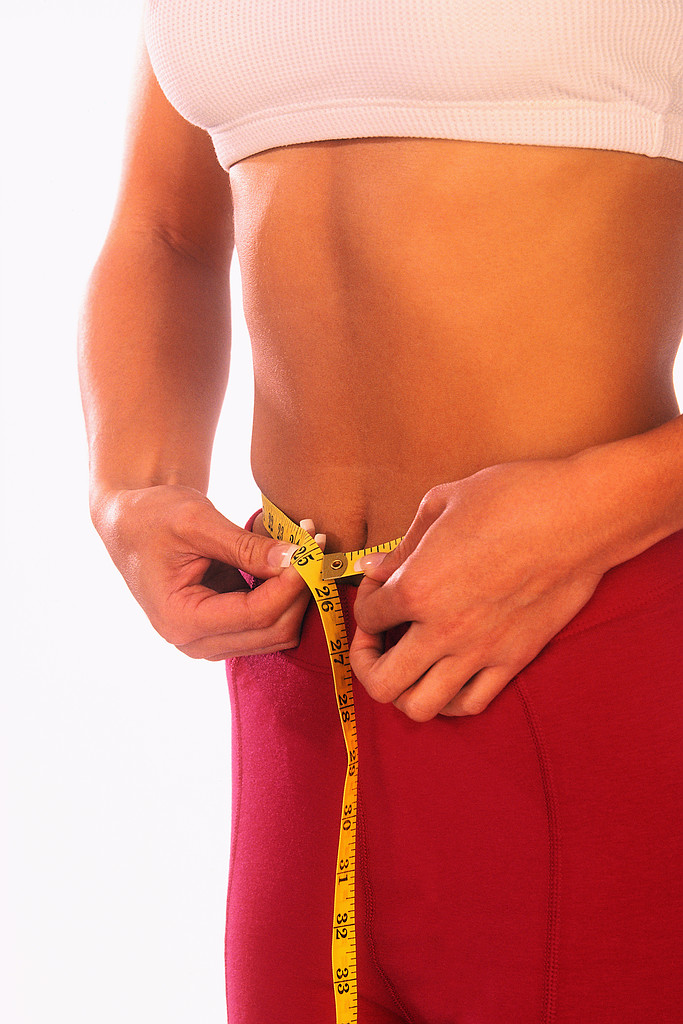
We can’t always make time for the gym, sometimes we have to rely on the space and items we have around our home to get those important exercises done.  The following three exercises will help strengthen your core, tighten your waistline, reduce back pain and give you a boost of energy!

Sitting V with Trunk Rotation – Grab a bag of potatoes or fruit, something that might equate to 8-10 lbs.  Sit on the ground and wedge your feet under the couch to secure them in place.  Sit up tall and hinge back from the hips to engage your abdominals.  Be sure you don’t hinge back too far as you don’t want to over recruit your hip flexor muscles, nor do you want to load your lower back.  Stay at a safe angle that allows maximum recruitment of your abdominal wall.  Take your weight and rotate side to side making sure to stay evenly planted on your tail.  While you are performing this exercise be sure to tighten your abs and breathe deep.  Know that this exercise can be performed with just your body weight as well for less intensity by simply crossing your arms on your chest.   Perform until you find fatigue in your abdominals then rest for a few breaths and repeat 3x.

Back Extensions – Take a few pillows and place them on the floor.  Lie on your stomach so the pillows rest under your hips.  Wedge your feet under the couch and place your hands behind your head.  Lengthen out of your spine and inhale, then exhale and lift your chest off the ground to find a position just beyond neutral.  You’ll want to be sure you pull the shoulder blades down your back so you’re not taking weight into your neck and shoulders.  Keep your gluteal muscles relaxed and feel the muscles along the sides of your spine tighten and you extend your back.  Perform 3 sets of 8-12 reps with a 3 second hold at the top.

Plank with Rotation Knee Tucks – Take an ordinary kitchen towel or pillowcase and place it under your feet.  Assume a plank position up on your hands, tighten your abdominals and make sure to keep your legs zipped together as one.   Take a deep breath in and as you exhale pull your knees across your body and into your right elbow then your left.  Do this a total of 8-10x keeping a nice pace.  Notice that your hips will lift slightly as you pull the knees across your body.  This is an advanced exercise so know that holding a static plank is a great alternative.  Planks can be done on your hands, your forearms, on your toes or on your knees.

By Chanda Fetter
IM=X Pilates, Owner and Master Trainer. Contact Chanda via chanda@imxsb.net, www.imxsb.net or 805-687-4692.


Sample This…RunnerBox!

Sample This…

Have you ever wished you could sample new athletic gear and supplies a few items at a time, without purchasing an entire box or bag full? Now, you can! Meet  RunnerBox.

Here’s your opportunity to demo and test products just like the pro’s, only on your own time, on your own schedule and in a cost-effective manner!

“RunnerBox is a mini shoebox full of running and fitness based products” shares founder Staci Dietzel. Finding the perfect products to complement your individual exercise program doesn’t get any easier, or more convenient than RunnerBox. The box arrives on your door step packed full of products to try out and sample. “We search out great products from the tried and true, to brand new, and then send them to you in our custom box” shares Ms. Dietzel. The RunnerBox was developed by athletes, for athletes! Ms. Dietzel is also an experienced marathon runner, endurance cyclist and duathlete. So who better than a fellow athlete to know what products we want, need and will benefit most from sampling?

“RunnerBox was started last year after my sister and I were enjoying another subscription box, but being an avid marathon and half-marathon runner wished it were filled with running stuff” shares Ms. Dietzel. “There are a lot of boxes out there, but when we started last year not one that we could find was for runners or triathletes” she continues. RunnerBox caters to runners and triathletes of all abilities and distances. Their products include the RunnerBox, TriBox and even a GlutenFreeBox, as well as a GiftBox Option for all three categories. They also offer a customer-service focused option of a gift card. Simply present the gift card to your loved ones and allow them to choose which Box they prefer!

Why should you become a subscriber? Prevent boredom when logging those miles month after month, and stay on the forefront and cutting-edge of what’s new and popular in the athletic world. RunnerBox is the way to try out a new product to determine if it works for you. Upon opening your box you’ll find everything from bars, protein shakes, energy gels and chews to apparel and various accessories designed to better your training and your racing experience.

“We set it up the way we would want it to be set up as a customer, with options.” Ms. Dietzel says. Customers may purchase a single Box as a gift, participate in the monthly or bimonthly program. RunnerBox also offers a 6 month subscription option to span a training season allowing athletes to explore and test many new products. Their great go-to GiftBox option makes a thoughtful birthday gift for any athlete, as well as a fun congratulatory gift for a completed 5K or marathon. Their GiftBox even includes a handwritten note customers can compose upon purchase on the RunnerBox website.

For as little as $10.00 athletes can sign up for monthly subscription (5-8 products per box) for the RunnerBox, the TriBox or the GlutenFreeBox, or $20.00 for a bimonthly subscription of a box of their choosing (includes 12-15 items per box.) The RunnerBox received on a bi-monthly basis is their best selling product. All GiftBoxes (consists of 12-15 items) are also $20.00, with shipping investment of under $6.

Subscriber Ali Jones touts RunnerBox saying, “my favorite part of the service is that I know I can expect high quality items that I’ll actually use.” She continues, “with RunnerBox, I have been impressed each month and have found great new fuels for my long runs.” Ms. Jones has been a subscriber to the RunnerBox service since February. She describes her experience with RunnerBox in three words, “reliable, quality and exciting – I’m always excited to see what’s inside!” Why not see what the fuss is all about for yourself?

RunnerBox’s motivation is simple and clear as described by Ms. Dietzel, “whether you are a seasoned runner or just getting started – this is a fun way to try out some great new healthy things.” Check them out at www.therunnerbox.com, or call them directly via 517-290-2785.

Be sure to connect with them via Facebook and Twitter as well!

How-to Love Your Exercise by Mary Miriani

As a trainer, I encounter my share of people who say they hate to exercise, but know they have to do it.   I usually respond by telling them that they just have not learned to love their exercise yet.  Here are three ways to love your exercise:

Choose an exercise that you like and is appropriate for your current fitness level.

So many people focus only on burning calories.  (“I hate to run, but running burns the most calories!”)  That is a recipe for disaster, because you end up hating exercise and not doing it.  Pick something you like to do, so you can stick with it over the long run.  Equally important, make sure you are doing something that is right for your fitness level.  If you spent the last 20 years sitting, it is not possible to jump right into vigorous activity without injury.  It is better to be slow and steady than quick and quit.

Vary your exercise routine.

The best exercise is the one you will do often.  Do whatever activity makes you feel good inside and out!  Have a couple of activities to choose from.  As they say, “Variety is the spice of life!”

Settle in and enjoy the process.

It is good to have goals, but loving exercise is all about loving to move your body.  Focus on enjoying what you are doing instead of “I have to do this to reach my goal.”  You will reach your goal simply because you will love moving.  A long journey doesn’t seem long when the scenery is pleasant!

If you keep these simple things in mind, soon you will love moving and be surprised at how fun exercise can be!

Mary Miriani earned a BA in Exercise Science after she learned to love exercise at age 40 and stopped worrying so much about weight loss.  (Yes, she lost weight and has kept it off over 12 years!).  She is certified by the American College of Sports Medicine as a Health/Fitness Specialist and trains clients in Naperville, Illinois.