December 1, 2025

Range of Motion Essentials by Carol Johnson

Exercise can be broken down into many categories. For example, muscle strength, cardiovascular endurance, and flexibility.  A category that is not discussed very often is that of range of motion. The muscles around our bones are able to move from each joint in many directions. This is termed “range of motion.” Range of motion exercises help maintain normal movement making our daily activities easier to complete. While we all may have a difference in range of motion, the ultimate goal for all of us is to keep what we have. Each joint should be moved through it’s range of motion daily to prevent stiffness, deformity and loss of function. While these exercises are useful for everyone, those with arthritis will especially benefit. Those with arthritis should pay attention to the “two hour pain rule.” Defined by the Arthritis Foundation as, if exercise-induced joint pain lasts longer than two hours then too much was done.  One should adjust the intensity and duration of exercise in the next session.
 

Move each joint through it’s range of motion 5-8 times. Move slowly in a controlled manner and never force the movement.  Remember to stand/sit up tall, keep your abdominals held in tight and breathe normally. Never move into pain unless under a professionals guidance. Please consult your physician before beginning an exercise program and perform exercises at your own risk.


Seated-
1.  Make a loose fist and then straighten your fingers.
2.  Move your thumb to the base of your pinky and then straighten your thumb.
3.  Circle your wrist one direction then the other.
4.  Bend and straighten your elbow.
5.  Pull your shoulders up towards your ears then lower your shoulders.
6.  Lift and lower your toes, then lift and lower your heels.
7.  Bend and straighten your leg. (move one leg at a time)
 

Standing-
1.  Keep your leg straight and touch your toes to the front, side and back.
2.  Lift and lower your knee.
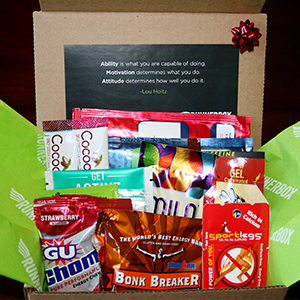
7 Steps to Race Ready by Nicole Bryan

This article is sponsored by RunnerBox.

ATTENTION ATHLETES: Want to sample the latest and greatest products just like the pro’s? RUNHEALTHY code is good through 12/11/13 to save $2 on RunnerBox, TriBox or Gluten Free Box. Order yours HERE! Runnerbox is a subscription box full of great running, triathlon and fitness products! Delivered right to your door, you’ll explore and learn about new products to make your fitness better. RunnerBox is a great way to sample new gear before investing in larger quantities. They make it easy and convenient to find new products to love! Treat yourself with a subscription, or gift a friend with a one time GiftBox. www.therunnerbox.com


7 Steps to Race Day Ready by Nicole Bryan


Whether you’re racing a 5K or an ultra-marathon, or any distance in between, the preparation required is similar. You’ve logged many miles, spent many hours insuring you have the appropriate gear and you’re now ready to toe the line. Every race veteran will tell you there are a few essentials to being race ready. Here’s the inside-track:

Skip the last minute miles. While last minute cramming may have helped you pass a college exam, it won’t help your racing. Your job is to arrive at the starting line 100% refreshed and ready to race. In fact, those last minute miles may do more harm than good. Running fitness is cumulative. One run missed or added will not make or break your running performance. Leave your miles to training, not to the week before the race.

Confirm your race start time. It sounds silly, but race schedules change! Don’t risk a morning panic attack by foregoing this easy step. Upon your race check in, simply confirm the start time. In fact, take a picture of the posted schedule and wave starts with your phone so you may easily refer to it when planning your arrival time.

Stick with food you know. Go online beforehand and do a menu search of the available eateries in the area. Once you’ve chosen your familiar meal, go one step further and make reservations for your dinner time two weeks before. Doing so, takes the guess work out of where to eat and when to eat. Plan to eat early to allow for proper digestion. The night before a race is not the time to try a new recipe or food choice. What you usually consume the night prior to your long runs is what you should consume the night before your race. The same applies to your breakfast the morning of the race.

Plan for an early evening. Three of the most challenging words for athletes to hear: Take it easy! You may be too nervous to go to sleep early, but you can still rest and relax. Watch a movie, chat with friends. Lounge, guilt-free!

Safety first. Before pinning your bib to your shirt the night before, take two extra minutes and write your emergency contact number on the back, as well as any vital medication/treatment information. Even with a timing chip secured to you, providing this easy accessible information on the back of your bib, may save valuable time during an emergency.

Be aware of the weather forecast. Know the temperature and wind conditions as both of these specifically can alter your run efforts. Do you need to pack warm-up or cool-down clothes? There’s nothing worse than shivering your way through a race or overheating due to lack of planning. Be sure to heed the warning of nothing new on race day as well. This applies to clothing, as well as shoes and technique. If you haven’t worn it, consumed it, or tried it in training, don’t try it on race day!

Allow time for a warm up. Regardless of the distance you’re racing, a proper warm up is an essential part of every athlete’s race day regime. This could mean simply walking from your car to the race start, or walking around the starting line. The goal is to increase heart rate and increase circulation, therefore preparing your body for the work of exercise.

YOU ARE READY.

Food Swaps for Better Health by Amanda Miarecki

Healthy eating doesn’t mean changing your entire diet. Simple and smart food swaps can encourage healthier habits, increase energy levels, aid in weight loss, and reduce cravings.

Try these five little swaps that can result in BIG health benefits.


Swap Out: Sugary Drinks
Swap In: Sparkling Water

Loaded with additives, sweeteners, and preservatives, sugary drinks such as soda can lead to complications ranging from obesity to kidney problems. Even diet sodas, free from calories and sugar, contain mold inhibitors, which cause damage on a cellular level.

Grab a bottle of sparkling water instead of soda. Need some extra flavor? Add your favorite fruits for the perfect infused, fizzy drink.

Swap Out: French Fries
Swap In: Sweet Potato

French fries, which are deep fried in oil and extremely high in trans and saturated fats, can increase your risk of type 2 diabetes, stroke, and heart disease. Sweet potatoes are readily available, delicious, and a great source of vitamin C, magnesium, potassium, beta-carotene and vitamin B6.

Sweet potatoes are incredibly versatile. Try them grilled, steamed, pureed, or roasted. Slice them into strips and sprinkle with cinnamon to create healthy baked fries.

Swap Out: Mayo and Sour Cream
Swap In: Greek Yogurt, Hummus, or Avocado

Condiments are a sneaky culprit when it comes to managing health. Instead of reaching for calorie-laden toppings like mayo and sour cream, try healthier alternatives.

Greek yogurt provides the same tangy flavor as sour cream, but with twice the protein and half the fat. Hummus is packed with fiber and mayo-like goodness without the added calories. Avocado is a great alternative to mayo and loaded with healthy fats.

Swap Out: Refined Grains
Swap In: Whole Grains

Refined grains can be just as bad for your heart as butter and bacon. Whole grains have their bran intact which results in more fiber, B vitamins, magnesium, and zinc. People who choose whole grains over refined tend to be leaner and have a lower risk of heart disease.

Swap white bread and rice for whole grain bread, brown rice, and oatmeal.

Swap Out: Steak
Swap In: Salmon

Red meat is incredibly high in saturated fats and dietary cholesterol, which can result in an increased risk of heart disease and obesity.

Try substituting in healthy fats like the omega-3 fatty acids found in salmon. Salmon can decrease your risk for cardiovascular problems.

Amanda is a Boulder-based Health Coach, fitness enthusiast, avid trail-runner, and aspiring physician with a passion for integrative health. Her goal is to motivate women to live inspiring and healthy lives and create a revolution in how people think about their health. Her passion is encouraging others to take care of their bodies with exercise, healthy behaviors, and nutritious foods. Get inspired to live fit and connect with Amanda on her blog. Visit her on Facebook, Twitter and Instagram.

Steady Fitness by Nicole Bryan

Let’s face it, even with our best intentions some days unexpected barriers and deadlines arise in the way of our exercise. Instead of giving up on your exercise efforts entirely, perform the following Maintenance Moves to keep your fitness steady. Perform 2-3 sets of 10-15 repetitions of each exercise. Consult your physician before beginning exercise and perform moves at your own risk.


1.  Standing Squat- (strengthens the lower body) Begin in a standing posture.  Bend your legs as if you’re going to sit down. Sit back and keep your knees over your ankles. Stop when your hips are just above your knees and stand up tall again.

2.  Pushups- (strengthens the upper body) Position yourself on your knees or toes and hands. Pull your belly button up into your spine and keep your body straight. Bend your arms and lower your body to the floor. Stop when your elbows form right angles, and then return to the starting position.

3.  Standing Lunge- (strengthens the lower body) Stand with one foot about 36 inches in front of the other.  Keep your back heel up and bend the back knee toward the floor. Make sure your stance is long enough so when bending your back knee your front knee remains over your front ankle.  Extend your back knee and return to the starting position.

Some days our schedule and life-demands get the best of us, but don’t let that discourage your fitness efforts entirely. Not all exercise has to be structured to count, keep it steady and perform these 3 maintenance exercises. Prior to performing strength exercises complete 10 minutes of cardiovascular exercise such as walking or jogging and you’ll take care of your warm-up and heart/lung conditioning as well.

By Nicole Bryan. ACE, NASM and ACSM Certified Fitness Professional.

Pumpkin Chocolate Chip Maple Muffins by Lisa McClellan

If you’re looking for a healthy snack for the whole family, check this out. This recipe is super easy to prepare a batch ahead of time and have on hand for the week! Lisa explains, “I wanted to create a muffin that my family would eat but change some of the ingredients to make it healthier. My family seems to do best when I do partial healthy, I can’t go full blown, they just simple will not eat it. I have learned to use moderation with a redux. Here is my recipe for Chocolate Chip Maple Pumpkin Muffins!”


Ingredients:

Makes 15 muffins
1/2 to 3/4 cup of coconut oil
1/2 cup of sugar
1/2 cup of maple syrup
2 large eggs
1 cup of white flour
1/2 cup of whole wheat flour
1 tsp baking soda
1 tsp sea salt
15 oz. of organic pumpkin
1/2 cup of plain greek yogurt
1 tsp. vanilla
1/4 cup of chia seeds
1/4 cup of flax meal
1/2 cup of dark chocolate chips (Optional)

Directions:

1. Preheat oven to 350 degrees.
2. Mix Flours, salt, baking soda, chia seeds and flax meal in a large bowl and set aside.
3. With a eletric or hand mixer cream coconut oil, sugar and maple syrup. Add eggs one at time until mixture is fluffy. Add pumpkin puree, greek yogurt, and vanilla.
4. Slowly add dry ingredients and chocolate chips until just blended, don’t over mix or the muffins will be tough.
5. Scoop batter into a lined cupcake pan and bake for 35-40 minutes. Let cool and enjoy with a icy cold or hot beverage.

I put them in my kids lunches, serve as an after school snack, or for a breakfast on the run.

Recipe by Lisa McClellan. For more recipes and healthy living tips follow her via RunWIki.org

How to Make Hearty Meals Healthier! By Laura Maydak

Hearty, cold-weather meals should warm your belly without adding extra inches to it. 

Making simple ingredient substitutions will allow you to fill up without worrying about filling out.  Follow these ingredient swaps to make your hearty meals healthier:


Meatloaf or Meatballs
Replace ground beef with: ½ lean ground meat, ½ mushrooms (pulse mushrooms in a food processor)

Pasta Dishes
Replace white pasta with: Whole wheat pasta, spaghetti squash
(Low-cal Bonus: 1 cup provides only 42 calories, 10 gm carbs and 2 gm fiber)
Zucchini ribbons (sub for spaghetti or lasagna noodles)

Mashed Potatoes
Replace potatoes with: Cauliflower, Turnips

Creamy Soups, Sauces, and Casseroles
Replace heavy cream, condensed soup, or mayonnaise with: Evaporated skim milk, pureed vegetables (cauliflower, carrots, potatoes, pumpkin, butternut squash; choose depending on dish’s flavor), fat-free, plain Greek yogurt

Replace high-fat cheese with: Low-fat or fat-free cheese
(Note: Sharp cheeses have a stronger taste, so you can use less without losing flavor!)

Creamy Dips
Replace sour cream with: fat-free, plain Greek yogurt

Recipe Bonus: Skip dipping veggies in full-fat ranch dressing.  Instead, add ranch seasoning to fat-free, plain Greek yogurt (amount added depends on taste preferences).  Mix, and enjoy!

Chili and Stew
Replace ground beef with: beans (any variety)
(Note: If using canned, buy low-sodium.  Also, rinsing and draining will remove up to 40% of the sodium.)

Added Flavor
Replace salt with: fresh or dried herbs, spices, salt-free seasoning blends
(Healthy Bonus: Herbs and spices add a punch of flavor and healthy compounds, such as antioxidants!)

Remember: Experiment and have fun!
Remember, making ingredient swaps may not work perfectly the first time, but you will learn and adjust accordingly.  Involve friends and family, especially kids, in the cooking, and then enjoy the healthy, hearty meal together.

Laura Maydak has a B.S. in Clinical Dietetics and Nutrition from the University of Pittsburgh, and is currently a graduate student in the school’s Coordinated Masters in Nutrition and Dietetics program on her way to become a registered dietitian.  Aside from school, she is an avid runner, fitness enthusiast, and wanna-be chef.  Connect with Laura on twitter (@lmaydak) for motivation and tips to live your healthiest, happiest life – all given with a healthy dose of humor.

Core Combo by Sarah Johnson

Combining moves at the gym is a great way to target specific muscles groups, as well as saving time by sticking close to one piece of equipment. Try the following quick core-strengthening combination during your next workout. (Perform exercises at your own risk and always consult your physician before beginning exercise.)

Utilizing the Cable Machine:


Plié Squat & Row: Move bar down to the bottom of the pulley.  Stand with feet wider than shoulders, toes turned out.  With an overhand grip, pick up the bar and bring to waist height.  Squat towards the floor, keeping your back straight and chest forward. As you stand up, push with your heels and squeeze your gluts and inner thighs.  Pull the bar to your chest.

Pull Over Leg Chase:  Place the bar about two feet from the floor on the cable machine.  Lay on your back, with your head at the end closest to the machine.  Bring your feet off of the floor, knees bent.  Grasp the bar over your head, and as your legs straighten and extend away, “chase” them with the bar, keeping your arms straight. Slowly return to the starting position and repeat.
 

Follow Sarah on Twitter @SarahJChicago

Do you know about these surprising benefits of exercise? By Amanda Miarecki

3 Surprising Reasons You Should Be Working Out Regularly

It’s common knowledge that working out can help you lose weight and reduce your risk of disease. Physical activity also increases strength and energy levels. It can help alleviate depression, boredom, and stress.

The benefits of exercise extend to everything from your mood to your digestive health but I bet you didn’t know about these 3 surprising reasons you should be working out regularly.

Controlled Blood Sugar

Exercise is a great tool in controlling blood sugar levels, which can be exceptionally helpful for people struggling with diabetes, hypoglycemia, and other blood sugar related illnesses.

Exercise makes your heart beat faster which causes muscles to use more glucose, the sugar in your blood stream. Over time, this lowers overall blood sugar levels.  Cardio, like brisk walking, jogging, or stairs, incorporated into a weekly fitness routine keeps blood sugar levels in a healthy range.

Lose Weight Without Losing Bone Density

A study done at Washington University found that dieters who didn’t work out lost bone density, while exercisers did not. A regular fitness routine can help you lose weight without sacrificing done density.

Weight-bearing exercise forces bones to adapt to the pull and weight of muscles by building more bone cells. This increase in bone cells results in improved strength and bone density, which in turn decreases the risk of osteoporosis and fractures. Weight-bearing exercises, such as weight lifting, jogging, and dancing, are excellent for maintaining and increasing bone density.

Enhance Your Immune System

When you workout, your temperature rises. This higher body temperature makes it challenging for certain infectious organisms to survive. Working out will also speed up the rate that antibodies flow through your blood stream. This increase results in higher immunity against common illnesses.

A 30-minute walk once a day is enough to speed up the flow of antibodies in your system and help you ward off illnesses, like the common cold.

Amanda is a Boulder-based Health Coach, fitness enthusiast, avid trail-runner, and aspiring physician with a passion for integrative health. Her goal is to motivate women to live inspiring and healthy lives and create a revolution in how people think about their health. Her passion is encouraging others to take care of their bodies with exercise, healthy behaviors, and nutritious foods. Get inspired to live fit and connect with Amanda on her blog, via Facebook and Twitter.

Can Exercise Make You Smarter? By Maggie Ayre


Can Exercise Make You Smarter? Securing Better Grades for Teenagers.

Researchers from a study conducted in Taiwan say the results do suggest that any form of exercise should be useful for maintaining and improving brain function.  It does seem to make sense that exercise that helps the circulatory system become more efficient makes the brain stronger as well. However, it’s not just improved oxygen uptake and improved circulation that helps brain activity.

Exercise stimulates the receptors for movement throughout the whole body. This information gets relayed to the brain where it increases the frequency of firing of all parts of the brain.  Movement helps the integration of the whole nervous system because we evolved to be creatures that are always on the go. This research is backed up by anecdotal evidence from regular exercisers who claim their activity has led to more energy, better sleep, increased attention and alertness and overall feelings of happiness and well-being all of which are directly related to the functioning of the brain.

Schools and teachers want the best for their pupils and for years this has led to a decrease in physical activity and an increase in time spent studying and reading books.  This research suggests that to really get the best from young people we should be prioritizing activity. In other countries schools are changing the way they operate to include more, rather than less activity within the school day.  The vast majority of private schools in the UK have followed suit and only the state sector seems left behind.

The NHS recommends that young people should be doing at least 60 minutes of physical activity every day and that they should be working at a strenuous level for at least 90 minutes every week.  By bringing these activity sessions into the school day not only can we ensure they take place but we can also use them to increase brain activity at school and ensure pupils achieve the very best grades they are capable of.

Maggie Ayre is the UKs leading Fitness Coach for Teen Girls. As well as one-to-one and small group nutrition and fitness work with teens she has developed the 3G Program designed to be run at schools as part of the PE curriculum. She also offers mentoring for PE departments on how to re-engage teen girls with PE and has recently published her third book; “Nutrition for Exam Success – A Parent’s Guide” which is now available as a Kindle and paperback at Amazon.

How to Stay Fit when Traveling by Sarah Johnson

Exercising on the go can be difficult: you’re in an unfamiliar place, the equipment you’d usually use isn’t available and the time constraints can all interfere with your best intentions of fitting a workout in.

These 5 exercises can be done in a hotel room (or guest bedroom) and require no additional equipment. Always seek medical clearance before beginning exercise. Perform exercises at own risk.

Repeat the workout 2-3 times to get in a quick fix while traveling!

1. Bed Pushups: Place your hands on the edge of the bed, a little wider than shoulder-width, and your feet on the floor. Keeping your back straight and core engaged, slowly lower your chest toward the bed, bending your elbows out to the sides. Push yourself back up to the starting position.

2. Wall Sits: Find wall space clear of objects. Place your back against the wall, and your feet on the floor, shoulder-width apart. Slide your back down the wall, and walk your feet away until your knees are over your ankles (no lower than a 90 degree bend at the waist). Hold, keeping your toes loose and leg muscles contracted, for up to one minute.

3. Jumping Jacks: Cardio break! Perform jumping jacks for one minute continuously.

4. Towel Twists: Grab the bath towel with one hand at each end, lengthwise. Sit on the floor, knees bent, feet down. Extend your arms forward, at chest height. Tilt back slightly, keeping your core engaged. Slowly rotate toward your right, bringing your hand towards the floor. Exhale and return to the center and twist toward the left, alternating sides.

5. Burpees: Cardio break! (Make sure there is enough room on the floor to safely perform) Place hands on the floor, shoulder-width apart. Jump or step back with both feet, until you are in a pushup position. Quickly jump or step forward, towards hands, then reach both arms up towards the ceiling (add one more jump up for an extra challenge!)

Follow Sarah on Twitter via @SarahJChicago