May 23, 2013

Summer and Kids: How to Stay Organized by Coach Juli

If you are a parent of a student-aged child you may not be as excited for school to end and summer to begin as your child. For kids it is a time for long lazy mornings, random meal times, playing outside in the middle of the day, and mid-week sleepovers, but for parents it’s another story all together!

For the adults in the equation, it’s days of interrupted routines, minimal structure, bored children, and often the need to work with children being left to their own devices during the weekdays.

Staying organized for the summer months takes a bit more planning because of the lack of structure when school isn’t in session. Start by finding out what activities your kids wish to do during the summer days. If they want to sit around and color pictures all day, that’s great, but if they want to do things that require you to drive them around everywhere you might need to work on that with them and come up with a reasonable schedule that works for everyone.

Don’t panic! Here are three tips for staying organized for the summer:
1.    Keep easy to grab snacks and small meals for children so they can feed themselves when they are hungry. Family mealtimes may be a just a few weekly dinners, so for breakfasts and lunches they can learn to fend for themselves – with your providing good food in the cupboards & fridge.
2.    Make a list and post it on the fridge entitled: “Things I can do” that you compile with the children so you don’t have that constant “Mom, I’m bored!” whine coming from down the hall every few hours.
3.    If you have really young kids, you might want to secure a ‘mother’s helper’ over the summer to keep the kids safe and entertained while you are home or running errands. Jr. and Sr. high school students who can’t work out in the community yet often love these opportunities.

Attempt to keep some structure to the days as best as you can as children tend to do better with some routines.

Coach Juli is a Professional Certified Coach with a specialty in Productivity specifically those with ADHD. She works with individuals at any stage of life who find themselves stuck and wish assistance and skills to better organize their lives both in the workplace and at home. For more information, go to www.coachjuli.com.


Fiber Facts by Rachael Roehmholdt

What exactly is fiber? Why is fiber important to health? What are sources of fiber?

Fiber consists of the indigestible parts of a plant that we consume when eating most naturally sourced foods. You can find fiber in two forms – soluble and insoluble. Soluble fiber dissolves in water and insoluble fiber doesn’t. Both are important to your colon’s health as fiber helps bulk up stools to make them move easily through the digestive tract.

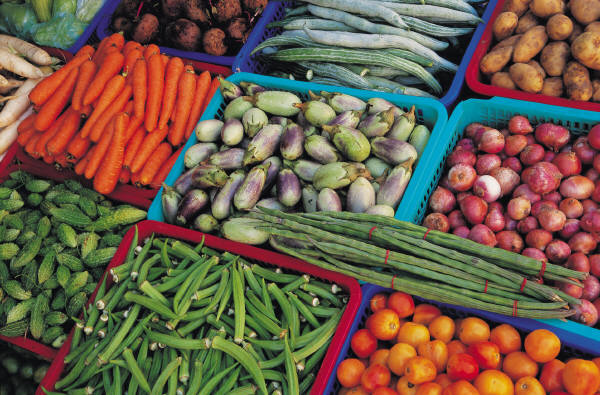
While there are plenty of fiber supplements on the market, we don’t really need these in order to get fiber into our diet regularly. Many of the whole foods you find at your grocery store already have plenty of fiber and if you’re filling up on these regularly, you won’t have a need for fiber powders or pills. Fiber is found in foods like fruits, vegetables, nuts, seeds, whole grains and beans.

There are plenty of great health benefits to getting more fiber in your diet regularly. One of which is regular bowel movements which indicates that your digestion is functioning properly and smoothly. Next, when you’re getting plenty of fiber, you’re a lot more likely to be maintaining your bowel health, which will help to prevent diarrhea, constipation and hemorrhoids. You can also count on lowered cholesterol levels, reduced blood pressure and inflammation throughout the entire body with adequate fiber in the diet.

Getting plenty of fiber is great for those who deal with maintaining energy throughout the day as well, because with the addition of fiber, any sugar found in a food is broken down and absorbed much more slowly into the blood than if taken without the fiber. This results in even energy levels that last for hours. This is also great news for diabetics and people who are working to prevent diabetes.

Lastly, fiber is essential to achieving and maintaining a healthy weight, because foods with a good amount or fiber taken longer to chew and break down than those with very little fiber. This means that you’ll likely be consuming less, as well as feeling full for longer since the foods will take more time to break down and be absorbed into the body.

Rachael Roehmholdt is a certified holistic health coach and founder of Be More Healthful. With a passion for good food and living a healthful and balanced life, she believes that small changes to our everyday lives can set us up for a lifetime of health and happiness.

Technology and Your Healthy Living by Coach Juli

Technology and You –
Out with stress, in with effective and efficient healthy living!

There are several ways that productivity has been, and can be, improved simply by taking advantage of the technology available to us today. Basically, any time that a task can be simplified, or the labor required to complete the task is reduced, stress will be decreased and productivity will increase.

Innovative technology is making it easier and faster for most people to take care of daily tasks – here are a few that are pretty simple for most to employ:

1.    Automatic or Online Bill Paying – Years ago when I started teaching people how to better manage their lives and save hundreds of dollars in late fees from not paying their bills, there were piles of paper to deal with, due dates to calculate, and then filing the bill once it was paid. No more! Now you can have most of your bills (think utilities!) deducted directly from your bank or credit card account and never worry about a late fee or worse, discontinued service. You can have your credit card statements emailed to you, and you can transfer funds, pay your bills, and manage your balances any time from the privacy of your computer or smartphone. Take a screen shot of the statement, or download it and store it in a receipt file on your computer. Paperless and Paid!

2.    Shopping & Coupon Clipping – newspapers, circulars, magazines…I think not. You can get deals emailed to you, sent to your phone, or simply Google® what you want and see if there is a coupon you can use when shopping online or at a brick & mortar. You can print your own coupons and only get the one you want for what you plan to purchase. Shopping online. Need I say more?

3.    Video Calling – I remember when there was talk of how someday we would be able to talk to people all over the world live! Wow! It seemed so miraculous. Well, it’s daily practice for most of us these days. Live far away from the kids? Jump on Skype, ooVoo, or Google Hangout and voila, instant quality time!

Contributed by Coach Juli, CPC: Efficiency & ADHD Coach. Efficiency Expert since 1984, and author of the eBook, Order! A Logical Approach to an Organized Way of Life, www.getordernow.com. Contact at jshulem@gmail.com 805-964-2389 or www.julishulem.com

The Secret to Better Health by Deborah Lowther

What if I told you I had the secret to better health, easier weight control, more energy, more restful sleep, and better mood? One that could provide stress relief, stronger muscles and bones and reduced heartburn, anxiety, constipation, depression, while also preventing diabetes, heart disease, osteoporosis and cancer?

You’d be curious right? You’d probably be first in line to find out this secret; who doesn’t want better health with all those added benefits?

Good news is, it can be yours.  All you need is a pair of running shoes and a few minutes a day.

What is this secret to better health?

Exercise.

Physical activity is not just for the marathon runners or the extreme health nuts; exercise is for everyone.  The human body was made to move, but our modern sedentary habits have taken over and created an inactive lifestyle common for too many adults.  Hours spent sitting in traffic, full time jobs in front of computer screens, kids growing up on couches resulting an unhealthy, stressed out, sleep deprived, lethargic, anxious population.

Taking just 20-30 minutes out a day for a brisk walk, a full stretch, to climb stairs, or ride a bike with your kids can make all the difference.  You can even break it up into two 15 minute sessions of activity, if it’s easier to fit in fitness that way, and still reap the benefits of a more active lifestyle.

Staying physically active doesn’t have to be difficult, you don’t need a gym or a personal trainer. You just need to move. Everyday. Get your heart pumping, your blood flowing and your energy soaring.  A little goes a long way to improving your health.

Physical activity everyday does more than just build muscle, improve your cardiovascular fitness and help you lose weight; it affects your stress level, your ability to get a good nights sleep, your energy level, your anxiety, digestion, circulation, bone density, immune system, mood and can prevent some serious diseases.

You may feel healthy now, being young, being busy and looking after everyone else, but years of inactivity will catch up with you and can threaten your long term health.

The Ministry of Health and Long Term Care warns “Cardiovascular disease (CVD) is the leading cause of death among Canadian men and women. One-quarter of CVD deaths are the direct result of inactivity. Regular physical activity reduces the risk of high blood pressure and stroke.”

Find activities you enjoy so you will stay motivated and work them into your daily life. Start a neighbourhood walking group, rent a yoga DVD from the library, take the stairs at work, park or get off the bus 10 minutes from your office, challenge the kids to front rolls in the park or a bike ride around the block.

Make staying physically active part of your family lifestyle and enjoy all of the health benefits that go along with it for years to come.

Deb Lowther is a mother of 3 young daughters who, when not running after the kids, is running in the trails! She blogs about Raising Healthy Kids and ensures her own have fun while eating healthy & staying active.  You can visit her websites to learn more www.iron-kids.com and  www.adultgummies.com.


Whole Grains 101 by Gretchen Scalpi

More Carb Options for People with Diabetes: Whole Grains!

Many people with diabetes or pre-diabetes believe that they will need to make drastic changes in the way that they eat. One of the most common beliefs is that those with diabetes have to completely cut out carbohydrates. Nothing is further from the truth! The good news:  you still can have carbohydrates and, in fact,  your eating plan should include grain products. The key is to pay attention to the portions you consume and to choose grain products wisely. A good rule of thumb is to choose grain products with plenty of fiber: 4 grams or more.

Selection of high fiber grain products goes way beyond switching from white to wheat bread.  Today there are many whole grain foods available right in your grocery store. Take a stroll down the “health food” aisle in your grocery store and you will see what I mean. What will you find?  Quinoa, amaranth, millet, buckwheat, kasha, barley, bulgur, and possibly even wheat berries (sometimes referred to as farro.) If you are unfamiliar with any of these products, you are not alone. It’s only been over the last few years that the “real whole grains” have made their appearance in places other than specialty food markets. I call them the “real whole grains” because when purchased, they are simply the grain itself…nothing added, just 100% grain.

Even if you have never tried cooking whole grains I would encourage you to experiment with some of these. Most are cooked much in the same way that you prepare rice:  add water and simmer for the designated period of time. Some grains such as kasha take as little as 15 minutes to cook, while wheat berries can take an hour or more. Keep in mind that each will have it’s own distinct flavor and texture. It’s up to you to decide how to season or combine grains with other foods.  Not sure how to you might do that? Think about how you season pasta or rice when you prepare it, then substitute the new grain instead. How about adding grains with vegetables, meat or poultry, in soups, or prepare as a breakfast cereal instead of oatmeal? A quick Google search of the grain you want to try will give you lots of ideas.

If you have diabetes, you still need to be mindful of how much grain you eat, even when it’s a whole grain. Carbohydrate content will vary, but typically 1/3 – 1/2 cup of the cooked grain will provide about 15 grams of carbohydrate (1 carb exchange.) Because whole grains are high in fiber, you will find them much more filling and less likely to spike your blood sugar in the way a refined carbohydrate food would.

Want to try out one of the whole grains? Here are a few guidelines for cooking them. 1 cup dry grain usually yields 3-4 cups cooked:

1 cup Wheat Berries or Barley (Pearl) to 3 cups Water: Cook covered on medium-high until wheat berries are plump & chewy (about 60 minutes)

1 cup Quinoa to 2 cups Water: Bring to boil then cover & simmer 10-15 minutes.

1 cup Buckwheat Groats or Kasha  to 2 cups Water: Bring to boil then cover & simmer 15 minutes.

Gretchen Scalpi is a Registered Dietitian, Certified Diabetes Educator and Certified Wellcoach®. Gretchen is the author of “The Quick Start Guide To Healthy Eating”, “The Everything Guide to Managing and Reversing Pre-Diabetes”, “The Everything Diabetes Cookbook, 2nd ed.”, “Pre-Diabetes Your Second Chance At Health” and the “Virtual Grocery Store Tour”.  You can find her products at http://www.nutritionxpert.com/products.


5 Steps to a Healthy Living Space! By Coach Juli Shulem

A healthy living space is part of wellness! An efficient household means less stress for everyone. Here are your five expert tips how to create a healthy, organized and functional living space:

1.    Make a plan!
Before organizing, know what it is or where it is that you will be focusing. To just begin willy-nilly often ends up leaving a bigger mess than which you started. Go through the entire house and list areas room-by-room. Be specific: kitchen counter, dining room table, under table, pantry, cutlery drawer, etc. Break the project into small, doable tasks that you can check off your list.

2.    Schedule specific time.
If you find you have been saying, “I need to organize this” and yet you never get around to it, chances are without scheduling it as an appointment with yourself, it won’t happen. Just like exercising: you need to plan and schedule this for it to become part of your regular day. If you have a very long list of organizing tasks, then you would be best off scheduling time daily to address it. I encourage clients to schedule 30-45 minutes each day.

3.    Start with “stuffed spaces.”
It is impossible to put things away where there is no space for anything to go. It only makes sense to begin by clearing space in existing cabinets and cupboards. There is usually so much packed into these and much of the things in the back are no longer useful. Start here and be ready to toss items that cause you to say, “Oh my, I still have this?”

4.    Get rid of unworn clothes.
It’s probably time to do a wardrobe assessment. Try items on and see what still fits, looks good, makes you feel good and is in style. Be realistic about how many different sizes of clothes you need to hold onto. Chances are if you have been a size for a few years, you won’t be changing drastically anytime soon, and if you do, you will probably want new clothes anyway. Let go of the ones you aren’t wearing.

5.    Schedule a donation pick-up within 48 hours of organizing.
So many times, a client gets things bagged or boxed only to have the stuff sit around in corners for days or weeks. Plan for your give-aways to be removed promptly. Afraid you will go back through your bags and boxes? Use opaque trash bags.

Contributed by Coach Juli, CPC: Efficiency & ADHD Coach. Efficiency Expert since 1984, and author of the eBook, Order! A Logical Approach to an Organized Way of Life, www.getordernow.com. Contact at jshulem@gmail.com, 805-964-2389 or www.julishulem.com


Decrease Clutter! By Coach Juli Shulem

It would be easy to just say, “throw away stuff you don’t need” but therein lies the problem. Those with clutter issues generally cannot discern between what they need to keep and what they should get rid of.

Here are 3 tips to making a big impact on decreasing the clutter in your physical space:

1.    Increase border control.
Don’t let anything through your door that isn’t an asset to your life. This means start by not even buying things you don’t absolutely need.  Don’t go ‘shopping’ for things. Go ‘buying.’ That means you go for the items you need, with a list in hand, and nothing more. If you don’t let unnecessary items come into your home in the first place you will have less to deal with in the near and distant future. Not having the item around to begin with will stop the process of cluttering at the root.
This goes for not accepting things from others as well. If friends or family don’t want an item any longer, why do you need it?

2.    Don’t buy more containers.
I see in my coaching practice that those who are trying to get organized instantly want to go out and acquire storage containers thinking that this will help them become organized. Actually, you want to first get rid of things and then, based on what is left and where the items will be kept, you can get appropriate containers. If you get dozens of plastic boxes first you will have more clutter that you had to begin with and chances are you won’t need all those containers either.

3.    Delete dupes .
If you have a lot of things, and they have had ‘offspring,’ you can generally get rid of all but one (perhaps two) of the item and be just fine. Often the reason people have many of the same items is that they can’t locate it when needed, so they go out and purchase another only to find the original one days, weeks, or months later. This can happen over and over resulting in ridiculous amounts of something where one is sufficient.

Contributed by Coach Juli, CPC: Efficiency & ADHD Coach. Efficiency Expert since 1984, and author of the eBook, Order! A Logical Approach to an Organized Way of Life, www.getordernow.com. Contact at jshulem@gmail.com 805-964-2389 or www.julishulem.com.

3 Tips to Organized and Efficient! By Michele Stalker

If one of your resolutions is to “get organized” for the New Year, then it’s time to put things in order to improve efficiency. Time is one thing we don’t ever seem to have enough of, so by gaining control over your systems and your belongings, you can regain precious time often wasted on looking for lost items.

Here are 3 organizing tips for 2013 to get you on the right track:


1. Simplify.
Need I say more? People have too much “stuff!” This is a time of year when we have just gotten through the holiday season and received gifts, contributing to more things in our homes. Toss anything that’s broken, chipped or can’t be fixed. Donate items that no longer have a use or place in your life.

2. Envision your ideal space.
Sometimes people have a hard time deciding what to throw out. If you turn things around and look at it from a different perspective, try asking yourself, “What do I want in this space?” For example, your bedside table drawers could be so stuffed, you can hardly open them and end up piling things on top of the table. Clear everything off the surface and inside the drawers and then put back only what you want and need.

3. Take a few minutes to put things where they belong.
Think about when you first walk in the door to your home. Do you have a place for kids to put their backpacks, coats, boots, etc. as well as your own coats, bags and keys? If everyone in the household can take 5 minutes to put things away where they belong, then they will be there when you need them. It will be much easier to get back out the door when it’s time to leave instead of searching for missing hats, gloves and keys!

Remember, you don’t need to tackle everything at once, so start with one small project at a time.

Michele Stalker is the owner of the Professional Organizing Company Morganized Mom. She helps working parents manage the chaos of family life. With two young children of her own to guide her creative planning, she gives her clients customized solutions and proven efficient organizational systems for the home. For more organizing tips visit her at www.morganizedmom.com or on Facebook  at http://www.facebook.com/morganizedmom


Are you on the Party-Circuit?

Party Healthy Eating Check-List

Going to a holiday party? You enter the party and come to a huge table with lovely nutritional choices, as well as some not-so-nutritional choices. What do you do? It really is easy to choose foods that will support your healthy living goals! Forego the standard chips and heavy dip, cookies and candies in favor of these expert recommended figure-friendly healthy and flavorful foods. Check out these recommendations by Keri Gans, MS, RD, CDN.  Next time you find yourself standing at a party table crowded with a variety of food choices, you’ll be prepared and empowered with your healthy go-to expert list.

Healthy Holiday-Party Choices:

Shrimp cocktail
Hummus & raw veggies
Cheese. Stick to serving size of 4 playing dice. Enjoy with whole grain crackers
Nuts. (Again watch serving size — no more than 1ounce = a shot glass)
Smoked salmon on cucumber squares
Tuna tartar with avocado
California roll
Chicken skewers

Be mindful to still limit portions of above — because even though healthy choices — if all is consumed at once, the calories will add up.

Keri Gans, MS, RD, CDN, Nutritionist in Private Practice in NYC, Media Spokesperson and Author of The Small Change Diet (Gallery, March 2011) For more information, www.kerigansnutrition.com. Follow Keri on Twitter @kerigans and join her Facebook community via www.facebook.com/TheSmallChangeDiet

An Apple a Day… Written by Laura Maydak

Apples: One of the Original Superfoods!

I’m going to assume that you have never heard the saying “An açaí berry a day keeps the doctor away.”  I know that I haven’t.  While the saying may be true, I don’t see it catching on very well.  Recently “superfoods” have been coming out of the woodwork, but what is it that makes them so much healthier than the standard fruits we have always eaten?  Personally, I love pomegranate-flavored yogurt, but I have never thought to buy a fresh pomegranate at the grocery store, no matter how much of a “superfood” it is.  I wouldn’t even know how to open it.  I like things simple, delicious, and nutrient-dense.  I like apples!

To me, apples are the perfect fruit.  They’re portable, versatile, sweet, and do wonders for your health.  Now lets look at the facts behind the phrase that I’m sure you have heard: “An apple a day keeps the doctor away.”

Nutrient Density
•    4 grams of fiber (per medium apple)
•    Excellent source of potassium
•    High in vitamin C
•    Fat-free

Weight Management and Healthy Diet
•    Help to satisfy hunger for few calories (95 calories per medium apple)
•    One medium apple counts as 1 cup of fruit

Heart Health & Chronic Disease Prevention
•    Soluble fiber in the flesh has been shown to lower LDL (“bad”) cholesterol
•    Antioxidants help reduce oxidation of LDL cholesterol and inhibit inflammation
•    Diets high in potassium are associated with lower blood pressure
•    Compounds found in the skin of apples have powerful inhibitory effects on cancer cells in the liver, colon, and breast
•    A flavanoid unique to apples may enhance bone density and reduce the risk of developing osteoporosis

Dental Health
•    Apples have been referred to as “nature’s toothbrush”
•    Replacing sugar-sweetened snacks and desserts with fresh apples will stimulate saliva production and reduce the number of cavity-producing bacteria, reducing the risk of developing dental caries

Physical Activity Benefits
•    An antioxidant in the skin of apples has been show to make oxygen more available to the lungs, enhancing endurance during physical activity

I’ve been known to eat apples for breakfast, lunch, dinner, dessert, and snacks in between.  Given their versatility, they can be used in sweet and savory recipes any time of the year.

No Bake Apple Crisp Bites

Prep time: 10 – 15 minutes
Yield: 12 balls

1 medium apple (I use Gala)
1 tsp. ground cinnamon
1/3 cup creamy peanut butter
¼ cup honey
1 cup quick-cooking oats

Wash and chop apple, leaving skin on.  Put apple in medium sized bowl and add cinnamon.  Mix until apple pieces are evenly coated.

Mix peanut butter and honey in microwave-safe bowl and microwave on high for 30 seconds, until slightly runny.  Add to apples and stir until evenly coated.

Add oats to mixture, ¼ cup at a time.  Stir after each addition.

Roll into small balls, about the size of a tablespoon (the mixture will be sticky.) Place balls on a plate or tray and transfer to the refrigerator to cool.  Refrigerate for at least one hour before serving.

Enjoy!

Follow me on Twitter (@lmaydak) for more nutrition and wellness tips!