March 17, 2026

Healthy Family=Healthy Kids by Candi Wingate

With soaring obesity rates, and the health risks associated with kids being overweight, more and more parents are asking how to help their kids get (or stay) fit. Here are some easy tips.

Set a good example. Exercise for at least a half hour three times weekly. Eat right. See your doctor annually for well visits and promptly for examinations when you think you may be unwell.

Ensure that your kids eat a healthy diet. Minimize fast foods and foods that are high in fat, sugar, caffeine, or salt. Offer healthy substitutes for traditional kid favorites. For example, cut a cantaloupe into narrow wedges, remove the rind and seeds, wrap the wedges individually in wax paper, place the wrapped wedges in a freezer bag, and freeze the wedges.  Then, when the kids want a popsicle, give them a frozen cantaloupe wedge . . . sweet, frozen, delicious, and healthy!

Take your kids to a good pediatrician for regularly scheduled well visits. When your kids may be ill and needing medical attention, seek medical intervention promptly. Follow the guidance given by medical professionals. For example, if vitamin and mineral supplements are recommended, find high quality supplements to help your kids grow up healthy and strong.

Set aside a specified time each day for your kids to put down the electronic games, turn off the TV and computer, and play outside. Hide and seek, leap frog, Simon says, Red Rover, kickball, tag, jumping rope, and a million other generations-old childhood games involve enjoying activity and fresh air. If electronic games are a must in your household, a Wii is an electronic game that encourages physical activity.

Enroll your kids in youth sports and activities such as YMCA/YWCA, municipal, or school-based programs. Also, your kids may be interested in private dance classes, golf lessons, baton lessons, etc.

Also set aside a specified time each day for family activities. Quality family activities include preparing and sharing healthy meals as a family, taking golf lessons together, or engaging in any other healthy behaviors together.

Let your kids have days in which they get to select the shared activity of the day. If Johnny gets to select an activity on Mondays and Wednesdays, Janie gets to make her selection on Tuesdays and Thursdays, and you (as parents) make your selections on Fridays through Sundays, then everybody will look forward to the days that they get to decide what the family does for a shared activity.

Get your babysitter involved. Have her promote healthy, active behavior in your absence.  Tell her what fun, healthy behaviors your kids are used to (i.e., the kinds of foods and physical recreation that are a part of their routine). Also allow her to be creative:  she may have fun, healthy ideas that are new to you and your family!

Go on nature hikes. Walk the family dog daily. Explore a local park or nature preserve. If you leave near mountains, go snow skiing. If you live near the ocean, go surfing. If you live near a lake, go water skiing. If you live near a lot of caves, take guided tours of your local caves.

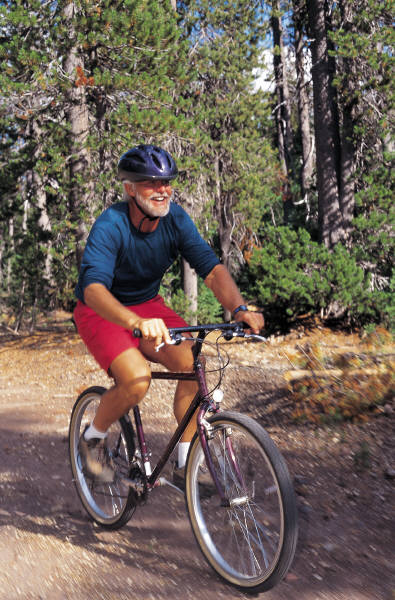
Bicycle to points of interest that are near your home. Try bicycles built for two (if you have an even number of family members). Or skate. Or skate board. Or maybe learn to use a unicycle, just for the fun of it. 

Celebrate the kids’ birthdays at water parks, skating rinks, or other areas that promote fun physical activity. Many venues are happy to host and organize kids’ birthday parties and can offer a wide array of fun, healthy, active things to do at parties.  

Take vacations that are physical. For example, go to Disney World, the Black Hills of South Dakota, Yellowstone National Park, the Grand Canyon, or the San Diego Zoo. A lot of walking is involved at these destinations.

Reward good behaviors with “gift certificates” that are redeemable for a fun physical activity.  For example, if one of your kids gets an “A” on a major test in school, give him/her a gift certificate that s/he can redeem for a fun physical activity of his/her choosing (i.e., a one-on-one, parent-child trip to a local water park . . . without “having” to share the time with siblings).

By following these tips, you can feel assured that you are doing your part to ensure that your kids are growing up fit.

Candi Wingate is an expert in the child care industry with over 20 years experience. She is the founder of Nannies4Hire.com and Care4Hire.com, and author of 100 Tips for Nannies & Families and The Nanny Factor: A Parent’s Guide to Finding the Right Nanny for Your Family

The Benefits of Diversified Training

Any form of repetition can cause someone to burn out. This remains true for running, biking, swimming, or any form of exercise. It can be easy for someone to get caught in a repetitious pattern, as many people are drawn to activities that are convenient. Running can be especially repetitive, you need to figure out how to switch up the routine to keep yourself interested and excited. You may have a scenic three mile loop right outside your front door, it easy to maintain your running schedule, so you run it all the time. Or, maybe you hate to run outdoors and you own a treadmill that you run on for an hour each day.
So, listen up runners, I’m speaking to you: Do you automatically roll out of bed, lace up the shoes and head out for the obligatory three-mile loop or jump on the treadmill? Are you still as enamored with it as the first time you ran it? I bet not. Has your running routine become a chore or a necessary evil?  You have the power to get out of your repetitious rut and mix up the run. As a runner, not only should you try new locations, but you should also try new surfaces and incorporate new techniques.  Better yet, throw in some cross-training as well to switch up your techniques. I know, you are a runner, so you just run. Why would you take a spin class, hot yoga, or strength train at a gym?  This goes back to the old saying: variety is the spice of life. Varying your fitness routine is essential to become a well-rounded runner. 

Here are four reasons why you should diversify your training and how to add a little ginger to your jog.
 

Achieve Results. Even if you are just looking to maintain your current fitness level, you can’t do it with the same old routine. Your body becomes efficient at your chosen exercise routine when it is repeated over and over. Your muscle memory decreases the amount of effort necessary and expended, thus decreasing your calorie burn. So, in this case, doing the same thing over and over again eventually will not have the same result! You must switch up the training by adding something new and cranking up the intensity. Go a little farther or a little faster on your run, or do both. Make one of your runs a tempo run.  Add-in some intervals or hill repeats. Pick one run a week and make that run longer, building by no more than 10% from week to week.  By adding any one or all three of these tips to your running routine, you will achieve new and improved results.
 

Muscle Activation. Running on different surfaces, or cycling, or even working out on the elliptical machine at your gym will activate a variety of new and different muscles. If your body is use to running on the treadmill, increase the incline or take a run through your local park. If you are a trail runner, try mountain biking. When you start to vary your terrain, add inclines and descents, cross-train, or even run in different shoes you increase your strength and activate muscles you may not be currently using. For example, swimming is a great full body workout with impact.  Believe it or not, upper body and core strength are important for a runner and swimming is a good way to help you achieve an all over strength gain. You can also incorporate strength or resistance training into your daily routine. This will make you stronger, fatigue less quickly and become more toned. After a strength training session, your body burns a lot of calories and needs additional energy to repair the muscle tissue just broken down, therefore, you will increase your metabolism. 
 

Fight Boredom – Stay Motivated. This step doesn’t require much explanation. Doing the same fitness routine over and over can get mighty tedious.  Diversifying your training will increase overall fitness level and will motivated you to run as well.
 

Reduce Chance of Injury. Running can lead to over-use injuries because of the repetitive nature of the sport and the impact of activity level on leg muscles and joints. Instead of engaging in running  multiple times during the week, hop on a bike or hit the pool. You’ll still get the aerobic workout, but you will be employing new muscles with less impact.

By Laura Ouimet, Dana Point Chamber of Commerce Executive Director, and a marathon/ triathlon coach and trainer. To learn more about the Dana Point Turkey Trot and to sign up, visit www.turkeytrot.com.

Make the Commitment: a 5k/10k Race on Your Horizon

Signing up to run a 5K (or even a 10K) run is the perfect way to kick-start a fitness routine and/or shed those unwanted pounds. For many beginning runners, the initial training routine can seem daunting. However, there are a few tips to follow that will not only make training manageable, but also fun. 
Many beginning runners chose to enter the race world by participating in a recreational run. By beginning with a structured and realistic training routine, you will begin to create a healthy and active lifestyle for yourself that you can carry through the holiday season and into the New Year.
Here’s a list of five essential tips to get you hitting the pavement and ready for the starting line, healthy and injury free.  
Sign up for the race. I know, I know, you don’t want to sign up until you know how you are going to feel or what your plans might be or if you will even want to run, but don’t wait! Without making the commitment to yourself and registering for the race, it is too easy to give up if the going gets tough or procrastinate until it’s too late. There is no time like the present; sign up before you lace up! It will be the motivation you need to complete your goal.
Set a realistic goal. It doesn’t matter how fast or slow you are to anyone but you. Set three goals per race: your big goal, your moderate goal and your minimum goal. The big goal is the time that may not possible to attain, but the one you’re aiming for. The moderate goal is a time you know will require an all-out effort to achieve, but it can be done. The minimum goal is the time that you must hit.  For example, if my average pace is 8:30 on a typical training day, my 5K big goal may be 23 minutes (sub 7:30 pace), my moderate goal may be 24 minutes(sub 7:45 pace), and my minimum goal may be 25 minutes (about an 8:00 minute mile pace).   
Create your program. 5K and 10K training plans are available online and can be obtained through a Professional Fitness Trainer, or located in fitness or running magazines. There are many training plans to choose from, so the trick is to find one that is simple, easy to understand and works for your lifestyle.  The basic training premise should be at least three days of running per week, with additional days of strength and/or cross training.  Once you have your program, write it on a calendar and stick to it!  Training is a matter of commitment. If you are committed, you will achieve your goal. Be committed! 
Get the proper running shoes.  Go to a specialty running store and have your feet and gait analyzed. Treat your feet right and they’ll protect the rest of your body. Running in the wrong shoes or worn out shoes could lead to injury and won’t bring you to the start line, let alone the finish line.
Start running!  Your training program should include at least one day of speed work, a day of moderate to easy running, and a day with a long run. Rest is important as you train and you have to let your body heal after each of your workouts. To keep your focus and motivation, make sure to mix it up. Don’t run the same route every time, download a new podcast or album, or try some fartleks (speed plays). 

By Laura Ouimet, Dana Point Chamber of Commerce Executive Director, and a marathon/ triathlon coach and trainer. To learn more about the Dana Point Turkey Trot and to sign up, visit www.turkeytrot.com.

Can’t Decide? Learn how! By Juli Shulem

First rule of decision making: More time does not create better decisions. In fact, it can decrease the quality of your decision. Decision-making challenges often leave people stuck. Below are 5 easy tools you can use immediately when faced with a making a tough choice.

Consider how important the decision is and how much attention it really deserves. If you spend all your time worrying about it, you may miss the opportunity that it offers altogether!

Informed Decision: Gathering the right data in order to make your decision is often the very first step. If the decision warrants it, learn what you need to know first. Maybe you are choosing between several options. Limit your decision to just a select few, and decide from there. Trying to learn about every single option out there may mean never having time to make the decision OR make use of the item you were trying to select in the first place. While more information may help, dragging out the process without a deadline will create anxiety, not results.

Pros & Cons List: Writing down a list of the benefits as well as the consequences of a decision can often point us in the direction to head when it’s a close call.

Consider Projected Outcomes: Similar to listing pros and cons, often listing what the outcome of each decision would be can help us choose the best scenario for our situation.

Create a Deadline: Taking forever to decide on something can literally lead to the opportunity disappearing, or can result in feeling overwhelmed. Circumvent this by giving yourself a deadline. Put it in your calendar and plan out the steps needed to come to a conclusion. Deciding now frees up your most valuable asset: time.

Use a Mind-Map: These allow you to put all the aspects about the decision in a visual image so your mind stops going around in circles. Often the decision will almost make itself once it’s out of your head.

Begin today and make every decision as soon as you have a reasonable amount of information. Decision making is a skill that with practice becomes easier over time.

Contributed by Juli Shulem (jshulem@gmail.com/805-964-2389), Efficiency/ ADHD Coach. www.julishulem.com, Efficiency Expert since 1984, and author of the eBook, Order! A Logical Approach to an Organized Way of Life, www.getordernow.com

Get Positive by Juli Shulem

We can all find something to complain about rather easily, but where does the complaining lead us?  Stop and think about the amount of energy wasted on negative thinking. Break the negative pattern in two steps!

Step One. Complaining and negative thinking really depletes positive energy, leaving debilitating negative energy. In other words, that which you spend time thinking about is what you will tend to manifest. Therefore, constant complaining could mean you may be bringing depleting energy into your world.

Are you a constant complainer? Ask yourself:

What do I complain about the most?
What has the complaining or negative thinking brought into my life?
Has anything GOOD come from the complaining?
What BAD has come from the negative thoughts?
If I were to become more positive, how would that change things?

Now try this:
Catch yourself being negative!
Notice when you are complaining!

Here’s a quick visual: place a jar on the counter and put in a quarter every time you catch yourself complaining. (Remember the goal is to keep the jar empty!) However, if the jar becomes full, think about donating the proceeds at the end of the month, at least something positive will come from all that negative thinking!

Step Two. Do you have a certain person in your life that exists primarily to listen to your complaints? Release this individual from being subjected to your continued negative thinking. Make it a conscious daily goal to be positive.

Becoming aware of the negativity is the first step to improving your mindset. The second step is to get busy and do something positive!
Contributed by Juli Shulem (jshulem@gmail.com/805-964-2389), Professional Organizing Coach specializing in those with ADHD. www.julishulem.com, Organizing Expert since 1984, and author of the eBook, Order! A Logical Approach to an Organized Way of Life, www.getordernow.com

Simplify to Sanity by Juli Shulem

Have you ever wondered what drives you to the point of feeling crazy? Could it be that you are just doing too much? Perhaps there is just too much of everything in your life pulling you from those things that are really important and serve your true values.

Here’s How to Achieve Balance:

When you find yourself wishing you didn’t have to do this and that, or thinking you’re wasting your time with certain tasks, it’s time to reassess your priorities.

Do you feel busy all day long and yet feel like you haven’t accomplished anything worthwhile? This happens from having spent the vast majority of your time dealing with tasks that are NOT fitting within your priorities and values. In essence you have not made choices of what to do in your day; you have allowed problems to choose you. Doing so, results in consuming your time fixing problems, rather than being proactive about accomplishing what is meaningful and important to you and your family.

Three Steps to Simplify Your Life

Learn to say no, to yourself and others. You know what you must do and what you can delete from your life. Be mindful before making any commitment of your time and determine the worth of the investment.

Plan Ahead. Write down the next day’s tasks the night before to begin each day with less stress. Prepare what you are able the night before. Leave big, readable notes in obvious places. Don’t leave something to the last minute.

Complete responsibilities. Sounds simple but many individuals go for that all too common multi-tasking concept that often backfires. Finishing something feels wonderful, so finish what you start. Stay on track with the most important item on your list and only when that is completed, go on to the next item. 

Contributed by Juli Shulem (jshulem@gmail.com/805-964-2389), Professional Coach focused on helping people get more organized. www.julishulem.com, Organizing Expert since 1984, and author of the eBook, Order! A Logical Approach to an Organized Way of Life, www.getordernow.com

Bicycle Riding Fun by Nancy Maier

Cycling is exercise and fun at the same time! Here are just a few out-of-the-box options:

Incorporate bicycle riding into your vacation. Before heading out on your travels call the chamber of commerce at your destination and ask about bicycling opportunities. For example, if you plan to visit Boston, Washington DC or Denver you don’t have to own a bike to explore the city on two wheels. These cities all have bike share programs. Bike rentals are available for a few dollars at one of the hundred bike stands throughout the each city. Explore the city on your rented bike, and then simply return it at the end of the day at another bike stand.

Take a self-guided tour. Many cities have created safe bike lanes not only for cyclists commuting to work, but for visitors sight-seeing on two wheels as well. If you have your own bike and want to explore beyond the city limits, there are websites with bike routes for self guided cycling.

Ride for a cause. Charity events offer a planned, supported route with inexpensive overnight options for multi day rides. Novice cyclists often fear the commitment of riding to support a nonprofit. However, what better excuse to get in shape? Many people find that each time their ride in preparation for the event, they’ll be stronger on the hills and be able to ride a little farther each time.

Sign up for an organized group tour. If you are looking for a group adventure or a more challenging experience, try an organized group tour. It’s a great way to get in shape! Many consider organized tours as the most desired option, as they may offer self guided portions, as well as guided portions.

Don’t forget that a bike helmet is a must for every bike ride. Wearing a helmet will protect against injury as well as increase visibility to cars, pedestrians and other cyclists.

Nancy Maier created Pedaling.com with over 1000 free self guided bicycling routes throughout the US and eastern/western Canada. Pedaling.com has maps and cue sheets for routes in all 50 states. Cyclists can download maps, cue sheets and information about each route.

Attacking Clutter by Juli Shulem

According to the American Demographic Society, Americans waste more than 9 million hours each day looking for lost and misplaced items. Cleaning professionals say that getting rid of excess clutter would eliminate 40% of the housework in an average home. And about 80% of the clutter in your home is a result of disorganization, not lack of space. It would make sense then, to begin by organizing your living and working environments, particularly if your office happens to be in your home.
Start by making a list of all the areas needing work. Just making this list and putting it on paper where you can look at it and acknowledge it usually starts the ball rolling. And where, you might ask, does the “ball” start its roll from? THE MESSIEST PLACE ON YOUR LIST! Why the messiest? It’s the place which grates on your nerves the most and the place which, once organized, will give you the greatest sense of satisfaction.
Here are 5 tips to get started:
Prioritize. Start by going through the space and focus on getting rid of unused, unwanted, and useless items FIRST.  This will give you some clarity immediately and allow you to see what you have left that you may wish to actually hold onto.
Downsize. During the process of purging refrain from shopping and adding to the clutter thinking that more things will help you get better organized. Stay on track with REMOVING items and that’s all.
Organize. As a regular practice take a few extra minutes to put things away in their proper places rather than shove them into the nearest place just to get them out of the way.
Eliminate extras. Get rid of extraneous things lying around the house. These items constantly remind you of another insipid task you didn’t do yet. If you have an item you need to return, just put in it a bag along with others and put the bag in the car, now.
Return borrowed items to their owners. Be careful not to borrow items if you are prone to damaging or losing things in general. You will then end up needing to replace the item, or worse, learn that it is irreplaceable. After you have returned something, you can stop thinking about it, nor will you need to find a place to store the item!

Excerpted and modified from Order! A Logical Approach to an Organized Way of Life. To order the ebook go to www.getordernow.com. Juli Shulem has been an Organizer/ADHD Coach, Efficiency Expert since 1984. She is also the author of Home-Based Business Mom, A Guide to Organizing for the Working Woman. Contact Juli at www.julishulem.com or jshulem@gmail.com.

A Successful Summer by Niels Johnson-Lameijer

Motivate, breakdown and celebrate.

The season of summer fun has started, so how can we maintain, and even increase our motivation when the sun keeps calling us out to play? Having a strong commitment to our end desired result is a key component to ultimately realizing a goal or dream. Goals give us direction and add meaning to our lives. Even though it is important to think big when crafting goals, a target too far out of your reach can end up becoming paralyzing and discouraging. Here’s how to do it right:

The first step to motivation is to simply set a goal. What do you want to accomplish? Each one of us approaches realizing our goals differently. Some dive into it head first; some plan extensively and proceed with caution. Write your goal down, details and all!
The second step is to believe that the ultimate goal is achievable! Based on this belief, ask, “what can I do today (or this week) that gets me closer to my goal?” The answer to this question will help breakdown the larger goal into smaller more tangible targets to accomplish in the very near future. Marking these smaller tasks off your to-do list will give you a feeling of accomplishment and will move you closer to your long term goal. When jotting down the smaller action steps, make sure that the list is manageable. Make it easy and accessible to insure that by the end of the day you are able to mark things off. This will create momentum, so add some to-do’s that you know you will easily achieve.

The final piece of the motivation puzzle is to CELEBRATE! At the end of each day, write down successes you achieved that day. Write down at least three every day, no exceptions, and celebrate them!

Niels is an internationally certified Corporate Coach and Life Mastery Coach. He guides passionate individuals to raise productivity and realize the life of their dreams, both in a corporate and private environment. For more information, visit www.nielsjl.com or email Niels at niels@nielsjl.com or call 805-617-3513.