April 17, 2026

Efficient Fitness by Andi Singer

No matter what your goal is with your fitness and nutrition, you should aim to be efficient with both. You don’t need to spend three hours at the gym to lose weight, and there’s no need to starve yourself either.

Here’s a look at a few variables to consider whether you are trying to lose, gain, or get better at a particular sport.

Looking Beyond Calories

Too many people focus solely on calories in and calories out in regards to nutrition. True, you will lose weight if you expend more calories than you take in, but health and performance should be taken into consideration as well. Alternatively, to gain weight you must eat more calories than you burn.

You will get ideal results if you focus on keeping your diet rich in whole foods, proteins, and healthy fats. Focusing on macronutrients as well as calories will ensure that you feel full and have the energy to play sports or get through your workout routine without feeling tired or sluggish.

Supplement Where Need Be

It is also important to consider supplementation of nutrients your natural diet may be lacking. Women especially need to consider iron and calcium, and a high-quality multivitamin can help meet those needs. Speak to your doctor about your individual health.

If you have a high activity level whether you lift weights, run, or play sports, it’s also important to consume sufficient enough protein. If you are not a big meat-eater, you might want to consider supplementing your diet with nutritional shakes or bars to boost protein intake.

Train Smart Not Long

Cardio is not the only way to lose weight– in fact, it is not the most efficient either. When you do aerobic exercises, you essentially train your body to be efficient and burn fewer calories as you work out. That is the opposite of what we want!

Instead, do exercises that use the most energy possible in the least amount of time as possible. This might include sprinting, plyometrics, or lifting heavy weights. If you do competitive sports, consider supplementing your workouts with activities that will help improve your skills at that sport.

Andi Singer is a blogger working with a health management resource program based out of San Diego. She is both a personal trainer as well as a competitive athlete, and specializes in weight loss and performance. Go to www.ihmonline.com for information.

Summer Exercise by Sarah Johnson

As it seems we may have finally made the transition (albeit abrupt!) to summer weather, it’s now time to get outside and enjoy all of the activities we haven’t been able to all winter!

Living so close to Lake Michigan, I’m fortunate to have so many water friendly activities in which to participate. As always, you need to be a good swimmer and comfortable in the water before trying any of these out. And be sure to let someone know where you’re going! Always consult your physician before beginning exercise.

Here are a few of my summer exercise favorites by the water:

Stand Up Paddleboarding: This very popular water sport uses a paddle board (think long, flat surf board) and one single-sided paddle. While standing, or kneeling if you’re just starting out, you need to balance as you move through the water’s waves and ripples. Flat water is best for this sport, although with a little practice and Core strength, you’ll be skimming the surface in no time!

Kayaking: This is a terrific upper body workout. Sitting inside the kayak and using a double-sided paddle, you’ll propel yourself forward with long strokes. Your arms, shoulders and upper back muscles all need to work together in order to move forward. This is also a great buddy activity, if you can rent a kayak built for 2!

Sand Running: The effort that running in the sand requires is much greater than on a dry, hard surface. This is a great way to mix up your training. Choose a shorter distance, and break it up into short and longer sprints on the beach. Walk in-between the sprints so you have time to recover (if you’ve never run on sand before, you may find that it’s harder than you think!) And pack a Frisbee or small ball to reward yourself with a game of catch after the hard part is over!

Follow Sarah on Twitter @SarahJChicago

Budget-Friendly Exercise Equipment by Nicole Bryan

Getting healthy doesn’t have to cost a lot of money. Check out the following fitness equipment that costs about $20.00, and even less if you catch them on sale! (Consult a fitness professional for specific recommendations as all equipment options may not be appropriate for everyone.)

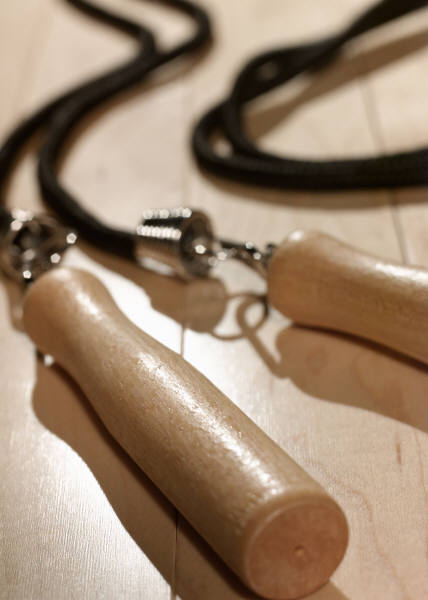
Jump Rope. Perform jump rope intervals in between your strength exercises. Begin with 10 second intervals and build up to 2 minutes or more. Or simply jump rope for an unaccustomed cardio workout.

Pedometer. A basic pedometer that attaches to your clothing will provide helpful feedback to gauge and adjust your walking program. (A simple pedometer offers strictly total step information, in contrast to the computer friendly options.) The Surgeon General’s Call to Action to Prevent and Decrease Overweight and Obesity recommends we each cover 10,000 steps every day for wellness. Use the pedometer the first few days to track how many average steps you’ve been walking. The Surgeon Generals’ plan recommends adding 500 steps for each two week period, until 10,000 steps/day is reached.

Exercise Band. Exercise bands provide a versatile and compact strength training alternative to weights. Read the package to choose a light-resistance band if you are new to exercise.

Medicine Ball, also called a Weighted Fitness Ball. The weighted fitness ball may be used like free-weights. Choose a 4-6lb ball if you’re new to exercise.

Fitness Step. A stepping workout is a fun way to mix up your routine and strengthen your legs at the same time. Follow the manufacturers DVD included with the step for instructions and workout options.
Ankle/Wrist Weights. Ankle and wrist weights may be used for upper and lower-body strengthening.

Stability Ball. Read the package to choose the appropriate size stability ball for your height. Follow the instructions to inflate safely.

Getting fit doesn’t have to break the bank. A fun option is to go shopping with friends, each purchase a different piece of equipment, then trade every few months. Sharing and swapping exercise equipment is a built-in unaccustomed exercise guarantee, at a reasonable cost. Check out the deals at your local sporting goods store this summer. You’ll be amazed how many different workout equipment options are available to us.


Are YOU right for your exercise? By Nicole Bryan

Fads and trends will always come and go. The next latest and greatest quick-fix is just around the corner. Your best friend swears her class is the absolute best way to lose weight. Your boss is adamant that her way is the best way ever! How do you know what’s best for you? Instead of asking yourself if an exercise is right for you, ask are YOU right for the exercise. Here’s how to tell:

What’s your goal? First determine what you’d like to accomplish. If you’d like to run a 5K in a certain time, then your program may be different than if you’re wishing to build strength for your job. Sounds like common sense, but many aren’t aware of what they’re goal is. Determine your goal, and then determine which exercise.

Are you right for your exercise? For example, you’re 2 months out of major back surgery perhaps now is not the time to participate in that karate class where challenging single-stance movements are required. Or you’re just getting back into the swing of your routine after a 20 year sabbatical, maybe now isn’t the time to jump right into a 5 day a week high-intensity circuit class. This point may be summed up in the following question; why do you want to do that particular exercise? Keep in mind this doesn’t mean the certain exercises are bad or impossible; this simply means appropriate exercise/exercise progression is specific to the individual and determined by what one wants to accomplish.

There is a principle called the SAID Principle that reinforces this idea. The SAID Principle stands for Specific Adaptation to Imposed Demands. This principle simply states that our body will adapt to the load under which it is placed. In other words, we should do specifically what we’d like to accomplish. For example if we want to be a runner, then we’ll need to run. If our goal is to increase strength to be able to lift our children easier, then we’ll need to perform strength training exercises. If our goal is to increase flexibility, then performing strength training three days each week while beneficial in general, will not improve flexibility. If our goal is to be able to walk around town with less effort, than performing 100lb power-cleans may not be the most appropriate exercise. This is not to say 100lb power-cleans are a bad exercise, it just depends who wants to do them and why.

Every movement performed in our workout should serve a specific purpose in moving us towards our goal. Enlist the assistance of a Fitness Professional to create a program based on your goals.

Find your Fitness FUN

Bored with your workout and in need of motivation to continue? Join our Fitness Community on Twitter!

Come CHAT FITNESS with us every Monday at 5pm(pacific)/8pm(eastern) via #HealthyWayMag. We trade workout ideas, exchange exercise tips and super-charge your fitness motivation!

Fitness motivation starts with finding the FUN in your fitness. A fun workout means you’re more likely to be consistent with your workout. Workout consistency is where results and fitness improvement happens. So, what are you waiting for? Find your fitness FUN!

THANK YOU to the following Chat Sponsors for helping us share motivation to live healthy and fit.

Drink Chia. Drink Chia is an innovative all natural chia seed beverage that offers an alternative to sugary and stimulant laden drinks. Drink Chia provides enhanced hydration, endurance and immune system support. They are the only chia drink that has the power of chia with B-complex vitamin, selenium and zinc as well as being rich in plant sourced-omega-3 fatty acids. Follow them on Twitter @DrinkChia.

Shaping Her Esteem. Shaping Her Esteem (SHE) promotes the participation of girls in physical activity to increase their health and wellness. They share nutrition tips, motivational videos and facilitate boot camps for young girls. Shaping Her Esteem is looking for girls between 8-16 who would love to write about her experiences in sport/dance, and to share positive experiences in physical activity! Follow them on Twitter for more info @ShapeHerEsteem.

KIND Healthy Snacks. They are your healthy food choice with a positive mission of promoting kindness. With a variety of snacks from which to choose, you’ll rest assured you’re feeding your fitness with healthy and nutritious ingredients.  @KINDSnacks

Healthy Eating for Life by Gretchen Scalpi, R.D.

Strategies to Help You Stick with a Healthy Eating Plan for Life

How many times have you started a healthy eating plan only to have your good intentions gradually slip away? When that happens, you may find yourself back where you started and frustrated with your lack of ability to keep on track. Most people know how to eat right, but maintaining what you have started is another matter.

Here are five strategies to help you make healthy eating habits stick.

Set reasonable, attainable goals:

Decide what your most important goals are and write them down. Goals need to be specific and measurable. Spell out what you will do, how often and when.

Learn from others:

Changing lifestyle habits are often easier said than done. One way to come up with goals that will work for you is to discuss your goals with a nutrition professional. Choose someone with the experience and educational credentials that makes them a nutrition expert, such as a Registered Dietitian.

Keep a journal:

When learning new skills, write down what you are doing. Keep a written journal of what you eat and review your journal at least once daily. Writing it down as you go lets you know exactly what you are eating and gives you quick insight into what areas need improvement.

Accept that you will have some setbacks:

It’s human nature to revert back to old behaviors, especially when social occasions or unexpected events occur. Accept the fact that sometimes life gets in the way of your plans! Don’t take the “all or nothing” outlook, and feel as though you have failed simply because you had a setback. If you have a setback, decide upon a time in the very near future to resume your plan, then just start again.

Check in with your progress:

The only way to know how well you are doing, is to keep track of your progress and see how far you have come. Besides keeping a food journal, it can be helpful to make a list of the improvements you have actually made along the way. Seeing your “improvement list” validates all the little things you have already done and is a great way to keep yourself motivated.

People that have a well thought out strategy for making healthy lifestyle changes are the ones who realize success. Lifestyle changes take time, but a systematic approach will help you maintain what you have changed. Give it a try!

Gretchen Scalpi is a Registered Dietitian, Certified Diabetes Educator and Certified Wellcoach. She is the author of “The EVERYTHING Guide to Managing and Reversing Pre-Diabetes 2nd Ed.”, “The EVERYTHING Diabetes Cookbook 2nd Ed.”, “Virtual Grocery Store Tour: Getting The Most Nutrition Out Of Your Food Shopping”, “Pre-Diabetes: Your Second Chance At Health”, “The Quick Start Guide to Healthy Eating”, “The Quick Start Guide To Pre-Diabetes” and “Quick Start Recipes For Healthy Meals”.  Read her articles, recipes and blog at http://www.nutritionxpert.com and learn more about her books at http://www.gretchenscalpi.com.

Do You Believe in Life-Long Learning?

Get Fit Quick Tip

Do you believe in life-long learning?
Set a goal to learn a new exercise or workout skill. Just as our body adapts to our exercise, so does our mind. Regularly rotating in new activities keeps motivation high, interest fresh and fitness gains coming. Set a goal to try a minimum of one new workout or type of exercise each month. This could be a simple as implementing a new walking route on your lunch break, asking to tag along to your friends yoga class or checking out a sporting club in your town.

Check back often for your useful and practical healthy living and fitness tip! Our Get Fit Quick tip will always be easy to remember and you’ll be able to implement it the very same day. Our tip will be so clear and concise you’ll be motivated to forward it to all your friends and family to inspire them to live healthy and fit as well.


Trail Fitness by Nicole Bryan

Looking for outdoor fitness? Consider heading to the hiking trails for exercise. Try the following stretches after your next hike. As always, consult your physician before exercise.
 

Standing Figure-4 stretch:  Cross your right ankle over your left knee.  Bend forward from your hips and sit back feeling a stretch in your right leg.  Hold on to a stable object for balance. Repeat with your left ankle crossed over your right knee.

Standing Hand-to-Ankle stretch:  Bend your right leg and hold your ankle with your right hand behind your body feeling a stretch in the front of your thigh. Release, and repeat holding your left ankle with your left hand.

Standing Lunge stretch.  Step back about three feet with your right leg into a lunge position.  Push your right heel down and bend your left knee until you feel a stretch in the calf of the right leg. Release, and repeat stepping back with your left leg.
 

Standing Hamstring stretch.  Place your right foot into an object in front of you about knee-height.  Lift your chest and bend forward from your hips, until you feel a stretch in the back of the right thigh. Release, and repeat with your left foot.

Stretching after your hike is a nice transition from exercise to rest. Hold each stretch for 10-15 seconds and never stretch into pain. Add deep breathing into your stretching regime. Inhale deeply while moving into each stretch and exhale while relaxing further into the stretch.

Is Heart Rate Training for You? By Jason Saltmarsh

Would you like to run longer and faster with less effort? Heart rate training can help you reach that goal. A heart rate monitor provides real-time biofeedback during your workouts to help you stay in the optimal training zone. Consult your physician to determine your specific target heart rate zones as they vary based on fitness goals, medications and state of health.

Determining Your Maximum and Minimum Heart Rate
To find your target heart rate zone, you’ll need to know your maximum heart rate and your resting heart rate. Then, you can determine several training zones between those two extreme values. The idea is that you use the heart rate data during your workout to stay in the intended heart rate zone. Some people choose to run by pace per mile speeds, while others by their ability to carry on a conversation. Heart rate training is based solely on BPM (beats per minute).

The American Heart Association recommends a method for identifying your maximum heart rate. Their method is to simply subtract your age from 220. For example, if you are thirty years old, you get the following: 220-30=190.

Determining your resting heart rate by taking your pulse for one minute just after waking up, or while sitting down relaxing. Athletes usually find their resting rate is around 60 BPM.

Determining Your Heart Rate Training Zones
Variety is the spice of life and the cure for ‘lazy’ running. Runners aren’t lazy, but their approach to training may be if they’re doing the same thing, at the same effort, day after day. To see improvements, you’ll need to mix things up and challenge yourself in a variety of ways.

The advantage to heart rate training is that it’s based solely on your own biofeedback. External measures such as pace per mile do not interfere with your results. For example, if you run a flat 6 mile course on a cool day at 8:00 pace, how does that compare to running 6 miles on a hilly course under a scorching sun at 8:30 pace?

Final Thoughts
Training principles remain the same no matter what method you use. A blend of long and short, easy and hard, fast and slow, and plenty of rest will keep you fit and healthy. Heart rate training offers you an exact measure of effort and gives you the certainty of knowing that you are training at your intended level of exertion.


Jason Saltmarsh is an competitive masters runner at distances ranging from 5K to the half marathon. In November 2013, he raced his first 26.2 at the iconic New York City Marathon. Jason’s goal is to share with others the benefits and joys of running, fitness and healthy living. For more information, please visit saltmarshrunning.com

Get Moving!

Get Fit Quick Tip

Circuit train! Adding cardiovascular intervals in between strength training sets is a great method to an efficient time-saving workout. Simply alternate 1 weight-set, immediately followed by a cardio interval, until all sets are complete. Be sure to include a warm-up and cool-down.


Make our Get Fit Quick column your daily go-to for motivation and inspiration to live healthy!