June 5, 2026

Extra Hour of Daylight means Extra Exercise Opportunities by Tanja Djelevic

With the arrival of Daylight Savings Time, you now have an EXTRA hour of sunshine! Spring is the best time of year to take your workouts outside, and here are a few fun and energizing ideas:  

Greet the sun: Find out what time the sun rises (http://www.sunrisesunset.com), and get outside to do your workout while watching the sun wake up.

Run: Go on a run through your city park to check out the signs of life and spring. There is nothing more satisfying than feeling your surroundings wake up from the winter sleep.

Hike: Whether you go on an early morning hike in your neighborhood or a week-long expedition to someplace new, hiking is a great way to leave your stress behind. Just remember to drink plenty of water and wear sunscreen!

Cycle: See the world and get your aerobic exercise! You can find great bicycling routes on websites like http://www.mapmyride.com or http://pedaling.com.

Socialize: Now that you have an extra hour of light, invite a family member or friend to join you for an after-work walk or jog. Get some fresh air and catch up at the same time! 

Organize: Create a fitness triathlon for a group of friends or coworkers. Take them all outside for a weekend extravaganza and choose 3 fun and athletic activities to do as a group! For example, you might do a 5K or 10K group run, make a stop at the Roman Rings or Rope Climb, and then finish off with a great yoga session on the lawn! 

Tanja Djelevic holds a Masters Degree in Psychology, specializing in Stress Management Therapy and Behavioral Life Coaching. She is a NASM Corrective Exercise Specialist (CES) and has fitness certifications from Reebok, AFAA, ACE, Powerhouse Pilates and C.H.E.K Institute. She has worked with a myriad of celebrity clientele including Matt Dillon, Pink and Rachel Weisz. Connect with Tanja at www.loudfitness.com

Top Tips for Active-Aging

This article is brought to you by Maggie Ayre. Maggie is the UKs Leading Fitness Coach for Teenage Girls. She has recently developed the 3G Program designed to be run in schools and youth clubs with the aim to get every teen girl active. She also offers Personal Training for Teenage Girls in person and via email, skype and video sessions. To learn more visit: www.maggieayre.com

Top Tips for Active-Aging

Active-aging expert offers “e-tips” for attaining and maintaining health.

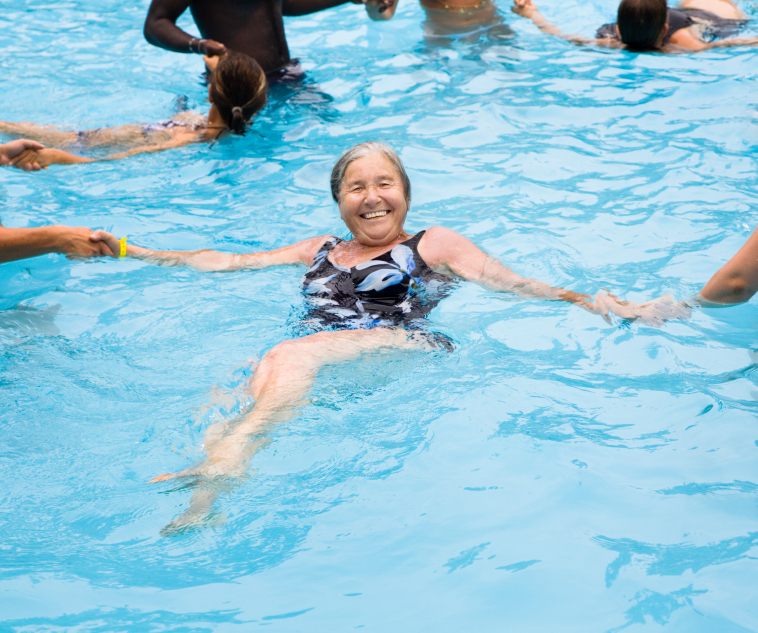
Whether you’re turning 30, 40, 50, 65, or 90, there’s no reason to assume you’re doomed to decline after a certain age—especially if you’re doing everything you can to stay healthy and active.”

Colin Milner, CEO of the International Council on Active Aging offers the following “E-tips” to help you extend a healthy life, or embark on one if you haven’t yet done so.

Expectations. If  you’ve been following a healthy lifestyle up ’til now, simply keep going; if you need to make changes, anticipate succeeding, not failing—and don’t let age be a barrier. Research has shown that thinking positively about getting older can extend your life by as much as 7.5 years.

Enthusiasm. Few people are thrilled with every aspect of their lives, but many have at least one area—family, friends, work, avocation—they feel good about. Identify an activity or connection that sparks your enthusiasm and make it your lifeline; try to extend that enthusiasm to other areas of your life.

Energy. Having the energy and motivation you need to age well are hallmarks of healthy living. If you’re fatigued all the time, don’t let apathy and lethargy bring you down; pursue a check-up to try to determine the cause—and the solution.

Eating. Eating a balanced diet and attaining/maintaining a normal weight are keys to physical and mental health; if you need to lose weight or make changes in your diet, keep your expectations high—you can do it.

Exercise. Staying physically active fuels the body and mind. If you’re already exercising regularly, keep it up; if you’re getting started, know your skill level, set goals, progress at your own pace, and be consistent.

Engagement. Volunteers have higher levels of well-being and life satisfaction than those who don’t volunteer; volunteering and other forms of civic and social engagement can play an important role in maintaining good health in later life. “Get involved,” Milner urges.

Emotions. Everyone feels down at times, but full-blown depression is a major cause of disability. If you’re feeling out of sorts for two weeks or more, talk with your doctor or take an online screening test at www.mentalhealthscreening.org/. In many instances, simply exercising and eating right can improve your mood.

Education. Life-long learning is important to living an independent and fulfilling life. Start now to learn a new area of knowledge or physical activity. It’s good for the brain.

Effort. Changing expectations and embarking on a new behavior takes energy and effort, but the results are well worth it.

Enjoyment. A healthy life generally is a joyous one. “Savor the process of being or becoming active, engaged, and truly alive,” Milner enthuses.

“Now is a great time to take stock and ask yourself, where do I want to go from here?” Milner says. “Emphasize the positive and don’t let your age, or anyone else, deter you.”

Colin Milner, founder and chief executive officer of the International Council on Active Aging® (ICAA), is a leading authority on the health and well-being of the older adult. An award-winning writer, Milner has authored over 250 articles. He is a Contributing Blogger to the US Department of Health and Human Services’ Be Active Your Way Blog, and has been published in journals such as Global Policy and the World Economic Forum’s Global Risk. He recently contributed a chapter to the book Global Population Ageing: Peril or Promise? (Published by the Forum in 2012.)

Warm-up this Winter with Healthful Soup Recipes by Kathy Smart

Great health begins with great nutrition. Try these healthy and hearty soup recipes to jump start your winter wellness plan.
 

Citrus Infused Carrot Soup (8 servings)

Ingredients:

1 pound of carrots, chopped
1 tablespoon of butter
1 orange
1 cup of leeks, chopped
 ¼ teaspoon of nutmeg
1 teaspoon of salt and pepper
6 cups of chicken or vegetable broth
8 tablespoons yogurt
Fresh cilantro

Recipe Accolades:

The subtle taste of orange in this recipe always keeps guests guessing as to identify the special taste.  This soup is perfect after a long walk in the snow!

Dairy Free
Easy to Make
Gluten and Wheat free
Low in fat
Low Glycemic
No Added Refined Sugars
Vegetarian (if made with vegetable stock)

Directions:

Melt butter over medium heat in a large soup pot.  Add carrots and leeks and let cook gently for 10 minutes allowing the vegetables to soften.

Cut the orange in half and juice both halves and add juice to the vegetables.  Reserve the orange peels.

Add the chicken stock, and season with nutmeg, salt and pepper.

Take reserved orange peel and puree in a food processor and add to the soup.  Let soup simmer for 30 minutes over low heat.

Puree with blender. Adjust seasoning to taste.
 
Serve with a dollop of yogurt and a fresh sprig of cilantro.
 

Smokey Red Pepper Soup (4 Servings)

Ingredients:

4 sweet red peppers
2 tablespoons of butter/ coconut oil if dairy intolerant/vegan
1 cup onion finely chopped
1 teaspoon dried rosemary or one tablespoon fresh
5 cups chicken or vegetable stock
3 tablespoons tomato paste
1 teaspoon sea salt
4 teaspoons of coconut milk or whipping cream

Recipe Accolades:

The smokiness of the roasted red pepper blends together with the aromatic undertone of onion and rosemary to create a smooth soup without the added fat from cream.  Serve this soup with a sprig of fresh rosemary on top. Red peppers are low in calories and high in vitamin C, which helps to fight infections, heart disease and cancer.  Other key nutrients found in this colourful vegetable include calcium, iron, magnesium, phosphorus, zinc and B vitamins just to name a few.
 

Directions:

Preheat oven to broil. 

Put red peppers whole on baking sheet under broiler and turn regularly until the skins have blackened.  Remove peppers from oven and place into sealed plastic bag and let stand for 20 minutes.

Peel off skin from peppers and remove seeds and stem.  Half peppers while trying to save any juices that run from pepper.  Set aside.

Melt butter/oil in a saucepan and add onion and rosemary, cooking gently over low heat for 5 minutes. 

Add peppers with juices, and stock and bring to boil.  Reduce heat and simmer for 15 minutes.  Add tomato paste and sea salt.

Remove from heat and puree with an immersion blender until smooth.  Strain soup through a fine strainer and reheat in saucepan.

Serve soup hot or chilled and garnish with pepper, paprika and a delicate swirl of cream or coconut milk on top.
 

Curried Butternut Squash and Apple Soup (10 servings)

Ingredients:
2 cups onion, chopped
2 tbsp. coconut oil
1 tbsp. ground cumin
1 tbsp. garam masala
2 tsp. ground coriander
2 tsp. sea salt
6 cups butternut squash, peeled and chopped
2 cups sweet potato, peeled and cubed
2 cups apples, peeled and chopped
6 cups vegetable broth, low sodium 
1/2 cup coconut milk

Recipe Accolades:

Dairy Free
Gluten Free
Vegan


Directions:

In a large soup pot, sauté the onions and coconut oil until the
onions are soft and translucent.

Add all spices, sea salt, vegetables, apples, broth and coconut
milk to the onions.

Bring to a boil, then lower heat and simmer for 30 minutes until the ingredients are soft and tender.

Puree with a blender or immersion blender. Serve soup with a
swirl of coconut milk on top.

Kathy Smart, TV nutritionist, host and chef of ‘ Live the Smart Way ~ the world’s first vegetarian and gluten free TV show and author of  Live the Smart Way. More information may be found on  www.livethesmartway.com.

Ask A Pro by Candi Wingate

This article is brought to you by Nicki Anderson. Nicki Anderson has owned and operated Reality Fitness, Inc. Personal Training since 1992. Nicki lectures all over the world teaching trainers the secret to success in owning and operating their own personal training business. Nicki is the author of 4 books, including 8 Secrets to Creating a Successful Personal Training Business. A few of Nicki’s lecture topics include, Outrageous Customer Service, Biggest Mistakes Personal Trainers Make, Women in Business-Finding the Balance and many, many more all pertaining to business. As a successful business owner, author and columnist, Nicki also consults with personal trainers providing them with tips for success. To contact Nicki, email her, nicki@realityfitness.com or via her website, www.realityfitness.com 

 Question: How do I prevent my teen from getting discouraged when not making the sports team at school? How do I help him build self-confidence?  –Marc in Minneapolis, MN.


Answer:
We, as parents, want our children to grow up healthy, happy and self-confident. It is easy to determine what steps we can take to foster good physical health: proper nutrition, regular medical exams, regular exercise, etc. However, fostering happiness and self confidence can be more elusive. Valuing our children as individuals, communicating our love for them, and letting them feel truly heard are some of the many components to fostering happiness in our children. Fostering self-confidence, however takes effort, awareness and sensitivity in specific areas.

Acknowledge Self Confidence as a Learned Attribute. Self-confidence is, to some degree, a learned trait. That is to say that we generally start as teenagers with some degree of uncertainty. When we attempt an accomplishment, it is our success or failure, as well as the feedback that comes to us as a result that determines whether our level of self-confidence is bolstered or diminished.

Maintain Momentum of Small Successes. For example, if a third grade boy tries out for junior football and is chosen for the team, the boy will learn that he is strong and capable in this context. He will subsequently interact with other youth who also consider themselves strong and capable in the sport of football. These youngsters become friends which makes the boy feel good that others enjoy his company. This will further reinforce the concept that he is a good person and worthy of friends. As his football prowess grows, so will his assessment of his own capability. Thus, by participating in football, his self-esteem has been bolstered in athletic as well as social contexts.

Be Context-Specific when Offering Feedback. Just because the desired accomplishment didn’t come to fruition, doesn’t mean self confidence should lower. For example, if this same boy tries out for soccer and is not chosen for the team, the feedback he receives as a result of this perceived failure will determine the effect of this event on his level of self-confidence. If he receives feedback that he did very well, however he was just a not as fast of a runner than the boys that were chosen for the soccer team, the boy will understand that his not making the team is performance based. Choosing feedback that is performance based, instead of personally-based in most effective in building self confidence.

Watch your Words. Let’s follow the same example of the boy who did not make the soccer team. Maybe he was one of the youngest boys trying out, so therefore he may feel encouraged (he did well for his size and age), which bolsters his self-confidence. Conversely however, what if he returns home after try outs to report that he did not make the team and his parent provides the following critical in nature feedback, “you performed very poorly. What’s the matter with you?” The boy then internalizes this criticism as a personal innate flaw which then translates into diminishing his self-esteem.

Encourage Perseverance and Practice. Use small frequent experiences, regardless of the outcome to reward children’s participation and therefore begin lying down the building blocks of self-confidence. Continue trying-out, continue learning new skills and sports and continue to encourage him to make new friends and expand his social network.

Candi Wingate is an expert in the child care industry with over 20 years experience. She is the founder of Nannies4Hire.com and Care4Hire.com, and author of 100 Tips for Nannies & Families and The Nanny Factor: A Parent’s Guide to Finding the Right Nanny for Your Family

The Downside of Organization by Juli Shulem

The Downside of Organization.

It may sound ridiculous, but there can be a downside of being too organized. Here is a list of potential hazards you should be aware of:

You will find yourself with unexplained stress-free time in the course of a day because you will be able to find what you are seeking in a matter of minutes.

You will be able to dress and get ready for your day faster because you can see all the items in your closet. Nothing will be shoved in the back of a drawer or laying on the floor of your closet or bedroom.

You will save money not buying something for the second or third time because you couldn’t find the first one you owned due to the clutter it was stuck under.
 
When cleaning you will get that chore done in record time because you aren’t forced to move piles and piles of items to get to the surfaces.

You will not miss out on opportunities because you will have everything you are interested in doing scheduled in your calendar – where you can find it.

You will not need to schedule time to purge closets and rooms or “get organized” because once you get to that place and learn to keep it that way – one doesn’t need to schedule time getting there. You have arrived.

You will not have the physical or mental complications associated with stress as you will no longer experience stress or overwhelm due to disorder.

And lastly, you will have free time. Most haven’t experienced that concept without sitting on the beach in the Bahamas, so allow me to remind you what free time includes. This is a block of unscheduled, unoccupied, unencumbered, ‘not busy’ stretch of existence. In other words – you get to simply exist and fill the space of defined time, or undefined if you are so lucky, where you can do what you wish, or simply do nothing at all. Words often associated with this are: Nirvana, bliss and pure joy.

So, if you’re unable to recall the last time a friend asked what you were up to today and you responded relaxing,  it’s time. Make today the start of a new lifestyle- make today the day you get organized once and for all! Decrease stress, decrease drama, decrease overwhelm and increase peace, breathing easier…and FREE TIME!

Contributed by Juli Shulem (jshulem@gmail.com/805-964-2389), Efficiency Coach. www.julishulem.com, Efficiency Expert since 1984, and author of the eBook, Order! A Logical Approach to an Organized Way of Life, www.getordernow.com

Getting Better (and More Fit) with Age by Nicki Anderson

As we age, our ability to burn the same amount of calories we did when we were 20 years old changes. The reason is our organs are not as efficient, our muscle mass diminishes and of course hormones play a role in body composition. All of these factors combined can result in weight gain and slowed or inability to lose body fat. Both of these are top health concerns for women according to the experts.
 

Here are three keys to managing weight gain:
 
Lift heavy weights. Not enough women are lifting weights, really lifting weights. Working with an appropriate amount of weight (1-5# weights are typically not enough) is essential to build healthy muscle mass. Walking is a wonderful activity and while it does burn calories, the outcome on body composition is different than that of strength training. There is also research showing that strength training plays a role in minimizing hot flashes.
 

Skip packaged foods. As for food, though many women diet to lose weight, the mistake they make is not paying attention to the quality of foods they consume. Firstly, focusing more on a plant based diet helps to regulate hormones and reduce symptoms of menopause. Secondly, eliminating any and all junk food that is boxed or processed is a good choice. Make your last meal of the evening your lightest meal. Many women who follow these guidelines for their nutrition notice a dramatic difference in weight and positive difference in how they feel.


Drop stress. Days are hectic, responsibilities are overwhelming and often the high stress levels are constant. Reduce stress with regular restorative exercise. Specifically check out your local yoga, tai chi or stretching class. Learning the art of meditation also helps to reduce stress levels.

Gaining weight in addition to the difficulty or slowed ability to lose weight makes for a tough duo. Granted, the challenges of menopause can play havoc with your body, but doing a quality check of your lifestyle factors will jump start your body’s fat burning capacity.
 

To jump start weight loss, evaluate your wellness program on a monthly (at a minimum) basis.
 

Examine your exercise program by asking three key questions:

Question 1: Are your workouts challenging?
Question 2: Do you finish each exercise session and know that you tried hard? Too often people get comfortable with their exercise and do the same thing day in and day out rarely challenging themselves. You’ve got to work out at a higher intensity and make your exercise time count.
Question 3: are you using weights that are challenging or simply going through the motions?

Next, evaluate food intake. Of course food plays a role in the weight loss equation and the most common mistake women make are eating the wrong foods and only paying attention to calories. It’s important to pay attention the types of foods you’re eating. Stay away from sugar (very common for women to over eat) and avoid any fried and processed foods. Also, just because something is healthy doesn’t mean you shouldn’t monitor portions. Portion sizes are often the number one weight loss blunder women make. Use a smaller plate, stick to one serving and always precede a meal with a tall glass of water.

Finally, remember body shape also changes as we age. The human body is made up of fat, lean tissue (muscles and organs), bones, water, and other substances. As we age, the amount of fat, lean tissue, muscle and organs get redistributed. For example, fat tissue tends to be more prevalent around the center of the body, abdominal organs and if you’re inactive, body fat may increase by as much as 30%. It’s also natural as you age to become shorter. Change in height is often related to aging changes in the bones, muscles, and joints. People typically lose about a half-inch every 10 years beginning around 40 years old. Once you reach 70, even more height may be lost each subsequent year. Bottom line, you may lose 1 to 3 inches in height as you age which will obviously redistribute your weight. In addition to the natural changes in the body, medication can also have an effect on the body shape.

Stick to the basics of physiology and biology to better manage the weight gain and slowed ability to lose body fat that may come with age. That means stick with proper exercise and quality nutrition! Be proactive about your wellness plan by evaluating your intensity and performing a quality check of your program in general. Be consistent and you’ll find it easy to become more fit with age!

Nicki Anderson
Columnist, Business Owner, and NASM Certified Trainer with over 25 years in the Health and Fitness Industry. She can be contacted at nicki@realityfitness.com or www.realityfitness.com.

Introducing Sports by Maggie Ayre

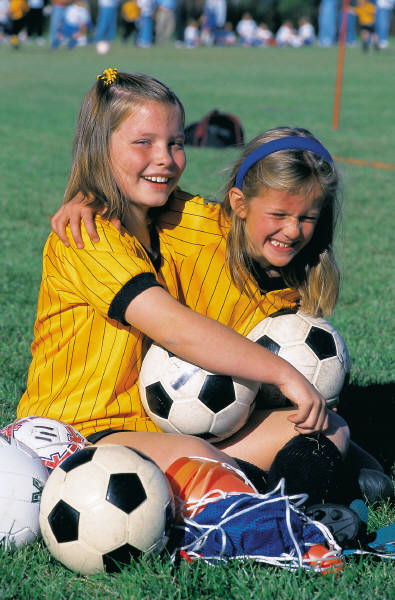
Research tells us that children involved in sports or regular physical activity are less stressed, perform better in school and enjoy better health- physical, mental and emotional. So, what’s the best way to introduce your child to sports and athletics to insure a positive experience for all?

How can a parent introduce sports/athletics to their child?  What is an appropriate age?

If you asked 10 different parents this question you’ll likely get 10 different answers. It very much depends on the individual child. Most children have the energy and interest to start afterschool and weekend activities when they are 5 or 6.  This is the ideal time to introduce something sporty once or twice a week. Choose the activity carefully based on your child’s interests and what their friends are doing. Their enjoyment is of paramount importance at this age.

Find a group with session specifically designed for children that include game based activities, learning basic skills and lots of FUN. Think outside the box when it comes to choice of sport – there are 100’s to choose from including karate, swimming, cricket, baseball, dance, soccer, ballet and so on. Or, a general fitness session may suit your child better. Use older siblings and school friends to help your child choose an activity. Also remember that kids of this age love to mimic their parents so find out if there is a youth section in your sport.

How hard should a parent push to promote their child continuing a sport if the child is resistant?

The parent needs to ask the child two important questions:
Why don’t you want to do the sport? 
Pushing a child to do something they don’t want to do so often backfires, however the situation determines the best course of action. For example, if your son doesn’t enjoy his karate sessions the 2-3 weeks before grading because they spend so much time practicing the techniques – if you encourage him through this, he’ll be proud of his grading result and start to share that karate is the best part of his week again!

What activity would you prefer to do?
Discourage from allowing your child to give up all sport and athletic activities in preference to non-active pursuits. Instead try to find an activity they will enjoy – something very different to what they’ve tried before. If they’re fed up with soccer, try swimming, if basketball doesn’t cut it anymore, try ballet. Allow your child to try lots of different activities until they find one they enjoy.

How should a parent approach a difficult or extreme coach?

Coaching has massively improved in the last ten years with many, many more specialist youth coaches appearing on the scene. However, there are exceptions and the first thing to bear in mind is that if you find a coach difficult or extreme other people probably do as well.  It is probably worth having a quiet word with some of the other parents and children to see if they share your views. Try the following course of action:

Talk to the coach and express your concerns, if this makes you uncomfortable talk to the assistant coaches. Try to set up a meeting between yourself, the coach and his assistants.  Hopefully most issues can be resolved at this meeting. If a direct meeting fails to improve the situation, consider the following:
Speak to the sports club manager.
Go to the governing body of your particular sport with your concerns.
Offer to volunteer as a helper at the sessions to keep a close eye on the atmosphere. All clubs are regularly looking for volunteers and you may be able to influence coaching style from the inside.

Maggie Ayre is the UKs Leading Fitness Coach for Teenage Girls. She has recently developed the 3G Program designed to be run in schools and youth clubs with the aim to get every teen girl active. She also offers Personal Training for Teenage Girls in person and via email, skype and video sessions. To learn more visit: www.maggieayre.com

Why Lack of Sleep is a Serious Health Threat by Royale Scuderi

There are not enough hours in the day to fit it all in. So much do, so little time. Sleep is usually the first to go. However, in actuality, sleep is the most important factor that determines the outcome of your days. It affects everything you do. It impairs the ability to function, our attitude, efficiency, and experience of life. We may sacrifice sleep to gain time, but we will lose in the long run. Sleep studies show that most Americans are functioning in a constant state of sleep deprivation, posing a serious threat to our safety as well as the quality of our lives and our work.  The consequences can be severe.

Short term:

Decreased Performance and Alertness. Sleep deprivation causes a measurable reduction in alertness, focus, and performance. A sleep deficit of as little as one hour of nightly sleep could result in a reduction of daytime alertness by as much as 32%.

Memory and Cognitive Impairment. Excessive daytime fatigue and decreased alertness can impair memory and compromise the ability to think and process information.

Stress Relationships. Disruption of a sleep can cause irritability, moodiness, frustration, and conflict, resulting in significant relationship damage.

Poor Quality of Life. Fatigue, will certainly case a general lack of energy, and an inability to participate in activities that require sustained attention, or physical exertion. Going to the movies, playing with your children, and spending time with friends all seem like too much effort for the sleep-deprived person.

Injury. Excessive sleepiness also contributes to a greater risk of sustaining injuries, both at work and at home. Sleep deprivation is also the major factor in many automobile accidents.

Long term:

High blood pressure, heart attack, stroke, obesity, depression and other mood disorders. Memory and focus impairment. Lowered immune function. Poor general health. Shortened life span. Disruption of bed partner’s sleep quality. Lower overall quality of life.

Here’s How to Get Better Sleep:
Create a sleep routine. Developing a routine is important to better sleep habits. Go to bed and get up at the same time every day whenever possible. Include relaxing activities that signal the brain that it’s time to relax. Taking a bath before bed, listen to soothing music, meditate or write in a journal.

Avoid stimulation. Avoid all forms of caffeine after mid-afternoon. Even a tiny bit of caffeine can disrupt sleep. Also, avoid watching television, using electronics or stressful discussions before bedtime. It’s important to allow your mind time to wind down and prepare for sleep. Experts also recommend keeping the TV out of the bedroom.

Create a better sleep environment. The bedroom should be cool, optimally around 65 degrees. If noise bothers you, wear earplugs. Close the curtains, dim the alarm clock or wear a sleep mask to make the bedroom as dark as possible. It’s also a good idea to remove pets from the bedroom. Their movement and noises are disruptive to good sleep.

Get regular exercise. Regular exercise, reduces stress, releases endorphins and increases serotonin levels that relax the brain. The minimum recommended amount is at least 30 minutes a day 5-6 days a week. Try yoga, walking or gentle weightlifting if you’re beginning an exercise program.

Improve food choices. Choose nutritious foods and avoid alcohol, spicy foods, sugar, and eating a big meal before bed. Drink a glass of milk instead. Milk contains tryptophan, a chemical that induces sleep. If you enjoy coffee, tea, or soda in the evening, make sure that it is decaf. Also, be careful not to drink too much water prior to bed.

Consider natural sleep aids. There are many natural solutions to improve the quality of your sleep. Try melatonin, Valerian, Passionflower. Certain vitamins and minerals can also improve sleep. Try a calcium and magnesium supplement. Lack of these nutrients can cause muscle aches and leg cramps.

Avoid naps. Though you may be exhausted and need a nap to make it through the day, try to avoid or limit naps if you can. It may help in the short term, but interferes with nighttime sleep in the long term.

It is a difficult challenge to get enough sleep in this hectic world, but is imperative to make sleep a priority. It can make the difference between shuffling through your day or experiencing the high quality lifestyle you desire and deserve.

Royale Scuderi is a freelance writer and Life Success expert who specializes in personal and professional growth, improving productivity, life balance, and well-being, as well as work and life success. Her lively and informative tips can be found on her Productive Life Concepts blog.

Fitness on a Budget by Tara Busker

This article brought to you by Brett Klika C.S.C.S., Director of Athletics at Fitness Quest 10. Brett is a world renowned human performance specialist, motivational speaker, author, and educator. For a copy of his new e-book and exercise program “The Underground Workout Manual- Exercise and Fat Loss in the Real World” visit www.undergroundworkoutmanual.com.  To contact Brett, send correspondence to brett@fitnessquest10.com.

Fitness on a Budget

 
You don’t need to spend thousands of dollars on the latest gadgets to be fit and healthy. There is a cost effective way to exercise. Here are a few items that may be used in your home or when you travel, and won’t put you in debt.

Gymboss Interval Timer. The Gymboss interval timer gives your workout the discipline and structure necessary to take your workout to the next level. The easy to use timer allows you to stay on track during your interval or tabata workouts by eliminating the pesky issue of checking the time during your intervals. Just set it, forget it and put all of your focus on your workout!

Resistance Exercise Bands. Resistance Bands are the best way to workout in a cost and space effective way! Unlike free weights, resistance bands are lightweight and travel well. With dumbbells, each time you want to add or decrease weight, you have to go grab another set of weights. But with resistance bands, all you have to do is tighten or loosen your grip. It’s like having multiple sets of weights in one piece of equipment.

Suspension Trainer. A must-have for the in-home exerciser is the TRX. The TRX suspension training system is great for the traveling exerciser , an outdoor enthusiast or the average exerciser who doesn’t have much space to work out. The TRX is a little more spendy, but it is your perfect all-in-one piece of equipment. Hook the TRX up to a tree, pole or sturdy beam in your house and you’re set for a great workout using just your body weight. Cardio, resistance, stretching – the TRX can do it all.

With a little creativity and prioritizing of equipment, working out outside of the gym doesn’t have to break the bank!

Tera Busker is an ACE Certified Personal Trainer and owner of Fitness To Go, an exclusive In Home & Private Studio Personal Training Service based out of Roberts, WI. www.fitnesstogo.net

Ramp up Metabolism by Kathy Smart

This Article Brought To You By:
IM=X Pilates in Santa Barbara. Located at 3554 State Street. www.imxsb.net. 805-687-IMX2. IM=X (Integrated Movement Xercize) is a new generation of pilates reformer and cardio inspired workouts enjoyed by hundreds of thousands of exercise enthusiasts who proclaim its immediate results! Our studios offer a variety of training options; Personal Training from Post Operative to Sports Specific, as well as Semi-Private Classes.  We offer both Unlimited Membership options as well as Drop-In Classes. Additional services include Personalized Meal Plans, Body Composition Analysis, Personal Coaching.

 
Ramp up Metabolism

A sluggish metabolism can cause you to feel tired and have a lack of energy. Simple lifestyle and dietary changes can boost your metabolism and give you more energy throughout the day.

Trick your body into burning calories more efficiently! Your basal metabolic rate — the energy your body expends at rest — is generally determined by your genetics, but new research shows you can trick your body into burning calories more efficiently.

Stoke your system with B vitamins
B vitamins: B vitamins are key players in DNA synthesis, the central nervous system, metabolism of carbohydrates, fats and protein and energy production. Inadequate amounts of B6, B12, folate, thiamin and niacin can leave you feeling depressed and fatigued, slow the body’s metabolism and increase your risk for chronic diseases. Get the bulk of your B’s from food, where they pair up with other vitamins and minerals for a complete synergy of action. Foods high in the B’s include: spinach, asparagus, beans (navy, soy, black beans), melon, broccoli, fish, poultry and eggs.

Up the Magnesium
Magnesium is a mineral needed by every cell in your body and is used in more than 300 biochemical reactions in the body, including proper muscle, nerve and heart function, protein synthesis and energy metabolism. The National Institutes of Health reports that most Americans are not getting enough magnesium in their diets for optimal health. Boost your intake of high magnesium foods to give your metabolism a boost. Go green with your vegetables. Green vegetables such as spinach provide magnesium because the center of the chlorophyll molecule contains magnesium. Other excellent sources of magnesium include: halibut, nuts such as almonds, cashews and peanuts, so, whole-grain cereals, oatmeal, and legumes such as black-eyed peas and lentils.

Spice it with Heat
Some plants contain the bioactive ingredient capsaicin, which not only makes them spicy hot, but also doubles energy expenditure for 3 hours after a meal. Plants belonging to this family are a hot ticket for boosting metabolism. Include red peppers, cayenne, jalapenos, habaneros, and tabasco to recipes. It may also work to decrease appetite centers in the brain by boosting the release of certain neurotransmitters.

Add Chromium
Chromium is an essential trace mineral meaning that it is essential for the metabolism of carbohydrates, and it also helps to regulate the metabolism of our blood sugar and thus helps deter diabetes. The benefits of chromium also include controlling fat and cholesterol levels in the blood, and if adequate amounts are provided to the body, it can help to prevent hypertension or high blood pressure. The best source of chromium is in true brewer’s yeast. Nutritional yeast is not the same and will not contain the same amount of chromium. It can also be found in grains and cereals although most of it is lost through refining.

Kathy Smart, TV nutritionist, host and chef of  Live the Smart Way ~ the world’s first vegetarian and gluten free TV show’ and author of ‘Live the Smart Way. www.livethesmartway.com