June 5, 2026

Ask A Pro by Mollie Millington

Question: Should I be doing weights (specifically, what exercises?) or cardio to lose inches in my lower body? –Michelle, Phoenix AZ.


Answer: Both! Generally, participating in both weight-training and cardio will help tone up your lower body (and actually, will tone up your entire body.) Keep in mind however, genetics also play a large part in determining our overall body shape. Finding an appropriate, healthy and sustainable balance between lifestyle (food intake and exercise, for example) and genetics will allow you to lose all-over inches.


To lose inches, try squats, lunges, calf raises and leg press. Consider also adding Vibration training (using a VibroGym or Power Plate machine) into your gym routine to help tone up. As with adding any new mode of exercise, be sure to obtain professional guidance to learn the best options (duration, frequency, intensity) for your capabilities, along with any safety information. Also, remember to include cardio for 30 minutes 2-3 times/week for an overall calorie burning result. Finally, to lose inches be mindful to control portion sizes when eating. Consider enlisting the aid of a fitness professional for basal metabolic testing to outline how many calories you burn in a day without exercising. From there you’ll be able to monitor your caloric intake more exactly.


Mollie Millington is a London-based personal trainer, available for in-person and virtual training. www.ptmollie.com. Mollie may be reached at www.ptmollie.com, as well as via @PTMollie on Twitter.

 

Top 3 Tips for Injury-Free Running Written by Julie Mulcahy

This article is sponsored by PRO Compression. At PRO Compression, foot comfort runs in our veins. We’re all about giving our customers an edge, providing you with socks that will enable you to perform better through improved blood circulation for the most extreme run, weekend jog or golf outing. Wear PRO Compression socks while flying to events, while sleeping, and during and after the races to help increase blood flow, reduce inflammation and remove lactic acid. Athletes tout PRO Compression as their socks of choice due to the built-in “stabilizing zone” for added support and the socks’ slightly padded heels and toes that eliminates hot spots and blisters. PRO Compression socks should play a major role in all athletes’ racing strategy. Our socks are the result of years of innovation and designed to keep you ahead of the competition. A better footwear choice is simply not available. For more information on PRO Compression socks and other compression products contact Eric Smith at: eric@procompression.com. Use discount code YOURWAY20 for 20% off any Marathon Compression Sock or Trainer Low Running sock at http://www.procompression.com/


Top 3 Tips for Injury-Free Running Written by Julie Mulcahy

Have you been running for a while now, and recently experienced some aches and pains? Nothing is more frustrating than getting a great running program started, only to be sidelined with a running injury. There are a few common mistakes people make that can cause running injuries. Here are your three top tips for injury-free running:

Running shoes. It is very important to have appropriate running shoes. The shoes your running partner wears may not be the best for your foot type. Shoes fall into a few categories including motion control, neutral, cushioning and minimalist. Reputable running shops have staff educated to help you select the right shoe and determine the right fit based on your foot type.  Some running shops utilize a force plate to the help determine foot type. As you stand on the force plate it measures how your foot bears your body weight. Good quality running shoes can range in price from $80-130. This may seem like quite an investment, but time and frustration of an injury can be much more costly. A good trick is to ask about older models of shoes. Shoe stores often have sales on older versions of a shoe because the color pattern has been discontinued.

Distance. Ramping up distance too quickly is a very common reason runners become injured. Increase up your distance slowly. Your muscles, ligaments and bones need time to adjust to the impact of running. If you are just beginning a running program, start with a gentle walk-run combination. Try to maintain a comfortable pace where you can carry on a conversation while running. As you ramp up your miles, add about 10% per week as a reasonable goal. If you are experiencing unusual fatigue, take a week to drop back your mileage. You may even notice feeling stronger and faster coming back from a drop-back week. 

Terrain. Keep in mind that most roads are sloped, changing the direction about every other run, allows both legs to experience the changes in the terrain. Also, different surfaces can utilize different muscles in the body. Trail running requires significant ankle strength to adjust to the constantly changing terrain while road running can place more impact on the body. Suddenly changing the terrain your body is used to can potentially cause an injury. Make changes gradually so your body can get accustomed to the new demands. If you are adding hills to your route, add them gradually on shorter runs.

Most importantly to remain injury-free, listen to your body! Muscle fatigue is a normal result that can occur with any new exercise. However, if discomfort persists or becomes worse, see your health care professional to assist you in getting back on the road pain-free.
 
This article is written by Julie Mulcahy, MPT. Julie is a licensed Physical Therapist with over 19 years experience in sports medicine and orthopedics. Julie is also busy mom of 4 children and a marathon runner. She may be reached by email jam82296@hotmail.com or @PTrunningmomof4 on Twitter.


Travel Exercise Tips by Mollie Millington

Here’s how to incorporate exercise while traveling:
 
Walk around town. True, a cab or the subway can be faster, but by walking around you’ll get a better and authentic feel for the area via the shops and local businesses. You will also see more of the city, as well as discover interesting side streets to explore.
 
Plan ahead. Book a hotel that has a gym or pool you can use. Look for a YMCA or other fitness club that allows guest visitors or has a reciprocal program with your home gym. Cities such as Los Angeles, CA even have running tours that offer guided runs (so you know the neighborhood is safe.) Investigate the local area for a state park or natural wonder that needs to be explored with camera in hand. 

Pack a jump rope. Yes, a simple little jump rope can get your heart rate soaring quickly while putting a smile on your face. Most of us haven’t skipped rope since we were children, but it is still fun even as an adult. Jump ropes are light, portable and don’t take up much room in your bag. You can also share the fun with your travel companions by setting a competition of who can jump the most times in a row without stopping.
 
Put together a quickie workout. Look around your hotel room for items that may be used to add resistance as in strength training (for example, bottles of water, a backpack with a few books in it, a door frame, set of stairs). The creativity involved can almost be as rewarding as the workout itself.
 
Traveling is fun, but don’t forget to take your fitness with you. Make an effort to find down time when on the road during which you can sneak in a workout. Remember that the government recommends accumulating 30 minutes of activity a day. With the above tips, it shouldn’t be too hard.

Mollie Millington is a London-based personal trainer, available for in-person and virtual training. www.ptmollie.com. Mollie may also be contacted via @PTMollie on Twitter.


Are you taking risks with your fitness or playing it safe? By Amy Christensen

This article is sponsored by WRRYFree Skin Care: products that are clean, safe, and effective for all ages. As a special gift to the readers of Health Your Way Online, we are offering a 10% coupon discount to bring in the new season! Get the most out of your summer with the Bug Drug, our super-effective and DEET-free insect repellant, and Climb On! brand sunscreen. Additionally, a product always to have on hand is our popular Climb On! Bar and Crème. Well known for its amazing healing properties from everything to cuts, scrapes, to dry skin and eczema. To redeem your savings, visit http://WRRYFreeSkinCare.com and use the code “HealthYourWay” before August 31, 2012.

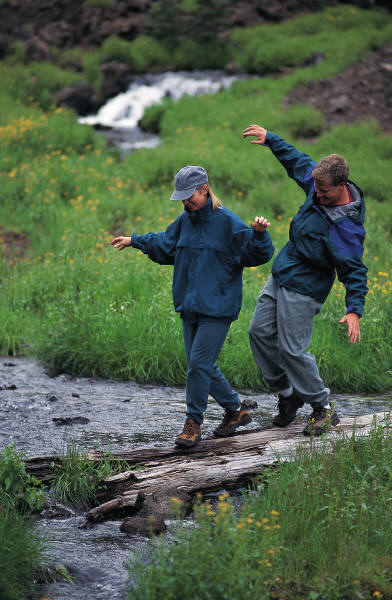
Step Out of Your Comfort Zone: How to Create a Risk-Friendly Environment for Personal Growth! Written by Amy Christensen

Have you ever wondered why sometimes it’s easy to step outside your comfort zone while other times it can feel like the biggest risk you’ve ever faced? Taking risks is how we discover our boundaries, redefine our limits of possibility and accomplish things we never imagined we could. In order to take the kind of risks that encourage us to grow (and take more), it helps to create a supportive environment conducive to pushing ourselves.

Your Risk Threshold. We all have a threshold for risk. Some people thrive on seeking out high-risk activities, while others shy away from even the most mundane change to their routine. Most of us fall somewhere in the middle. Baselines shift over time (sometimes moment-to-moment). What was exciting last week might suddenly feel overwhelming today. That’s totally normal. There are a lot of varying factors that affect our threshold. Get familiar with your baseline to help you decide where (and when) to start pushing.

Creating a Risk-Friendly Environment. Whether or not we’re willing to take a risk is dictated by a combination of factors. Some days it has little to do with the risk itself and a lot to do with where our threshold is on that particular day.

Here are five areas that can have an impact on whether or not a risk will push you in the direction of personal growth:

The Company You Keep. Who is with you on this journey? (And do you trust them?) Feeling safe within a group can boost your level of confidence and provide a great space to test your limits.

Your Skill Level. Know your current skill level and where you want to go. Smaller, more consistent steps forward is more efficient than giant leaps that leave you exhausted. (Note for women: we tend to underestimate our abilities, so take that into consideration when assessing.)

The Atmosphere. For example, are you prepared for the weather? Whether it’s an outdoor adventure or career move, getting a handle on (and feeling comfortable with) the external environment can help you prepare for any surprises.

The Level of Sustained Risk. In other words, how long will the “risk” last? Will it be short and exhilarating? Or will it be more sustained? A steep 50’ mountain biking descent might be an exhilarating challenge, but multiply that by ten, and the fun-factor goes down as the risk is prolonged.

Your Energy. If we’re expending a lot of energy elsewhere (work issues or illness), it can be difficult to muster up the necessary courage to test a new personal boundary.

Step outside your comfort zone and test your limits. You can go farther than you ever dreamed possible.
 

This article is written by Amy Christensen. Amy is a certified professional life coach with a passion for helping women step out of their comfort zone and break through self-limiting barriers. Based in Boulder, CO, her company, Expand Outdoors, focuses on creating healthy, sustainable, and fun lifestyle changes. Contact her at amyc@expandoutdoors.com or via www.expandoutdoors.com. You can also connect on twitter, @expandoutdoors and on Facebook at http://www.facebook.com/expandoutdoors

Ask A Pro by Tera Busker

Question: What is a “Bosu Ball?” What’s the benefit of a Bosu Ball and how can I utilize it in my gym workout?  -Chad in Boise, ID.

Answer: The BOSU ball, which stands for” Both Sides Up”, is an extremely effective fitness tool that can be utilized for a wide range of training purposes. It’s essential to seek guidance from a Fitness Professional to learn how to use this fitness tool safely. When used correctly, the BOSU ball can be used to increase flexibility, enhance balance, boost speed and take your strength to the next level. Because you can use both sides of the BOSU (rounded side facing up or rounded side facing the floor), your exercise and fitness options are endless.

When incorporating the BOSU into your routine, take things slowly and perform all exercises with purpose and good form. Because the BOSU really challenges your balance, your muscles, especially the core, will be working overtime. Start off with incorporating the BOSU into standard exercises like squats, pushups and planks. Stand on the rounded side of the BOSU when you do squats and place the BOSU flat side up and hold onto the sides while doing pushups and planks. If you are a beginner to incorporating stability challenges into your workout or you have balance issues, try standing on the BOSU (always round side up) while performing exercises like shoulder presses, bicep curls and side raises. As always, obtain medical clearance before beginning an exercise program.

Tera Busker is an ACE Certified Personal Trainer and owner of Fitness To Go, an exclusive In Home & Private Studio Personal Training Service based out of Roberts, WI. www.fitnesstogo.net

Running 101 by Kristie Cranford

So you’ve decided to become a Runner, how do you begin?

There is nothing more exciting and energizing than waking up one morning and deciding, today is the day you’re going to make the leap and add the title “runner” to your resume of life. Here are some important tips to get started:

Talk to your doctor. As with the start of any physical activity, make sure your body is as ready as your mind. Get a physical. You need a healthy foundation to begin.

Get properly fitted for shoes. Go to a local running specialty store and get properly fitted. They will watch you walk across the floor. Some will even analyze your gait on a treadmill. Good fitting shoes are crucial. Remember, running shoes are equipment, not an accessory. Don’t just go out and buy a pair of shoes just because they look “cool.”  Be prepared to spend $100-$125 (average) for a high quality pair of shoes.
 
Eat right. Your body is a fine tuned machine, don’t put the wrong fuel in it. Just because you are running does not mean you can eat everything and anything you wish. Eat clean, and remember you can never have too many fresh fruits and vegetables. 

Don’t buy a whole new running wardrobe. Ditch the cotton (it will weigh you down) and wear clothing with moisture wicking fabric that will take the moisture away from your skin. It’ll take time to learn what works best for you during a run. Get a couple shirts and shorts to start and build as you find what is comfortable and suits your needs and running style.

Wear sunscreen. Sunscreen should be something you put on every day just like your clothes.

Experiment. Running for fitness is a learning experience. What works for your friend will not necessarily work for you. There are so many different shoes, energy gels, etc on the market. Be open to trying out different products and gear, and don’t get discouraged if something doesn’t work for you. Keep experimenting!

Distance before speed. Work your way up to where running 30-40 minutes continuously is manageable before even thinking of adding speed work.

Find a support group of running buddies. Non-runners simply won’t relate and may not be interested to hear your constant chatter of races, energy gels, shoes, etc. Find a friend, buddy, social media group with whom to chat up running. The support, camaraderie, and motivation in the running community is like a big happy family. Your support group will cheer you on and lift you up.

Running is a fun and challenging workout! Enjoy the experience.

Written by Kristie Cranford, CPT. A wife, mother, cancer survivor and competitive athlete, Kristie is an ACE Certified Personal Trainer as well as a Running/Triathlon Coach for PRSFit Nation. Living in Las Vegas, she is the Chair of Long Distance Running for USATF-Nevada Association, a Coolibar sponsored athlete, and Raw Elements Sunscreen Ambassador. Contact Kristie via email, CoachKristieLV@yahoo.com. Or via the web on www.prsfit.com and http://coachkristie.com.

Summer Fitness Opportunities By Derek Peruo

Summer is officially here and after a long winter stuck inside, it’s time to get out there and grab some sun! Here are three outdoor locations to visit, along with activities you can do while there, to stay fit and healthy this season.

At the Beach

The beach is perfect for soaking up some vitamin D, which we get from exposure to direct sunlight and is an essential hormone for a healthy body. Just be sure to monitor your exposure time, and occasionally apply high-quality sunblock if you plan on being outside all day. While you’re at the beach, try doing some sprints in the sand. Sand sprints are incredibly challenging at any fitness level, and all you need is a 20-yard stretch of clear beach. Run as fast as you can 6-10 times, recovering 3-5 minutes between sprints.

At the Park

Parks are great for quick bodyweight circuits. Pick 5-6 of your favorite exercises and perform 8-10 reps of each without resting in between. The circuit could look like this:

1) Squat
2) Pushup
3) Forward Lunge
4) Rotating Pushup
5) Side Lunge
6) Mountain Climber

Rest 1-2 minutes after your last exercise, and repeat the circuit 4-5 times.

Parks are also a great place to play frisbee, which will improve hand-eye coordination, agility, flexibility, and cardiovascular health.

In the Woods

Start with a quick hike to your favorite spot. Hiking is an effective form of low-intensity cardio, and the uneven surfaces found in the woods will activate muscles in your feet and calves, improving balance. Consider bouldering, which is a form of rock climbing, that requires much less equipment.

No matter what you do this summer, be sure to drink lots of water to stay hydrated. Now go out there and have some fun!

Derek Peruo, CSCS, is the owner of Renaissance Fitness, a personal training service based in New York City. He also writes and consults for magazines such as Men’s Fitness and Men’s Health. http://RenaissanceFitnessInc.com


Stand up Straight Using your Core by Mary Miriani

The “core” from an exercise perspective, refers to the muscles that move and stabilize the trunk.  Most people know that abdominal and low back muscles are core muscles, but what exactly is the core?  The core is our center of balance, and all the muscles that connect to or cross the joints of the spine and pelvis. Besides the abdominals and low back muscles, the gluteal muscles, the pelvic floor muscles and most of the upper thigh muscles make up the core.
 
The most familiar core muscle is the outer abdominal muscle known as the “six-pack” – the rectus abdominis. Actually, the rectus abdominis is an “eight-pack”, but typically you don’t see the bottom two compartments of this muscle that stretches vertically from the bottom of the rib cage to the pubic bone. This muscle enables you to bend forward. Underneath the rectus abdominis are the external and internal obliques, the external criss-crossing above the internal.   The external obliques extend diagonally from the ribs to the front of the pelvis. The internal obliques extend diagonally in the opposite direction underneath the external obliques. There is a pair on each side of your torso. Together, these muscles rotate your torso and bend it sideways.  They are also one of the main stabilizers of the trunk. The innermost abdominal muscle the tranverse abdominis. The transverse abdominis runs horizontally from the sides of your rectus abdominis around your back to the bottom of the ribs and pelvis.  It holds in the contents of the abdomen (i.e. your organs) and is a main stabilizer of the trunk. 

Equal in importance to the abdominals are the low back muscles. They consist of the erector spinae muscle group that runs vertically down your spine to the pelvis. They bend you backwards and help stabilize the spine. The quadratus lumborum muscles run on either side of your lumbar (lower) spine from the bottom of your ribcage to the top of the pelvis. They stabilize your spine and play a large part in bending sideways. It would be difficult to walk without these muscles working well. Other important core muscles are the gluteus maximus, gluteus medius, and gluteus minimus. They help stabilize the pelvis, and move the leg to the back and side.  Finally,  the upper thigh muscles that cross the pelvis, mainly the rectus femoris in the front of the thigh and the 3 hamstring muscles in the back of the thigh  help to stabilize the your hips and back.

Because all these muscles work together to keep your spine aligned, it is critical to exercise and stretch them. Doing so will help prevent pain and injury to the back. Think of popsicle sticks all tied together with rubber bands. If those rubber bands are thin and loose, the popsicle sticks will flop out of place. Conversely, if the rubber bands are too tight, the popsicle sticks will bunch up and pinch each other. In the human body, this means pain and/or injury. It is necessary to both strength train and stretch the muscles of the core to keep them strong and flexible and eliminate a lot of the pain and problems you have in the back.

Many people think that doing daily crunches will keep their core in shape, but it takes a variety of exercises and stretches for all of the muscles to keep the core strong and flexible. It is well worth the investment in a couple of sessions with a fitness professional if you are in doubt of what exercises to do to keep your core in shape. Health care costs of maintaining a strong core are far less than the cost of chronic back pain and injury. Keeping a strong core will allow you to stand up straight and face your day!     

By Mary Miriani. BA Exercise Science; ACSM Health/Fitness Specialist.
Reality Fitness, Inc.; Naperville, IL. Contact her via email, mary@miriani.com.


Running; Not Always a Serious Matter

This article is sponsored by PRO Compression. At PRO Compression, foot comfort runs in our veins. We’re all about giving our customers an edge, providing you with socks that will enable you to perform better through improved blood circulation for the most extreme run, weekend jog or golf outing. Wear PRO Compression socks while flying to events, while sleeping, and during and after the races to help increase blood flow, reduce inflammation and remove lactic acid. Athletes tout PRO Compression as their socks of choice due to the built-in “stabilizing zone” for added support and the socks’ slightly padded heels and toes that eliminates hot spots and blisters. PRO Compression socks should play a major role in all athletes’ racing strategy. Our socks are the result of years of innovation and designed to keep you ahead of the competition. A better footwear choice is simply not available. For more information on PRO Compression socks and other compression products contact Eric Smith at: eric@procompression.com. Use discount code YOURWAY20 for 20% off any Marathon Compression Sock or Trainer Low Running sock at http://www.procompression.com/
 

Running; Not Always a Serious Matter
An Athlete’s Inspiring 160 Mile Week
 
Running is personal. Our bodies speak to us, we adjust and program ourselves to push harder. Mostly we run because that’s what we do. We love to run. We enjoy running. We have a sense of humor about running and our running experiences! It’s that pursuit and in this case one blogger’s passion to share her experiences with millions of followers at www.skinnyrunner.com

Sarah Moore is her real name and on April 14, 2012 she set out to break a personal endurance record by running in two back-to-back marathons, a 200 mile relay race and another marathon all within eight days.
 

So why do we do we push for personal records you may ask? Because life is about having fun and enjoying ourselves! Setting goals that are outside of our comfort zone is about personal growth, as well as building confidence and self-esteem. Setting goals that are out of the box also teach important life lessons, for example not to take ourselves too seriously and that trying and do-ing is just as important as completing. These traits are wonderful benefits that carry over to all other aspects of life. Let Sarah’s energy inspire and empower you to set a goal that is so far out of your comfort zone, it provokes others to say “What are you thinking?!” Your answer to their question is simple, “Life is about enjoying it, embracing all healthy living has to offer- the good, the fun, the laughter, the challenging, the setbacks and everything in between.”
 

Sarah started off her challenge by running the Gansett Marathon in Rhode Island. It’s the only qualification-only marathon in the world. Two days later she ran the Boston Marathon in a heat wave – it was 90 degrees by the finish. On April 20th she ran on a Ragnar Relay Ultra team where over the course of 200 miles, she ran 41 miles and contributed to the first women’s ultra team to run it with a time of 29 hours. The following morning she ran the San Luis Obispo Marathon.
 

Far from being a pro runner she says, when it comes to endurance running Sarah leaves her followers in awe of her stamina and go-lucky nature to running. “I’m relaxed about my running,” says Sarah. “I have a couple running/blogging friends whose lives revolve around chasing their personal record, laboring over their 3 month training cycle, eating the exact number of carbs. No, thanks.” Sarah adds “my philosophy is that there’s always another race and running is just a part of my life, not life itself.”
 

Sarah was born and raised on Kodiak Island, Alaska and lived there until she was 14. She was brought up in a fishing family: her great-grandfather, grandfather, father and two brothers were all commercial fisherman. Once in high school she and her two brothers fished in the summers to save up money for college. Having her fill of halibut and salmon, she eventually moved to California to attend school. She now lives with her husband in Orange County, CA where the weather permits her to run nearly every day of the year. 
 

She inspires thousands in her running-focused blog. “I’m honest and open with a lot of taboo topics that other bloggers won’t touch,” she says.  “For example, I have no problem talking about my weight, weight loss/gain and body image because I’m really comfortable with myself.  Every woman wants to read about those things, how to lose weight, etc, but no one will admit to it because everyone’s quick to criticize emotionally-charged subjects.”
 

So, what’s next for Sarah? She is looking forward to running marathons in Chicago and New York. She is also considering running in two more ultra relays, possibly with a five man team instead of six, making it, of course, tougher and longer. For more information on Sarah Moore, and to read her blog go to www.skinnyrunner.com

Fire Up the Grill by Keri Gans

Summer is almost here and so is the barbeque season. The challenge is how to socialize this summer and still eat healthy. Don’t let this time of year send you off course – use it has an opportunity to eat all the wonderful foods summer has to offer and keep your waistline in check.

Whether or not you are the person in charge of the grill or simply planning the menu, below are some easy and healthy BBQ ideas:

Shrimp Skewers. Make skewers with shrimp marinated in olive oil and lemon with chunks of peppers, onions, and cherry tomatoes. Prepare separate shrimp skewers and veggie skewers since the veggies will take longer to cook.

Veggies. Slice zucchini, squash and eggplant in large strips and throw on the grill with portabella mushrooms, all lightly tossed in olive oil.

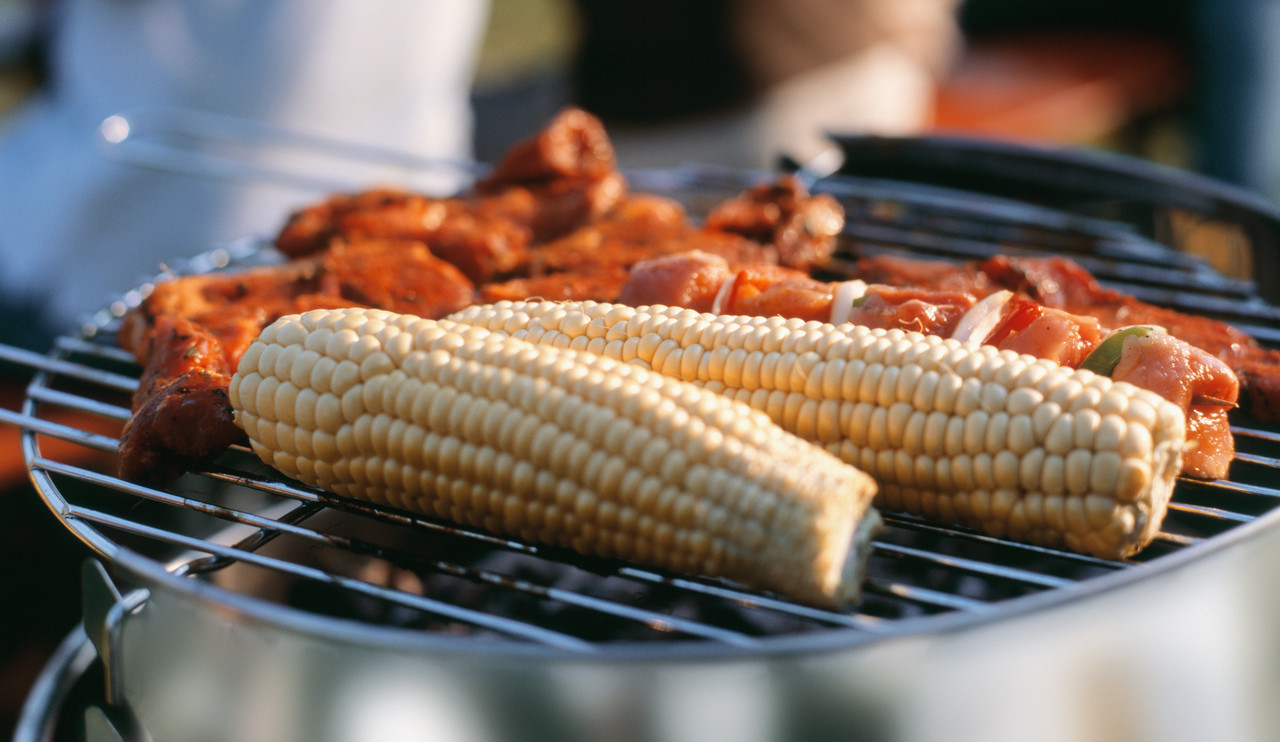
Corn-on-the-Cob. Enjoy corn on-the -cob! Either grill in the husk after soaking in water, or remove husk, rub a little oil and pepper on corn and cover with aluminum foil. Both versions require turnning often while grilling for a total of about 15 minutes. Serve with fresh lime instead of butter.

Fish. Choose your favorite fish “steak.” For example, salmon, swordfish, or tuna rubbed with a little olive oil and spices make for a flavorful healthy meal.

Using a flakier fish, for example halibut, flounder or red snapper, also works well on the grill.  Wrap loosely in aluminum foil folding up the edges. Place foil package on the grill and let “steam” for ten to fifteen minutes or until cooked through. Add some garlic cloves or pepper and onion slices on top of fish while cooking.

Soft shell crabs. Soft shell crabs are a quick and easy meal on the grill. All they need are a little olive oil, squeeze of lemon and lime, and a sprinkle of red pepper flakes. Cooking soft shell crab on the grill takes around 5 minutes on each side.

Burgers. As an alternative to the traditional hamburger, try veggie, chicken or turkey burgers (white meat only.) Top with tomato and sliced onion. Also, lose the bun and switch to a whole wheat English muffin or 100- calorie sandwich thin.

Fruit. Want a sweet dessert? Forget about the berry pies and throw some fruit on the grill. Pineapple and peach slices (sliced 1/4 inch thick) or a whole banana (grill in peel) taste super sweet. Serve with a dollop of plain greek yogurt.

So, go ahead a fire up the grill! There are many healthy options for grilling, many of which require little preparation. No excuses this summer not to eat healthy!

This article is written by Keri Gans, MS, RD, CDN, Nutritionist in Private Practice in NYC, Media Spokesperson and Author of The Small Change Diet (Gallery, March 2011) For more information,  www.kerigansnutrition.com. Follow Keri on Twitter @kerigans and join her Facebook community via www.facebook.com/TheSmallChangeDiet