June 5, 2026

Why Group Exercise? By Mollie Millington

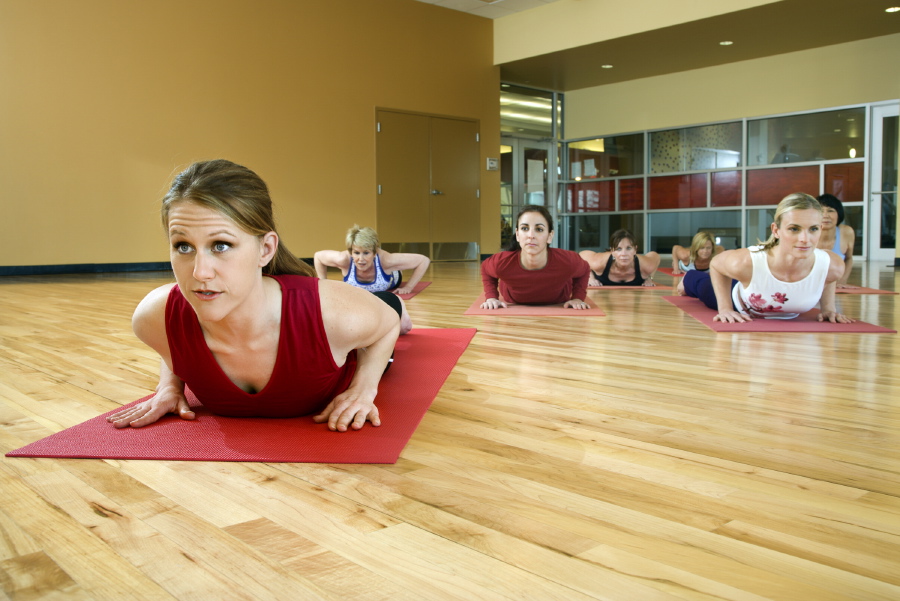
Most gyms offer group exercise classes such as yoga, Pilates, indoor cycling, Body Pump, Boxercise, and CrossFit. Most group classes will be included in your membership fee and are offered at all times of the day.

Why should you give group exercise a try?

Group exercise adds variety to your workout. If you hit the treadmill every day after work for 30 minutes, a group exercise class can help you get over a plateau by challenging your body in a new way.  Muscles can be accustomed to always working in the same way. So if you always go for a run, try a yoga class to switch it up a bit. If you regularly lift weights, try Zumba for a fun heart pumping workout.

Having a class at a set time automatically fits it into your schedule. It is easy to say, “I will go to the gym after work” and somehow never make it there because you prepared dinner for the family, helped the kids with homework, and then needed to run errands. But when you know your favorite class is at 6:30pm you can’t put it off until later. You also know when you will be done which helps you plan the rest of your day.

Someone knowledgeable will guide you. You might not always feel confident doing exercises on your own in the weight room. A group exercise instructor will know how to maximize your time in the studio and give your body a fantastic workout. Every class is designed to work muscle groups in a certain way and order after an appropriate warm up. Cooling down and stretching out at the end of a workout is important too and you might overlook that on your own.

Fun! Finally, group fitness classes can be fun. You can try different types until you find one that you love (and doesn’t seem like work.) You can make new friend who enjoy the same things you do too.

If you haven’t yet, give group exercise classes a try. Men are joining in too as they realize cross-training is an effective way to develop fitness faster. Just be sure to arrive early and let your instructor know if it is your first time trying out the class. 

Mollie Millington is a London-based personal trainer who offers in-person and virtual training.  You can find her on Twitter (@PTMollie) and online at www.ptmollie.com. She posts free workouts, product reviews and recipes every week.

Ask A Pro by Maggie Ayre

Question: What is a healthy way to introduce competition to my 7 year old daughter?  Do we keep score, reward winning etc?  -Carol from New York City.

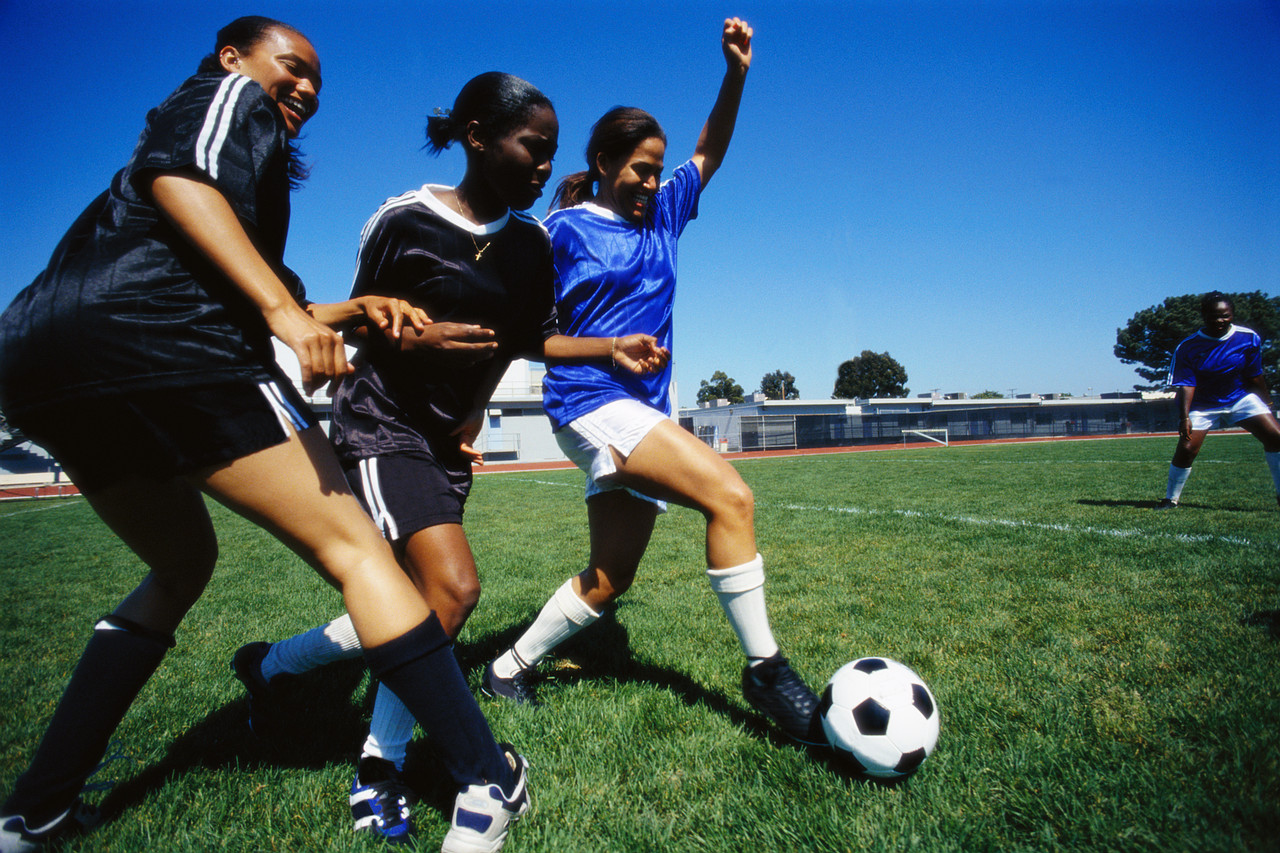
Answer: By the age of 7 some children thrive on competition and show great enthusiasm for sports where there is a chance to beat an opponent or the opposing team. You’ll see 7 year olds coming out of swimming lesson proclaiming; “I was swimming the fastest” or finishing a game of soccer; “we beat them, we got 4 goals to their 3.”

Other 7 year olds have no interest in the competitive side of things and are more interested in perfecting their ability.  They are more likely to make comments such as; “did you see me dive?” or “I did a fantastic pass.”

By the age of 7 I suspect your daughter understands the concept of competition. Schools introduce the concept through playing games such as Duck, Duck, Goose where children race each other around a circle, or Tag where you are trying to be the last person tagged. All these seemingly “just for fun” games have educational elements to develop skills and introduce the concept of competition. It may be worth talking to your daughter’s teacher to find out what games they play at her school.

By all means introduce the concept of more structured competition but if she’s not interested then my advice is not to push it. Time spent perfecting her skills without worrying what other people are up to will stand her in good stead for winning future competitions when the time is right.

One of the most effective ways to introduce your daughter to competition is to take her to the park by herself and set up an obstacle course. How quickly can she complete it? Can she beat this time? This also works in the swimming pool, with ball skills etc anything where she has to cover a distance or complete the task a particular number of times and can be timed.

You could also sign her up for a team sport. Most will include training sessions, for developing skills, with mini-competitions for putting them into practice to beat the opposition. Definitely use rewards. But divide your rewards into three; reward for effort, reward for ability and reward for success in competition. Without the first two the third will be far harder to achieve.
 

Maggie Ayre is the UKs leading Fitness Coach for Young People.  As well as one-to-one and small group nutrition and fitness work with teens she has developed Nutrition and Fitness Plans specifically for teens (www.nutritionplansforteens.com) and the 3G Program designed to be run at schools as part of the PE curriculum.  She also offers mentoring for PE departments on how to re-engage teen girls with PE and has recently published her third book; “Nutrition for Exam Success – A Parent’s Guide” which is now available as a Kindle and paperback at Amazon.

Addicted to Busy? By Juli Shulem

Summer is often thought of in terms of “lazy days of summer” yet some jam-pack their every last fun desire into a day without a thought. While most adults are at work, student age kids want to indulge in otherwise less stressful activities: play.

One of the challenges to overcome is to undo some of the busy-ness of the school day months and translate that into a more relaxed version of what would be considered an actual break. Keeping busy is appropriate at certain times, but being addicted to being busy is not healthy. So, that begs the question: How to become less addicted to always being busy?

Does being less busy make you feel guilty? For some adults this is a very real situation. Children experience less of this as they are still able to find value in ‘play.’ It’s important for a parent to not put their own agenda and feelings of wanting to be super busy onto their child. That said, it is also important not to sit around and waste an entire day doing nothing but watch TV.

So, how do we “undo” busy?

It all comes down to priorities. Determining what is important, meaningful and necessary in our lives.

Ask yourself ‘why’ you are engaging in a particular activity. Granted there is much more that we need to do besides the income producing work we do, but is all of it really necessary?

Acknowledge that we can’t do it all at once. To have something scheduled every day or night of the week without ‘down time’ to recharge will come back to bite you. When do you rest? When do you recharge?

Look at your life, assess your schedule and determine what doesn’t need to be part of your routine ‘right now.’ Take it out and let there be simply ‘nothing’ in its place. Everyone needs to rest and have unstructured time. Be sure to take time to do nothing.

Contributed by Juli Shulem (jshulem@gmail.com/805-964-2389), Professional Coach focused on helping people get more organized. www.julishulem.com, Organizing Expert since 1984, and author of the eBook, Order! A Logical Approach to an Organized Way of Life, www.getordernow.com


Triathlon Race-Day Tips

This article is sponsored by PRO Compression. At PRO Compression, foot comfort runs in our veins. We’re all about giving our customers an edge, providing you with socks that will enable you to perform better through improved blood circulation for the most extreme run, weekend jog or golf outing. Wear PRO Compression socks while flying to events, while sleeping, and during and after the races to help increase blood flow, reduce inflammation and remove lactic acid. Athletes tout PRO Compression as their socks of choice due to the built-in “stabilizing zone” for added support and the socks’ slightly padded heels and toes that eliminates hot spots and blisters. PRO Compression socks should play a major role in all athletes’ racing strategy. Our socks are the result of years of innovation and designed to keep you ahead of the competition. A better footwear choice is simply not available. For more information on PRO Compression socks and other compression products contact Eric Smith at: eric@procompression.com. Use discount code YOURWAY20 for 20% off any Marathon Compression Sock or Trainer Low Running sock at http://www.procompression.com/

Triathlon Race-Day Tips by Nicole Clancy

Miles are logged. Techniques perfected. Form practiced. Food and hydration dialed in. But what about planning the logistics of your race-day prep? There are lots of race-day details that can lead to either a chaotic day or a smooth stress-free day. Here are a few athlete tricks and tips to insure your race-day goes smoothly.

Race-day prep begins well before the gun goes off at your actual starting line:

Plan for an early evening. A few weeks before heading to your race location, Google restaurants in the area. Look up the menu online to make sure the meal selections meet your needs. Then go one step further and make reservations. Eat early to allow for proper digestion. You may be too nervous go to sleep early, but you can rest and relax. Watch a movie, chat with friends. Lounge guilt-free!

Gear-details. Writing your name in your wetsuit is a great trick. Let’s face it, transitions are hectic and for shorter distances your transition belongings may be accidentally shoved to another area or placed with another athlete’s belongings. Packing a few zip-ties may also prove helpful. These simple plastic-fasteners, found at every hardware store, may come in handy if your zipper breaks on your wetsuit, if your numbers need to be refastened to your bike or if your goggle-strap snaps, for example.

Be aware of the weather forecast. Know the temperature and wind conditions as both of these specifically can alter your bike, swim and run efforts. Do you need to pack arm or leg-warmers for the bike leg? Layers you’re able to peel away with one hand and easily store in your jersey while riding, is your best bet. There’s nothing worse than shivering your way through a race or overheating due to lack of planning.

Read (don’t skim) the athlete-instructions information. You’ll decrease stress by answering such questions as, location of athlete and spectator parking? What time does transition area close? Have there been course changes? Where is body marking located? Where is family reunion area located? Are they providing shuttle busses to the start? Leave these instructions with your spectators, so they have all the information in-hand to better assist you.

Set out your Sun Block and Anti-Chafing product. Placing these items on the bathroom counter to apply in the morning, before even leaving for the race venue is a great time-saver. Once these two important tasks are completed, there are two less actions to remember to do in the transition area.

Finally, race day is here! Here’s how to arrive to the starting line with less stress:

Stick with your tried-and-true breakfast. Following the principle of ‘nothing new on race day,’ eat exactly what you did during training. Call ahead to your lodging and ask what arrangements are available, keeping in mind the early morning race start time. A good rule is to always bring food with you from home, and don’t forget utensils!

Pack simply. Don’t overload your transition bag. Stick with your essential gear, and keep items easy to see and grab quickly. Keep in mind also, that your hands may be cold coming out of the swim and therefore dexterity to pick up some items may be compromised. Another trick is placing a colorful towel right below your bike to make your transition space visible as you may be disoriented from the swim. The towel also allows you to step immediately onto the towel to wipe dry the bottom of your feet without adding even an extra second to your transition. Keep transitions simple, simple, simple!

Bring an extra swim cap. Although race-wave colored caps are required, if the water is cold consider wearing your own cap beneath the race cap to increase core temperature.

Rack your bike in an easy gear. Racking your bike in an easy gear allows your legs a few critical minutes to spin easily when first out of the water. Doing so, increases blood flow to your leg muscles as you settle into your bike leg. Placing your helmet (with the strap unfastened) cradled in your aerobars or handlebars is a great tip and allows easy access to secure your helmet as your first action in the swim to bike transition. Hydration/fuel should already be mounted on your bike or in your gear bags.

Warm-up in the water, if possible. At a minimum splash water over your head and face to acclimate to the water temperature and conditions. A proper warm-up will allow you to relax into your swim faster, and hold your swim line easier for a more efficient swim and a faster time!

Thank a volunteer! They are there to help you enjoy a better race experience.

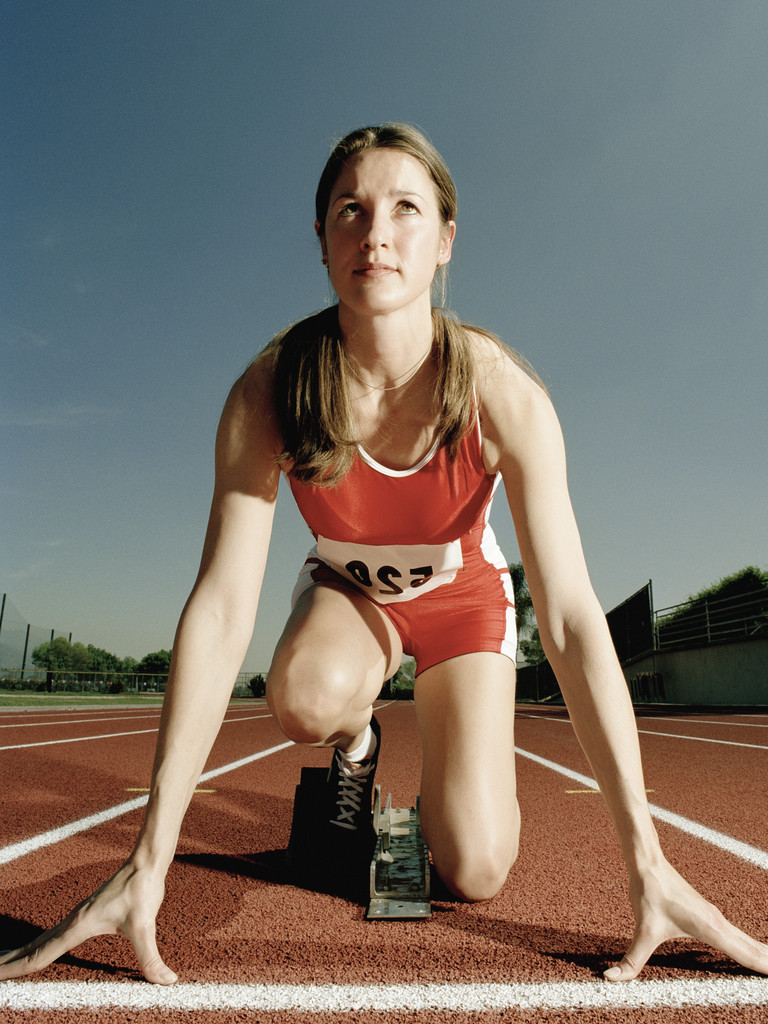
It’s time to toe the starting line. You are ready.

Reiki-The Inner Sunshine by Marty Fabianova

Reiki- The Inner Sunshine

Imagine you are lying on a beach. The hot sand is filling every cell of your body with a feeling of beautiful warmth and all your worries and stresses are being washed away by the whispering waves of the sea. The sun tickles your cheeks and the blowing wind is making you feel fresh, energised and content. Your body is relaxed and your mind is in a state of absolute peace. And now imagine that you can feel like this anytime, not just when you go on a holiday. How? By treating yourself to a regular dose of Reiki!

What is Reiki?

Reiki (pronounced ‘raykey’) is a natural, hands-on healing system. Its origins can be traced back to the ancient Tibet, thousands of years ago. This technique was lost for centuries, until its rediscovery in the late 1800′s by Dr. Mikao Usui from Japan. Since then it has found its fans all around the globe.

This powerful healing enhances the flow of Qi/Chi (Chinese), Ki (Japanese), Prana (Sanskrit) or the Universal life-force energy which is present in every living being. The Reiki practitioner acts as a channel for this Universal energy, enabling the body’s own healing processes to be activated – on a physical, mental and emotional level. Reiki is now offered by the NHS, most commonly as a complimentary treatment for cancer patients. Heart surgeon Dr. Oz (‘Oprah Winfrey’s doctor’) and celebrities such as Nicole Kidman, Kate Hudson, Meg Ryan and Angelina Jolie all tout the benefits of Reiki.

What are the benefits of Reiki?

Reiki engages the body’s own self-healing, so we are able to better address whatever dis-ease we are going through. It does not treat any condition directly. This healing discipline goes to the core of bodily and emotional problems, rather than just easing symptoms. Many fans of Reiki say that it helps them to release stress, improve concentration and sports endurance. It is also said to help lessen the symptoms of many chronic conditions.

Reiki is not restricted to any gender, age or religion. Everybody can benefit from Reiki’s rejuvenating and empowering touch. Are you ready for your portion of inner sunshine?

This article is written by Marty Fabianova. Marty works as Reiki and Bowen Technique Practitioner in Stoke Newington, London. She is passionate about helping people to tap into the wellness of their body and mind in a natural way. Contact her at www.thebowenway.co.uk or via marty.fabianova@hotmail.co.uk. You can also connect on Facebook via her page The Bowen way – Help your body to help itself or on Twitter @MartyFabianova.


Get Your Mind in the Game by Charlene Ragsdale

There is a well-known phrase among athletes, “racing is all mental!” While funny, there is truth to it. Running, or any athletic sport involves a mental component. Doubts, confusion, anxiety and brain exhaustion face all athletes at every  level of performance, even elite athletes and professional athletes. 

When I first started competitive racing , I noticed between the start and mile 2, my mind started playing head games. It was as if a monster in my head was screaming at me, “WHAT ARE YOU DOING?  I don’t like this!” Then around Mile 2.5 or 3 the endorphins kicked in and my brain said, “Okay, I like this!” There are times however, no matter how much you physically train that the mental aspect of racing seems to take most of your energy. You arrive at the start line, start your race and you find you’re spending more energy on fighting your brain to focus and controlling self-talk, than actually running your race. The solution is in your training. Not just your physical training however, but in your mental training.

If you’re battling self-doubt, consider adopting a personal mantra. Practice your mantra, with the same intensity and dedication as you practice the physical skills required for your sport, until it becomes second-nature. Here’s how it works:

Train your brain to respond with positivity when it hears a particular word or phrase. Choose a word or phrase that triggers feelings of empowerment, energy, speed, power to keep going. For example, during your next run, and every single run thereafter, practice your mantra or key word or phrase. Consider words such as, Push, Dig, You Got This, Focus, Fighter. Most importantly, your mantra must speak to you and have specific meaning to you. From the moment you step across the start line, repeat your mantra. If you’re struggling to maintain mental focus, stop the negative self-talk cycle immediately and re-set your mental focus by repeating your mantra once again. Running and racing challenges our mental focus. Adopt a mantra as a personal mission statement and experience the difference it makes in your performance.

Charlene Ragsdale is a RRCA Certified Running Coach, IFA Certified Sports Nutritionist and member of the USATF Master’s All-American Team. She can often be seen at on the podium as a frequent Age Division & Overall Winner in several distances. She lives with her Chef husband, two sons and two dogs in Las Vegas, NV. You can follow her at her blog:  www.RunningWithCharlene.com

Being Run Ready by Dr. Kent Sasse

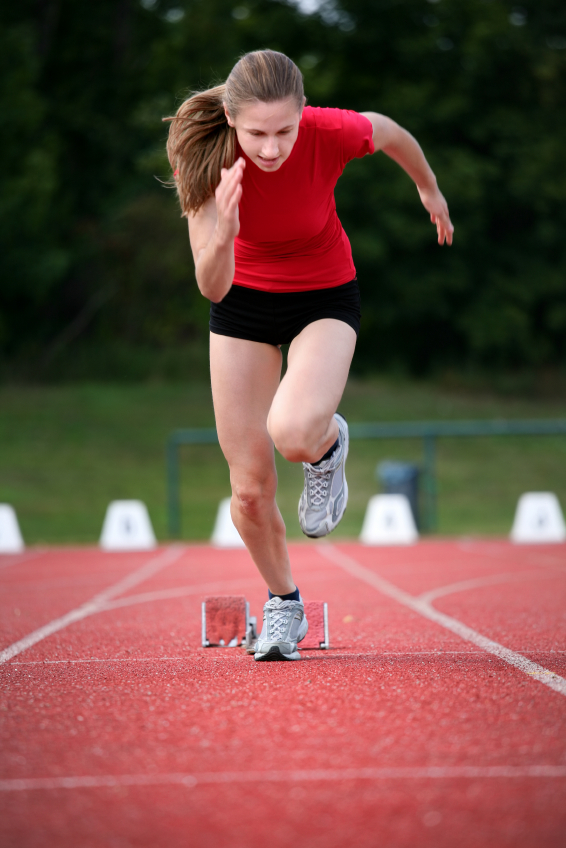
It is the time of year when the temperature encourages people to lace up their sneakers and every weekend boasts a run (or two.) Planning to run a marathon, half marathon, or even a 10K requires training and proper maintenance for your body. For beginners it is especially important to begin a regimen and educate yourself on best habits.

Listen to your body. It is not how fast you run today, or even how far; it is about how many years you can enjoy running. For older runners or those with injuries, don’t run if it hurts. Give your body a chance to heal. Take advantage of the days you feel good and go on longer runs, push yourself, and seize the opportunity.

Run with a partner that can encourage and motivate you. Training with others with a similar interest and passion for running means you can train for events together, swap training techniques, engage in a little friendly competition or maybe even participate in a relay as team.

Hydration. Water is obviously integral to successful and healthy running, but even more so in extreme conditions of heat and altitude. Hydrate before your runs by drinking water right before, hours before, and even days before. You will recognize hydration by (almost) colorless urine. Drink water consistently rather than consuming more than 16 oz. before a run itself. Drinking enormous amounts of water prior to a run can cause issues so hydrate often rather than in huge doses. If water stops are not on your runs- and even if they are- supplement with a water belt.

Food Intake. Eat your normal balanced breakfast a couple hours before a strenuous run; normalcy is easier for your body to digest. Stay away from heavy meals, and opt for oatmeal and bagels and bananas. Don’t forget a dose of protein as well to keep those muscles happy.

Dr. Sasse founded Western Bariatric Institute and iMetabolic. He is also the author of numerous books and a featured speaker nationally in the field of weight loss.

Skin Care Basics by Gia Marie

Your skin is the largest organ in your body and deserves as much attention as brushing your teeth twice a day. Skin care is an important investment in your total overall health and the future appearance of your skin, whatever your age. Our skin is exposed to pollution, smoke, stress and the sun. It is a necessary commitment to protect your skin from these damaging elements to promote overall health and prevent premature aging.

There is an abundance of information available about skin care and the number of products that are in the marketplace can be overwhelming. It seems that every celebrity has a product out now and if marketed well enough will most likely do well.  Consulting a skin care specialist is an important part of finding a solution to your skin care needs, whether your concerns are medical or aesthetic.

Here are some tips for healthy skin:

Take care of you. Getting plenty of sleep, eating well and reducing stress are essential to improving the overall health of your skin. Participating in any type of exercise will also work wonders for your skin, as well as nourishing your mind, body and spirit.

Know your skin type. Understanding your own personal skin type is key to the right product selection. If you’re unsure, consult a skincare professional.

Hands off.  As tempting as it is to pick and pop your way to clear skin, this method is just not advised. This can only lead to possible scars and even infection. If you think may have a severe case of acne, please seek the advice of a medical provider.

Shave carefully. Both men and women should always have their skin lubricated. Use a clean, sharp razor every time you shave. Shaving in the direction of hair growth is always best. DO NOT shave your legs prior to a pedicure because of a possible risk of infection.

Keep cosmetics clean. Old make-up is not your friend, especially mascara. Clean your make-up brushes often; you will be glad you did. Buy make-up products that don’t require having to use your fingers to get the product out of the container. Get in a habit of using cotton swabs for applying make-up and you will be sure to keep your make-up clean. (No double dipping).

Practice comprehensive skin care. Examine your body for unusual moles or changed pigmentation; this can be extremely important to your skin’s overall health. Please contact a medical specialist if you feel something doesn’t feel or look right to you.

Gia Marie, founder of Gia Skin Care, may be reached through her website, www.giaskincare.com.

Two Supplements Worth Your Attention by David Sandel

The multi-billion dollar supplement industry’s recommendations can be overwhelming! Take a break from the protein powders, energy boosters, and hormone enhancers and consider two basic supplements as your essentials. Regardless of athletic, aesthetic, health, or wellness goals, these supplements should find their way into your cupboard or refrigerator.

Fish Oil (Omega-3 fatty acids) There are plenty of daily recommended amounts floating around, however none are conclusive, nor are we certain of exact individual dosages. Enlist the aid of a Fitness Professional to determine the appropriate dosage and best course of action for your goals.

The consumption of Omega-3 fatty acids may improve your cardiovascular health, prevent certain types of cancer, and help reduce a slew of mental health disorders such as depression, Alzheimer’s, and Parkinson’s. The most immediate benefit you might encounter is reduced inflammation, which is one of the main culprits that slow down recovery after a strenuous training session. The less inflammation in your system, the faster your recovery.

Vitamin D3. Vitamin D is naturally produced in our bodies when our skin is exposed to sunlight, but a lot of us live in geographical regions (or work in jobs) which require us to cover a majority of our skin most of the time. If you’re unable to get direct sunlight for 20 minutes per day, consult your health professional for their dosage recommendation unique to you. 

The benefits of Vitamin D3 include cancer prevention, maintain bone density, boosts our immune system, and again, cardiovascular health. That’s important in a country where heart disease is so rampant.

Consider Fish Oil and Vitamin D3 as your two basic supplement needs (provided you are an otherwise healthy individual.) They are highly affordable, and their claims are backed by legitimate scientific research.

Most importantly when considering supplements, do your own research. Get on Google. Look for unbiased sources. Read your food labels. Keep a log to determine if you feel better, look better, or perform better.

David Sandel is the creator of AthleteCreator.com and DudesWithTents.com. Follow him on Twitter (@AthleteCreator, @DudesWithTents) and/or Facebook for more great health and fitness info.


How to Keep Your Teen Active This Summer by Maggie Ayre

What will your family do this summer? Do you have time off or will your teen be amusing themselves?
When kids are young it can be easier to entertain them with family outings or activity days where they can learn new skills. But, what do you do with a teenager who could quite happily sit in front of the TV or computer for hours or even days on end?
 

Here are five top ways to ensure your teenager stays healthy and active this summer:

Sign them up for a “cool” activity. You can find holiday clubs where they’ll teach you everything from skateboarding to surfing to juggling to street dance. They’ll make new friends and learn a new skill at the same time.


Plan a family day out. Even the most independent teen enjoys a bit of attention from Mum, Dad, brothers and sisters. Find an activity you’ll all enjoy and give it your full attention. What about a trip to the beach, 10 pin bowling, swimming or ice-skating? There’s something whatever the weather.
 

Give your teen some independence. Encourage your teen to cook a special meal for the family. Help them plan a menu then leave the rest to them – walking to the shops, carrying home the groceries, table laying and decoration and of course the cooking. Remember to lavish them with praise and they’ll be more likely to do it again later in the holiday.
 

Speak to their friends parents and arrange a cycle ride and picnic. If you’ve bought the food and done the organising your teen is far less likely to back out. In fact, chances are they’ll enjoy it so much they’ll want to go again later in the holiday.
 

Set your teen some chores so that they can earn money for treats. Not only will they be active whilst they are doing the chores but they are also more likely to go out and meet friends if they have a little money in their pocket.


Maggie Ayre is the UKs leading Fitness Coach for Teen Girls. As well as one-to-one and small group nutrition and fitness work with teens she has developed the 3G Program designed to be run at schools as part of the PE curriculum. She also offers mentoring for PE departments on how to re-engage teen girls with PE and has recently published her third book; “Nutrition for Exam Success – A Parent’s Guide” which is now available as a Kindle and paperback at Amazon. www.maggieayre.com/maggies-books.html. For more information, contact Maggie via www.maggieayre.com or www.femalefitnessrevolution.com.