June 15, 2026

Fitness at Every Age by Craig Thomas

Recent research has shown age expectancy for men and women is getting longer and will continue to grow with each generation. As of 2011, the golden years are averaging 20% of an average person’s life or roughly 13 years. In light of that, “older” is not synonymous with incapacitated—nor does it necessarily mean to slow down.

For those fitness enthusiasts who find the inside of a gym familiar, a full-body workout that spans 60 minutes 3 times per week is an great option. However, 4 -5 days per week of 40-45 minutes can also be beneficial. For those folks accustomed to weights, a barometer in which 8-12 repetitions are achieved and the final rep is highly challenging is a good measuring stick.

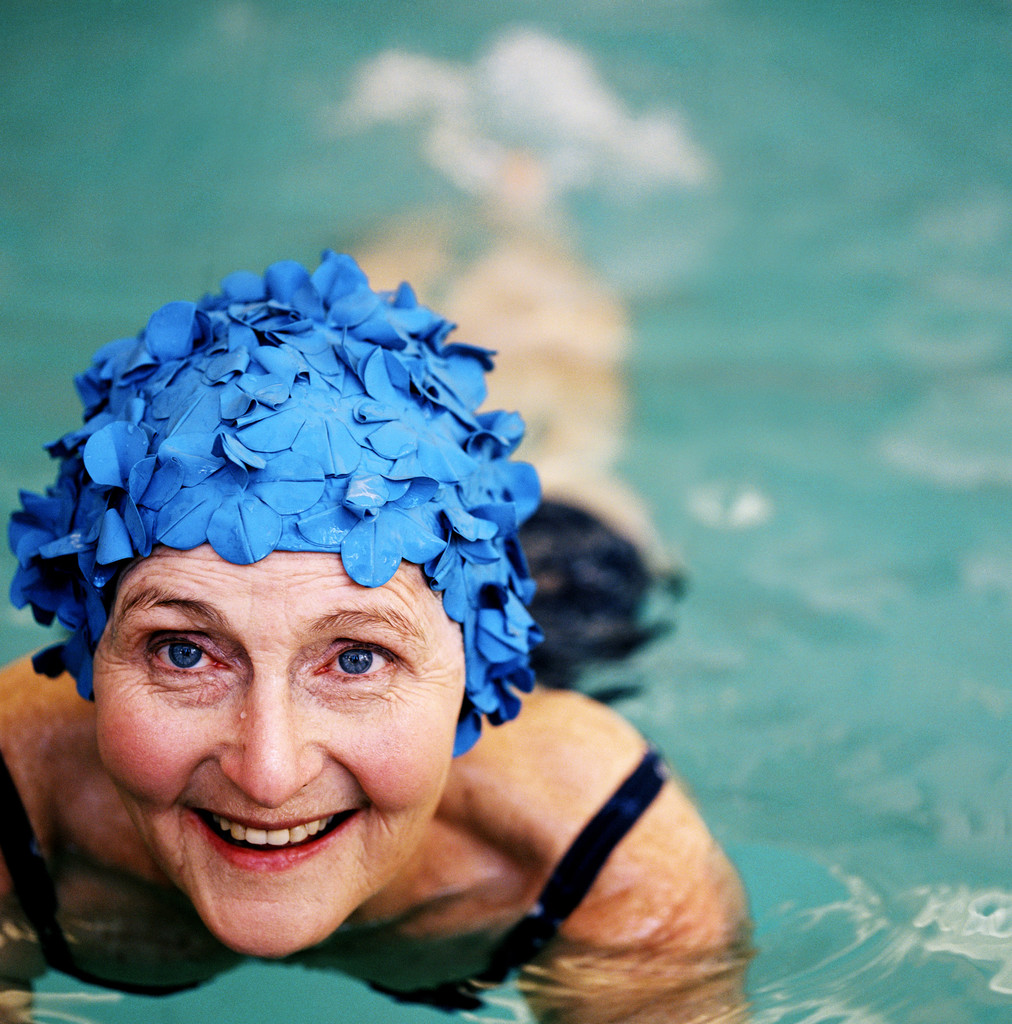
For those who do not have access to a gym or just prefer the great outdoors, participating in active hobbies that are enjoyable will result in sustainable exercise. Hiking, walking and biking to more intense exercises such as skiing and tennis are fantastic full body aerobic activities. Choose exercises that are multi-planar and movement-based to gain the most varied benefits. Multi-planar means moving our body in all directions, such as tennis. Movement-based, translates to activities that include full body (arms, legs and core) movement, for example hiking. Water activities are also excellent examples of  multi-planar and movement-based exercise. In addition, the water acts as natural resistance through low-impact and joint friendly movements (for those suffering from osteoporosis or other arthritis conditions.)

If you’re new to the world of exercise, consider the principle of “just moving.” Walking is a wonderful workout that leads to increases in cardiovascular health and muscle endurance, as well as balance and agility improvements. Lack of blood flow is associated with stagnation and Eastern opinion believes that many body imbalances and diseases stem from stationary lifestyles. According to statistics over the past 10 years, heart disease is the number one culprit for deaths in those over the age of 65 in the U.S. Exercise and physical fitness has been shown to reduce blood pressure, improve circulation and improve cardiovascular disease (atherosclerosis).

Of course, the first action every new fitness protégée should take—regardless of age—is to consult with his/her doctor and request medical clearance to begin an exercise regime. Additionally, during your visit ask your doctor to outline any physical contraindications (movements that would be detrimental to your body if you did them) based on your current condition and past family health history.

By Craig Thomas, ACSM.

craigthomas3609@gmail.com

Find a Solution to your Resolution by Chanda Fetter

It seems that year after year, we promise to improve something we know is a challenge for us. For whatever reason, we convince ourselves that this ONE DAY, out of the entire year, is THE DAY things will change. 

The definition of resolution is …finding a solution to a problem; a statement that solves a problem or explains how to solve the problem.

To no surprise, the number one New Year’s Resolution is to lose weight. It’s time to truly find the SOLUTION to your resolution! If getting in shape has been your resolution more than once, don’t you think it’s time? Make 2012 different.

Commit to an Event. Typically the reason people can’t stick to a fitness goal is because there is no defined goal. So, make one! Sign up for something by the end of this month! Consider participating in a Walk for a Cure, climb the Rockies, Ride for a cause, or register for a Sprint Triathlon, just to name a few examples.  Pick an activity you enjoy and get excited about it.
 

Establish a Plan. Once you’ve chosen an event, create a realistic plan to prepare.  Having a realistic goal with sufficient training will allow you to ease into your activity giving your body time to embrace the new exercise rather than fight it.
 

Be Accountable. Buddy up with someone or a group, we are 96% more likely to show up if we know someone’s waiting.

Hire a Qualified Professional. We defer to professionals to tune up our cars but for some reason we don’t consider tuning up our bodies as important. Your body is the MOST important vehicle you own! Let a trained professional help you create a plan and motivate you to complete it. This time of year even affords you the best deals to do it!

It’s not a question of whether you CAN do it or WANT to do it, you NEED to do it.  Everything is better when you are living your best healthy life!

Chanda Fetter
IM=X Pilates, Owner
www.imxsb.net

Teen Fitness Questions Answered by Maggie Ayre

What is the easiest way to improve my diet?

There are two very simple steps to improving diet.
Eat a rainbow – try to eat as many different coloured fruit and vegetables every day.
Eat natural – think about the food you eat, how close is it to the original product?  For example, steak is far closer to the original cow than a burger, raw carrot sticks are far closer to the original carrot than carrot soup.

Follow these two simple rules and your diet will improve very quickly and you’ll notice the associated benefits of increased energy, better complexion, a slimmer waist line, etc. Follow this simple rule with everything you eat and drink;  this includes snacks, which tend to be most teenagers downfall.

How much exercise should I do?

Guidelines for young people are 60 minutes activity every day including 30 minutes of exercise where your heart rate is raised, for example playing sport, running, dance class, swimming, cycling.

What is a healthy shape and size for me?

There is a children’s BMI. However, many professionals agree BMI should only be one factor when considering a healthy shape and size for teens. However, it is more accurate than the adult BMI as it considers age, height and weight. On the downside it only considers an average for your age which makes it inaccurate because, as we all know, teens mature at different ages.  Discourage comparing teens with friends and classmates. Every teen develops at a different rate. Even as adults we are all very different shapes. Instead, pay attention to how much extra fat lies around the mid-section.

What is the best exercise for me?

Find an activity you enjoy! Use your imagination; there are so many activities to choose from……Indoor activities – fitness class, dance class, sports such as basketball and volley ball, boxercise. Outdoor activities – netball, football, hockey and other team sports, running, power walking, fitness class, cycling. Water activities – sailing, swimming, windsurfing. Home activities – wii fit, exercise video, trampolining, exercise video, hula hooping, skipping. And the list goes on…….

Find something you enjoy or mix and match with several different activities. Do something with your friends or by yourself. Include some strength and flexibility work into your exercise such as a bodyweight workout, gym workout or yoga class to promote full body fitness.

Maggie Ayre is a Personal Trainer and Nutrition Advisor. More information about Maggie’s work with teenagers can be found at www.maggieayre.com or www.femalefitnessrevolution.com.

Ask A Pro by Niels Johnson-Lameijer

Question: I can’t stay focused. Seems I take one step forward and two steps back. How do I know if I am I sabotaging my fitness goals? –Cassie, PA.

Answer: 4 Steps to Stop Self-Sabotage

Be aware. Awareness provides the opportunity to think about actions, and it breaks the automatic cycle of the self-sabotaging behaviors. So the first step is to recognize behavior as self-sabotage.

Be honest. Once you have the awareness about your-self sabotaging behavior dig a little deeper. Ask yourself: What is this behavior sabotaging? Is it my effectiveness at work? A healthy lifestyle? Write down the results of your sabotaging behavior and be as specific as you can, don’t hold back, be brutally honest! So if you end up watching TV till late at night, which makes you get up too late for your daily exercise, which is a vital part of your goal to release 10 pounds. You could say that TV is unhealthy or … more brutally honest … watching TV makes me fat!

Take Action. Now that you know how your self-sabotaging behavior is keeping you from realizing the (healthy) life you want to live, it’s time to take action toward changing your life! Write down your brutally honest realizations on several post-it notes and post them in the places you will likely be when your destructive self-sabotaging behavior takes place (on your TV!) There is no better way than reminding yourself over and over again of the negative results your self-sabotaging behavior creates, to make sure you do not fall back into your old patterns.

Replace the old behavior with new empowering behavior. When you have completed this step it’s time to replace your self-sabotaging behavior with empowering habits. Do you have a clear picture of what you want to create? What behavior will support that? Make it tangible, write it down, and make sure you put it in your calendar. Then create reminders for yourself through-out your house (car, office etc) about the positive new habits you want to create.

Niels Johnson-Lameijer is an internationally certified Executive Coach and Life Mastery Coach. He guides companies and passionate individuals toward raising productivity and realizing the life of their dreams. For more information visit www.nielsjl.com or email Niels at niels@nielsjl.com or call 805.617.3513.

Exercising for Fat Loss by Ali Croft

Trying to lose weight and doing all the right things – training, nutrition etc – but struggling to achieve your goal? It could be your method of training that’s the problem.

If you’re relying soley on aerobic activities such as running, cycling and dancing for weight loss, this is where you are going wrong. This is why the weight isn’t shifting as quickly as you would like, and why you’re not getting the lean and toned look that you desire.

In truth, if weight loss is your goal then resistance training is one of the best ways to achieve it, whether that resistance is weights at your local gym or your own body weight.

The reason for this is that resistance training boosts metabolism, which is the rate at which your body burns calories to sustain itself, more effectively than aerobic activity and is the key to effective, long-term body fat reduction. The higher your metabolism the more effective your body is at burning calories even while you are resting.

Muscle is metabolically active tissue, so increasing the amount of muscle mass through resistance training substantially increases your body’s abilities to burn body fat.

Will it make me look bulky? No! In fact research has revealed that resistance training significantly decreases body fat, and while it increases muscle tissue, there is no increase in physical size. So the muscle built simply gives tone and shape to your figure.

The best way to benefit…To include resistance work in the form of interval training, which is where you work for a short period of time at a high intensity, recover by working at low intensity or resting for a short period of time and then repeating the cycle again. Training in this method places high energy demands on the body and is a more effective way to burn fat.

A simple example of this would be to complete a circuit of exercises – such as squats, press ups, lunges, plank rows, burpees and mountain climbers – working for 40 seconds on each one, resting for 20 seconds, then moving on to the next and repeating the circuit three or four times.

If you are committed to your cardio programs and reluctant to introduce resistance work, just try it for a month, you’ll be surprised by the results.

By Ali Croft, Certified Personal Trainer. www.alicroft.co.uk

Keep a Log for Workout Success by Juli Shulem

Research shows tracking our workouts results in improved exercise adherence. Since exercise consistency is the goal to gain desired results, begin a workout log to support your efforts. Keeping track of your workout can be very simple, and typically the simpler the system, the more likely a person is to use it. Of course, keeping a log in a smart phone allows for easy access and updating. However, tracking exercise using pen and paper allows for visual reinforcement of progress. Meaning being able to see one entire sheet of paper full of noted workouts often better serves to further reinforce our commitment to exercise. And remember the goal, simple!

Having random papers all over usually indicates that one specific location for data hasn’t been set up. Do one of two things: either design a form on your computer to use regularly in order to keep track of the information (sample below), or draw up a form using ruled paper and then make photo copies. You will want to create columns that list the exercises, reps, weight used, etc. and you can also have an area to make a note on the row for each exercise you have on your list.

For starters acquire either a 3-ring binder in which you keep the paper work. Choose a thin binder as you won’t be inclined to carry around a big heavy binder. An alternative is to go to an office supply store and purchase a report cover or folder that holds several sheets of paper. Put the pages in here for a period of a month and then add new blank sheets and file the used ones in a designated space. This allows keeping a lightweight piece with you while working out. Use a pen/pencil that can clip onto whatever you are using so that you have something to write with at your fingertips.

When creating the form, type in the exercises before printing it out so that you don’t have to waste time writing that in each session. Use pencil when you fill in the remaining areas. Have a space for the date on each sheet, then modify it to meet your needs as your needs change.

For example:
 
Exercise      Weight       Reps      Notes
Lunges             15           10×3    Added 3lbs from last week/goal 6lbs more by end of mo.
Bicep curl         12           12×2    Try 15lbs next time

Contributed by Juli Shulem (jshulem@gmail.com/805-964-2389), Efficiency/ ADHD Coach. www.julishulem.com, Efficiency Expert since 1984, and author of the eBook, Order! A Logical Approach to an Organized Way of Life, www.getordernow.com.

Ask A Pro by Dr. Stephanie Burris

Question: Do carrots really improve eyesight? How does my nutrition affect my eyes/vision? –Jennifer from New York City

Answer: Carrots contain high amounts of natural vitamin A, also known as beta-carotene.  This substance is found in high concentration in some of the nerve tissue of the eye, especially the retinal cells known as “rods.” Rods provide vision in the dark. It has been shown that a vitamin A deficiency may be linked to “night blindness.” However, your vision in dim light may be poor for other reasons. Eating foods that are high in vitamins A, E, C, and Lutein will definitely lower your risk of losing vision due to aging conditions of the eyes, such as macular degeneration, glaucoma and cataracts. The best foods to aid vision are dark green and brightly colored vegetables, as well as fruits, garlic and onions. Eating fatty fish (such as salmon) or grass-fed beef, and/or supplementing with a pure, bio-available Omega 3 that has at least 200 mg of DHA and 300 mg of EPA is another sure way to keep eyes healthy. Stay away from processed foods, don’t smoke, and drink plenty of water to keep your eyes and your whole body healthy!

By Dr. Stephanie Burris of Optometry Care Santa Barbara.

Finding Inspiration in Others

Living healthy is contagious! No one has ever regretted taking the time to improve the quality of their life, and having a mantra to turn to when exercise gets tough will encourage continued progress. Keep in mind, all obstacles can be overcome with dedication and commitment. Rely on these favorite go-to motivational quotes of twitter leaders to guide your focus. When faced with challenges on the journey to health, lean on others for motivation and let their words inspire you.

Find words of encouragement in the following examples of living healthy, well and fit!

@rickilakeshow: “Make the decision, then do something – no matter how small – toward accomplishing what you want.”

@DrJAshton: “Push your body hard during your workouts. Your body will surprise you with what it can do! In return, show it love and respect.”

@SmashFit: “Your fitness is 100% mental. Your body won’t go where mind doesn’t push it.” -Heather Frey

@Stretchfit: “No matter how brief your activity may be, you’re lapping the person on the couch!”

@artstudionyc: “Movement cures everything.”

@noisydogstudio:  “Do something today that your future self will thank you for ”

@GetFitGetLife: “Embrace the challenge and exceed your expectations.”

@Partnerunning: “Go further together and create your desired future.”

@MamaBritt: “Take care of your body. It’s the only place you have to live.” – Jim Rohn

@Coupleontherun:  “Success comes to those who keep going when everyone else gives up.”

@John_ETB: “Make things happen. Don’t wait for them.”

@Maggie Ayre: “Whether you think that you can, or that you can’t, you are usually right.”-Henry Ford. 

@Loudfitness: “I’m a Warrior of the light mind, body and soul, and I want to live like one!”

@LisaBraithwaite: “Feet don’t fail me now!”

@AliCroftPT: “There are no short cuts to any place worth going.”

@LoriShemek: “You have the power within you to create the life you love.”

@search4hurt: “If it doesn’t hurt, it aint worth doing.”

@URHealthURChoice: “Be present in whatever you do. Your mind, body and spirit will thank you for it.”

@thevmethod: “There were no workouts I regretted doing, but many I regretted not doing.”

Planning for Optimal Health by Dr. Lori Shemek

Wouldn’t it be nice if we were to just snap our fingers and all we wanted in life appeared instantly? We all know this isn’t a reality so we have to create our life, not with the snap of the fingers, but with a plan. We have control. 

Creating healthy change is almost as easy as snapping your fingers if you have that blueprint to take you to health success. Making, pardon the pun, ‘snap’ decisions regarding your health is a plan for failure. Why? Because you don’t have the necessary steps laid-out in front of you. You have to live your life on purpose!

For example, if you know you’ll be going to visit Grandma and she always cooks high calorie foods and sweets, your plan then is to eat a small healthy meal before you go that includes a lean protein and a smaller amount of complex carbohydrates (whole grains, beans, fruits or veggies) to help minimize the urge to overdo it at Grandma’s table.

Other health habits to include in your plan for success:

Get enough sleep.  Keeping your phone, computer or television by your side will prevent you from getting the 7-8 hours of sleep a night. Also, if you are a night owl, consider hitting the sack 1 hour earlier to acclimate your body to a longer sleep cycle. Sleep is vital to optimal health, emotional health and weight loss. 

Plan and prepare your food. The key to a healthy diet is to plan what you are going to purchase at the store and what you are going to make for your meals. Have your grocery list full of healthy foods in hand when you go shopping. Prepare most of your meals in advance. Step out of the ‘Convenience Culture’ mentality that is slowly damaging your health.  Stopping at the drive-thru is convenient yes…but it is also your first class ticket to weight gain and poor health. Pre-chop those veggies, boil a carton of eggs for meals and snacks, make those lunches the night before. By planning and preparing your meals, you are setting yourself-up for healthy success.

Schedule Your Exercise. Select a day and a time to exercise that you absolutely know you will stick to! Put it in your appointment book or calendar and honor it as you would a doctor appointment. This action is ‘accountability’ and accountability is vital for any successful endeavor including fitness. If you are consistent with this, exercising will become something that you do automatically, much like brushing your teeth.

Whether your goal is to eat healthier, lose weight, reduce stress, age younger, or just create optimal health, you’ll find a plan is your key to achieving optimal health.

Dr. Lori Shemek is a Health Expert for the #1 ABC Show “Good Morning Texas!”  She is the author of “Fire-Up Your Fat Burn:  Super-Easy Quick Tips, Strategies and Goals”  http://dlsHealthWorks.com/

You’ve Committed, Now What…

Congratulations on committing to re-enter the fitness world! It’s been awhile, so where to start? When your workout has taken a back seat to life, try these easy tips to get moving again. You’ll super-charge your motivation with super-results!

Scenario: Injury. Just because you’re unable to continue your current mode of exercise doesn’t mean giving it up all together. Most training plans can be adjusted to work around injury. Be smart, use common sense to not exercise through pain, enlist aid from a professional, but keep moving. Moving often helps the physical healing process, and will do wonders mentally and emotionally as well.
Expert strategy: Try cross-training! Cross-training provides an unaccustomed effect and burns more calories allowing you to work around your injury. If you have an injured upper body, try a stationary bicycle cardio workout. If you have an injured lower body, try an upper body ergometer. Unable to do high impact exercise as you’re used to? Jump in the pool for a non impact workout.  Unable to lift heavy weights for awhile? Try a challenging exercise band or body weight circuit workout.

Scenario: Poor performance. Every once in awhile regardless of training efforts, our performance will be less than par. While it’s hard to mentally accept the outcome, quitting will only lead to regrets and wondering what could have been. For example, you trained so hard for the 5K, but an unexpected sinus infection caused your performance to slip.
Expert strategy: Reset your mental focus! For example, write down what was a controllable-factor contributing to your poor performance (hydration, food the night before and during the race, sleep), and what was uncontrollable (sinus infection.) Let go of the un-controllables, and then sign up for a new event or goal.

Scenario: Time away from working out. In everyone’s journey to healthy living, there will be times when exercise must wait or be modified.
Expert strategy: Focus on consistency! Remember that living healthy is cumulative, every little bit counts. Take what time and energy is available and make healthy choices. For example, set a goal to workout 3 days a week to start. Use a calendar to mark your progress.

Scenario: Travel. Tending to obligations out of town can be time consuming and tiring. For example, the unexpected travel your boss required last quarter meant you had to forego your favorite spin classes for several weeks.
Expert strategy: Plan ahead! Next time you have to travel, research your visiting town beforehand.  Find a gym where you may purchase a guest pass to attend their spin class, or pack your running shoes and head out for a jog after your meetings.

By Nicole Clancy