June 15, 2026

Developing Healthy Habits

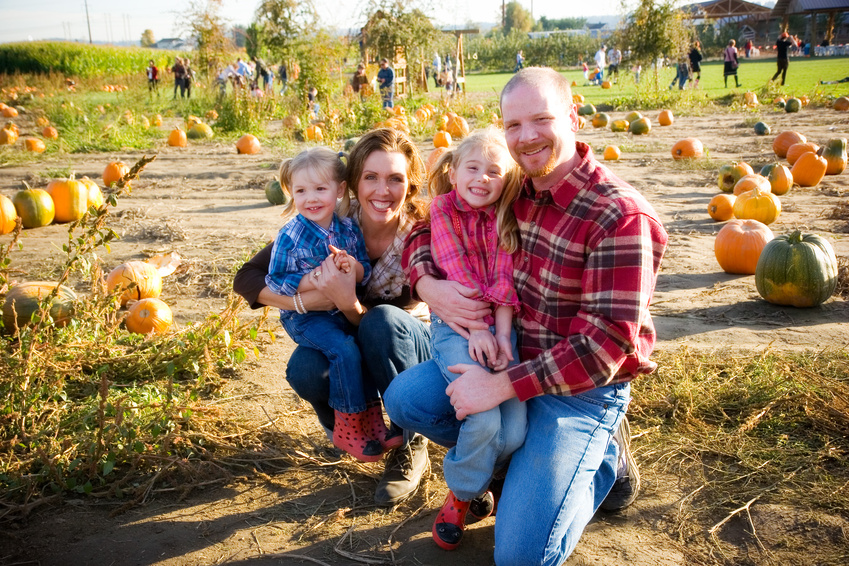
Lead By Example. Kids learn habits from their parents. If they see you exercise regularly, and eat nutritious food, your kids will pick up that behavior and make it part of their daily routine. Research shows that kids who eat breakfast do better in school and have more energy during the day, compared to kids who skip breakfast. If you eat breakfast, your kids will too, so make a big deal out of the first meal of the day!

Make Exercise Fun. Children benefit most from unstructured physical activity. Make it a family event, and enjoy the time you spend together. Go outside and play tag, or a game of catch. Race up a hill, or chase around butterflies. Even indoor games like playing dress up or making the bed can be made into physical activities. Use your imagination and be creative.

Teach Habits Early. It is never too early to instill healthy eating habits. Talk with your children regularly about where your food comes from and the benefits of vitamins and minerals. Take your kids grocery shopping and make a game out of spotting the healthy snacks like apples and nuts. Let your children take ownership of their food by having them help you prepare dinner for the whole family. The earlier you invest in your children’s understanding of food and how it helps them become big and strong, the more they will want to learn.

By Derek Peruo, CSCS, CPT

646-820-8246

bodybydrock.com
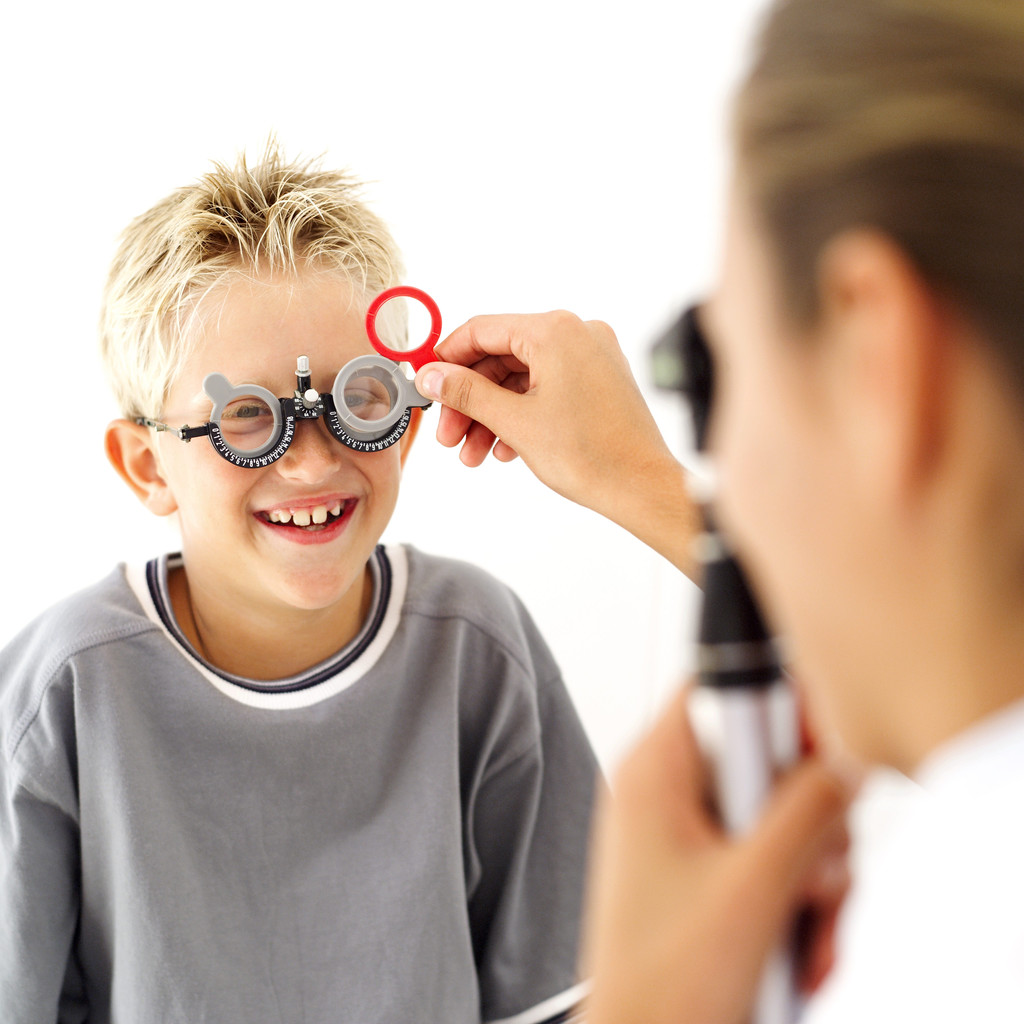
Children and Eye Exams by Dr. Stephanie Burris, O.D.

Vision is closely related to a child’s overall mental and physical development. While some vision problems are obvious, some are very subtle. A child may pass the vision screening at school or at the pediatrician’s office with flying colors and yet still have a very significant visual problem.  Sustained visual tasks, such as reading or looking at an iphone, or tasks that require frequent eye focusing changes, like copying from a chalkboard or playing sports, stress the eyes in a different way than reading letters on a chart.
 
A thorough eye and vision exam will determine how clearly a child sees AND how well the child is able to use her eyes together. Each eye must receive a crisp, clear image on the retina for both distance and near viewing, and the eyes must work as a comfortable, binocular system. An eye care professional will perform the following:
 
• visual acuity for each eye, potential need for glasses
• eye health, checking for eye allergies, growths inside the eye, etc.
• coordination of the two eyes together, depth perception, etc.
• focusing (or accommodation) of the eyes for sustained near vision tasks
• the need for referral to a specialist for vision therapy or eye health conditions
• discussion of how eyes are affected by nutritional and environmental factors
 
The American Optometry Association recommends an eye exam for children at age 3 and age 5 to assess baseline visual function and eye health, and to determine the risk of any visual or health disorders for that child’s future. Please schedule an eye exam sooner if you notice any symptoms, such as closing one eye frequently, one eye turns in or out frequently, one eye appears different especially in photos, or redness, tearing, discharge from the eyes.

How to Get Your Kids to Hit the Pavement: Running for Fun

Kids love running, they just don’t know it, yet. Take a look at any school
playground during recess and you will see kids of all ages engaging in many
types of activities and games that revolve around running. From soccer to
tag, to basketball and hide and seek, kids are running every single day!

To encourage kids to run, activities must be fun and also safe. Here are
seven tips to help get your child into a pair of running shoes and loving
running for life.

Warm up, before you lace up. Start your child with a few warm up and
dynamic stretches (moving stretches, not static or stationary stretches).
As a parent, your goal is to ensure that your child avoids any injury while
running. Moving stretches gets the blood flowing, the heart pumping, the muscles
warmed up and allows for less potential injuries. To warm up, try jumping
jacks or jogging in place with high knees. To make it fun, turn it into a
contest to see how many the kids can do in one minute.

Keep pace in mind. Kids will run as fast as they can and have a
lengthy endurance. For kids, the motto is: “full speed ahead!” A great way
to teach your children that they need to have control when running is to
have them run at their fastest pace (laps, time or distance) for as long as
they are able. Have your child repeat this step, completing the same amount of
laps, time or distance at a moderate consistent pace, this allows your child
to hold a conversation as they run. Once this pace is determined, keep
practicing at that pace.

Technique is important. Teach your child the proper form first:

Stand up straight and shoulders back.

Your child should be able to fully fill their lungs, slouching
will hurt their back and not allow them to breathe properly.

Arms should swing forward to back, not side to side.

Thumbs should lightly graze the hip bone.

Head up and looking forward.

Most importantly kids need to know how to breathe. Slow deep
breaths at first in the nose out the mouth. Eventually they will be
breathing in and out through their mouth only as they continue.

Hydrate, hydrate, hydrate. Kids may be able to run for great lengths
of time, but they need to hydrate just like an adult. Water is needed for
any run under an hour. If your child can keep going after that, you have a
super star! One thing to note, make sure they drink an electrolyte
replacement or sports drink!

Proper Running Shoes. For safety purposes, make sure your
child has the proper running shoes. Children (and adults) cannot run in
their skate shoes, dress shoes or everyday tennis shoes as much as they’d
like to or tell you they can. Lace up!

Make it fun. Give your child a challenge. Have them set a goal for
themselves. Reward them for their efforts.

Cool down, before you sit down. It’s important for your child to
cool down and stretch after every single run. This is the time to sit and
do static stretching. Proper stretching after a run will ensure their next
run is enjoyable and injury free.

By Laura Ouimet, Dana Point Chamber of Commerce Executive Director, and a
marathon/ triathlon coach and trainer. To learn more about the Dana Point
Turkey Trot and to sign up, visit <http://www.turkeytrot.com>
www.turkeytrot.com.

Can’t Decide? Learn how! By Juli Shulem

First rule of decision making: More time does not create better decisions. In fact, it can decrease the quality of your decision. Decision-making challenges often leave people stuck. Below are 5 easy tools you can use immediately when faced with a making a tough choice.

Consider how important the decision is and how much attention it really deserves. If you spend all your time worrying about it, you may miss the opportunity that it offers altogether!

Informed Decision: Gathering the right data in order to make your decision is often the very first step. If the decision warrants it, learn what you need to know first. Maybe you are choosing between several options. Limit your decision to just a select few, and decide from there. Trying to learn about every single option out there may mean never having time to make the decision OR make use of the item you were trying to select in the first place. While more information may help, dragging out the process without a deadline will create anxiety, not results.

Pros & Cons List: Writing down a list of the benefits as well as the consequences of a decision can often point us in the direction to head when it’s a close call.

Consider Projected Outcomes: Similar to listing pros and cons, often listing what the outcome of each decision would be can help us choose the best scenario for our situation.

Create a Deadline: Taking forever to decide on something can literally lead to the opportunity disappearing, or can result in feeling overwhelmed. Circumvent this by giving yourself a deadline. Put it in your calendar and plan out the steps needed to come to a conclusion. Deciding now frees up your most valuable asset: time.

Use a Mind-Map: These allow you to put all the aspects about the decision in a visual image so your mind stops going around in circles. Often the decision will almost make itself once it’s out of your head.

Begin today and make every decision as soon as you have a reasonable amount of information. Decision making is a skill that with practice becomes easier over time.

Contributed by Juli Shulem (jshulem@gmail.com/805-964-2389), Efficiency/ ADHD Coach. www.julishulem.com, Efficiency Expert since 1984, and author of the eBook, Order! A Logical Approach to an Organized Way of Life, www.getordernow.com

Ask a Pro by Erin McGill

Question: I’m 68 years young and new to exercise. I have no medical issues. What’s best for me, bands or free-weights?  –Judy from Idaho
 

Answer: Being 68 years young and new to exercise offers you plenty of options. Bands are an excellent form of exercise because they provide progressive resistance- meaning the more you pull on them, the more resistance you will place on your muscles. Another ideal component of resistance bands is that they are very mobile and can be used in a variety of ways for upper, lower, and total body exercises. Be creative when selecting your exercises and make sure that you pay close attention to correct form. Free weights will be a great choice for you as well for a number of reasons. When performing resistance training with free weights such as dumbbells, your central nervous system has to work harder to maintain its balance and understand where it is in space, in addition to coordinating the correct muscles to execute the movement. Another benefit of free weights is that you will have more opportunity to increase your resistance/weight as you progress, whereas bands typically are only available to a certain degree of resistance.
 
With that being said, and knowing you are new to exercise, make use of both resistance bands and free weights- they both have great benefits to serve. As with anything new, however, make sure you learn how to properly execute the movements first, without resistance in order to perfect your form. Additionally do not progress too quickly, instead focus on quality of movement over quantity of resistance. This will help prevent injury in the future and ensure consistent results.
 
Erin A. McGill, MA, NASM CPT, CES, PES
Training Manager
National Academy of Sports Medicine
800.460.6276 ext. 1252
602.383.1252
erin.mcgill@nasm.org

Food for Thought by Lisa Wilcox

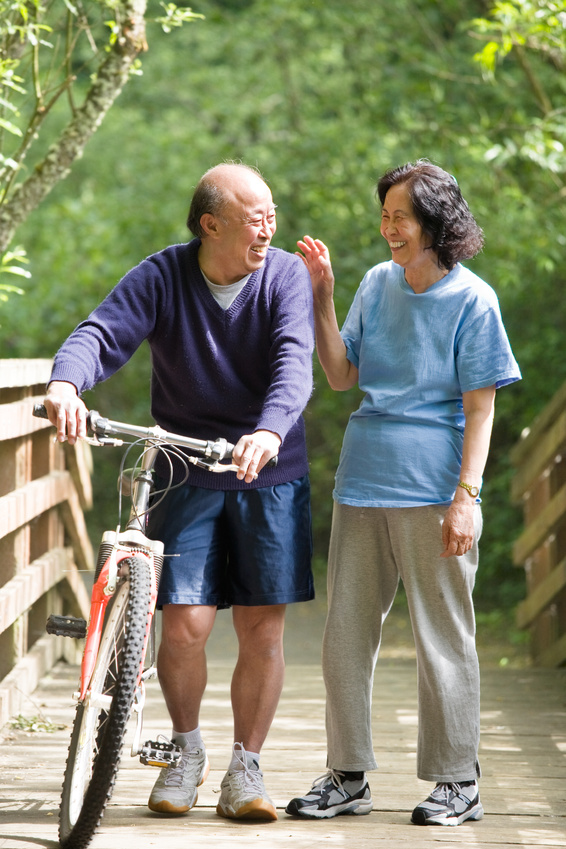
Research shows the biological benefits of exercise (motion) and social connections (emotion) and how that helps slow the aging process.

The book Younger Next Year by Dr. Henry S. Lodge and Chris Crowley explains why the things you know you should do for example, get daily vigorous exercise, eat well and stay close to family and friends are mandated by laws of biology. You can ignore the rules, the authors say, but you can’t change them. To oversimplify their theory: Your body and brain have evolved so that behaviors that helped our ancestors survive, robust daily physical activity and close links to others, send positive signals to our most fundamental biological systems that say life is good: grow, heal, thrive. Being sedentary and isolated tells our body and brain to slow down.

Co-author Lodge, a Manhattan internist who is on the faculty of Columbia University’s College of Physicians and Surgeons, draws on current work in evolutionary biology and human neurochemistry to make the case. Dr. Lodge covers three major topics:

The biology of aging. This focuses mainly on growth and decay as the predominant biological functions of both body and mind, which are directly controlled by how you live your life. Seventy percent of what we call aging is not biological aging at all. It may be lifestyle driven with true aging as a minor part of the process.
 
The value and benefits of exercise. Exercise is the most concrete, powerful way of transforming biology. Dr Lodge believes aerobic exercise six days a week and strength training at least three times a week can turn back the biological clock of both physical and mental aging.

Social/emotional biology. The impact of connecting with others is equal to that of exercise. The chemistry is, in fact, almost identical. The morbidity and mortality of loneliness, and the power of social connections have a lot more to do with how we age than we thought. There is a sharp focus on the recent data that proves you can change your body and brain by how you live your life resulting in the significant reduction of illness. For example, being connected with a church, walking club, bridge club, or having a great connection with your family can help slow the aging process.

Lisa Wilcox,  Posture Alignment Specialist
www.promotionfitness.net

Leg Exercises Made Simple

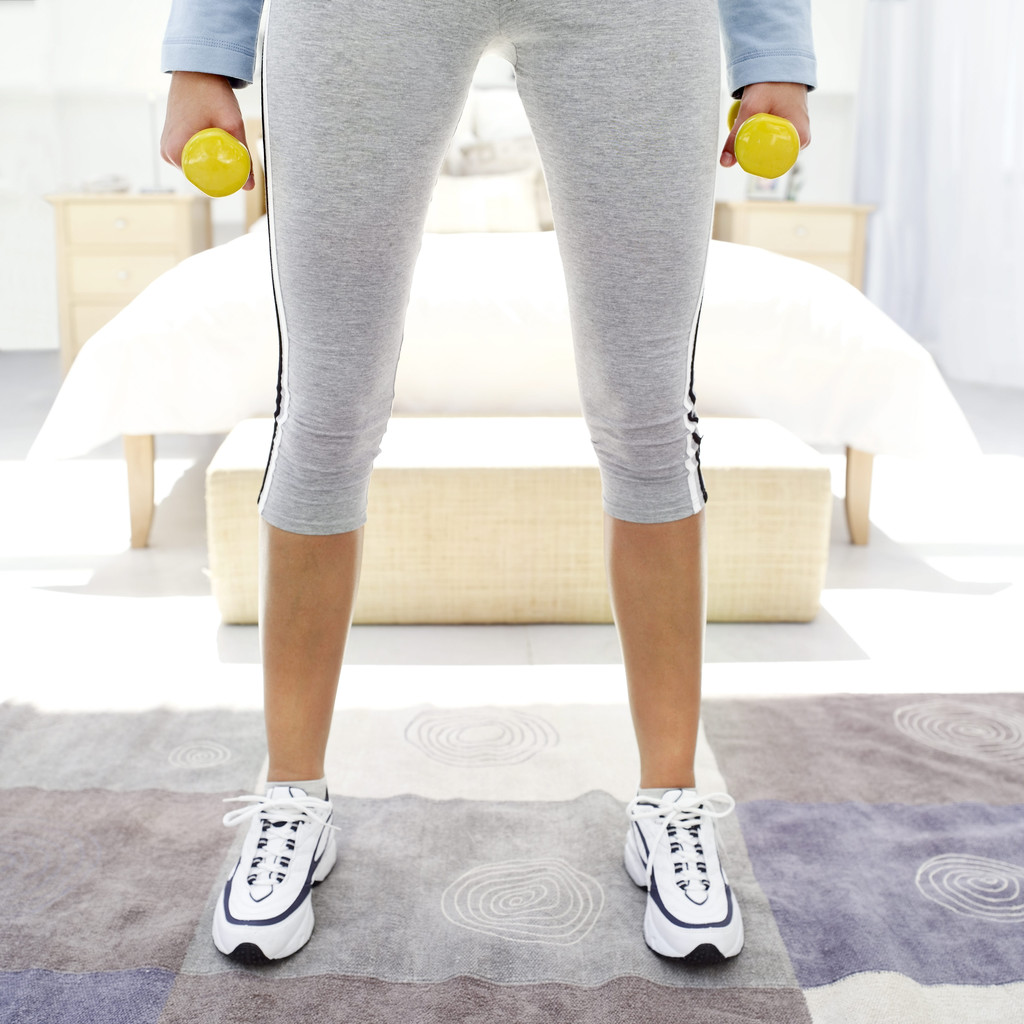
Try the following lower body exercises to shake up your routine. As always, pay attention to maintaining proper posture and holding abdominal muscles in tight. Control each movement. Start with body weight only and progress to holding dumbbells. 

Dynamic Side Squat. Begin by taking a step to your right side and forward 12 inches, arms extended shoulder-level, straight out in front of you. Bend your knees and hips and sit back into a squat. Push off with your right foot and return to the center. Repeat the same movement to the left side and forward 12 inches. Perform 12 repetitions alternating to each side.
Make it easier- perform as a stationary squat with your feet staggered 12 inches, eliminating the return to the center movement. (12 repetitions with the right foot forward, 12 repetitions with the left foot forward.)
Make it harder- perform a squat to the right side, bend forward from your waist and touch both hands to your right shoe. Push off with your right foot and return to center.  Repeat side squat to the left side, with a forward toe-touch to the left.

Chair Stationary Lunge. Stand about 3 feet in front of a sturdy chair. Balancing on right foot, place top of left foot on seat behind you. Bending both knees, drop your back knee toward the floor. Push through your front heel and return to your starting position.  Perform 12 repetitions with each leg.
Make it easier- only bend knees half-way down toward the floor.
Make it harder- lift your back foot up off the chair about one inch in between each repetition.

Cross-behind Lunge. Stand on your right leg. Step your left leg back about 2 feet, bend both knees and cross your left leg behind your right leg. Keep your weight on your right heel and pull your left leg up to center. Perform 12 repetitions with each leg.
Make it easier- Stand on your right leg, step your left leg back so it crosses behind your right leg.  Keep your right foot flat on the floor and the ball of your left foot on the floor. Bend both knees and lower your body toward the floor. Straighten both knees to complete one repetition. 12 repetitions with each leg.
Make it harder- stand on your right leg, step your left leg back so it crosses behind your right leg. Stand up by pulling your left leg to center and then forward by bending your left knee and lifting it in front of your body to be hip level.
 
Lunges are an example of a compound exercise. A compound exercise is that which uses many different muscle groups at the same time. For challenging exercises to improve lower body muscle strength or endurance squats and lunges are a great choice. Consult your doctor before beginning an exercise program, and enlist the assistance of a fitness professional to determine which form of squats and lunges are appropriate for you.

 By Nicole Clancy

Overcome Self-Defeating Thoughts by Niels Johnson-Lameijer

Getting rid of negative thoughts is a struggle for many people. In order to effectively eradicate these undesired thoughts it’s good to understand where they originate. The energy behind most negative thoughts is FEAR! Fear is at the root of all blocks and the number one reason for our negative self talk.
We have two main kinds of fears that prevent us from living our fullest potential, fear of failure and fear of rejection. Fear of failure usually comes from a time when our natural curiosity and urge to explore was being cut short. We notice this fear every time we think about of taking any kind of risk involving the danger of losing time, money or emotion. The fear of rejection mostly originates from conditional love which manifests in the fear of being criticized, and motivates us to focus on gaining other’s approval.
Be Aware and Shift. These are the two key ideas to balance thoughts, and to change your current reality into the reality of your choosing. The goal is to monitor thoughts and shift them when necessary. 
Strive for Balance. Try this exercise: grab a pencil and balance it between your fingers. Looking at your pencil imagine it representing the balance of your thoughts. When negative thoughts immerge your pencil will start tipping to the left side and be out of balance. You assignment is the counter it with a positive thought (for example, a 10K run you completed in a great time) to make sure the pencil gets back into the balanced position.
Three Successes. One hour after you get up, write down three things that already went right for you that day (good breakfast, returned phone calls, etc.) During lunch, review the list and replace your earlier successes with additional successes from later in the day. Repeat this at least two more times the same day.

Remember! Think about what makes you feel good and what changes your mood. For example, carry something in your pocket that reminds you of a memory. Load your favorite music on your iPod so you can play it anytime. Stick Post-It notes with personal messages in places you see frequently.
 
Niels is an internationally certified Executive Coach and Life Mastery Coach. He guides companies and passionate individuals toward raising productivity and realizing the life of their dreams. For more information visit www.nielsjl.com or contact Niels directly at niels@nielsjl.com or call 805.617.3513.

Encouraging Healthy Habits for Teenagers by Brett Klika

How to help teenagers exercise and eat well, without putting on the pressure of weight loss:

Getting kids of any age to exercise and eat well is a function of familiarity, exposure, and experience that transcend weight loss. If a child grows up in a household with a culture of wellness, it becomes a familiar way of life. If a child grows up in a household where exercise and eating well are seen as punishment for indulgences, this is exactly how they will view a healthy lifestyle: punishment. 

Expose children at a young age to fun physical activities that involve the entire family. Food works much the same way. Make sure kids see where real food comes from and how it is made. Grow a garden and cook with your kids if you are able. Physical activity and healthy eating then become a positive experience that will develop life-long behaviors

Focus on “now.” Telling kids of any age that food is fattening or unhealthy is not very effective. They do not have the cortical processing to base their current activity on future outcomes. They need to understand how things work in the now. By doing this, youngsters develop an awareness of what they are eating. It is independent of “fat” or “skinny.”  It becomes a decision of “do I want to eat a chemical that I have no idea what it is?” The younger they can begin the better. 

Creative positive experiences. Much of the above attitudes and behaviors are formed by the time kids are in their teens.  To continue to facilitate physical activity and healthy eating through the teenage years, continue to make these a positive experience. Find physical activities your children enjoy doing and facilitate those activities however possible. They don’t have to be sports!  Have healthy food around the house, go to high quality food sources for groceries, make restaurants a treat, and family dinners whenever possible. Teenagers are programmed to rebel as they go through the process of forming their own identity. Overall behavior is a collective of multiple decisions made throughout a day, week, month, year, etc. The more positive experiences you can create, the more favorable decisions they will make in regards to their health and wellness. Multiple favorable decisions form positive lifetime outcomes!         
Brett Klika
Brettklika.com
Want to Know the Truth About Fat Loss? Read The Dark Side of Fat Loss, available at www.brettklika.com.

Get Positive by Juli Shulem

We can all find something to complain about rather easily, but where does the complaining lead us?  Stop and think about the amount of energy wasted on negative thinking. Break the negative pattern in two steps!

Step One. Complaining and negative thinking really depletes positive energy, leaving debilitating negative energy. In other words, that which you spend time thinking about is what you will tend to manifest. Therefore, constant complaining could mean you may be bringing depleting energy into your world.

Are you a constant complainer? Ask yourself:

What do I complain about the most?
What has the complaining or negative thinking brought into my life?
Has anything GOOD come from the complaining?
What BAD has come from the negative thoughts?
If I were to become more positive, how would that change things?

Now try this:
Catch yourself being negative!
Notice when you are complaining!

Here’s a quick visual: place a jar on the counter and put in a quarter every time you catch yourself complaining. (Remember the goal is to keep the jar empty!) However, if the jar becomes full, think about donating the proceeds at the end of the month, at least something positive will come from all that negative thinking!

Step Two. Do you have a certain person in your life that exists primarily to listen to your complaints? Release this individual from being subjected to your continued negative thinking. Make it a conscious daily goal to be positive.

Becoming aware of the negativity is the first step to improving your mindset. The second step is to get busy and do something positive!
Contributed by Juli Shulem (jshulem@gmail.com/805-964-2389), Professional Organizing Coach specializing in those with ADHD. www.julishulem.com, Organizing Expert since 1984, and author of the eBook, Order! A Logical Approach to an Organized Way of Life, www.getordernow.com