December 1, 2025

Exercise at the Park by Sarah Johnson

The park is a great place to lounge, relax and get some sunshine. However, if you’re in need of some workout inspiration, the park can also be utilized for a quick and easy workout to boost your mood and energy levels! All you need is a bench and yourself.

Using a bench, you can make plenty of hard work on something that’s usually used for sitting and resting! (Please consult your physician before performing exercises.)


Warm Up: Begin by warming up your lower body. Stand with your back to the bench. Perform a Squat up and down to the bench. Try not to sit and rest, but barely touch the bench. Perform 10-15 reps.

Upper Body Strength: Then, turn around and add some pushups! Place your hands on the back support of the bench, or if you’d like more of a challenge, on the seat of the bench. Slowly lower your chest between your hands and push yourself back up.

Lower Body Strength: Now you should be warmed up, and we can add some step ups. Place your right foot firmly on the seat of the bench, and pull your body and left leg up on top of the seat. Carefully and slowly lower the left leg back to the ground, and repeat 10 times. Then switch legs.

Repeat series as desired.

Follow Sarah on Twitter @SarahJChicago

 

Green Chocolate Pudding by Shirley Plant

Healthy Green Chocolate Pudding (Dairy Free, Sugar Free)

Looking for an easy, healthy and refreshing snack?
1 banana
1 avocado
1/2 tsp peppermint extract
3/4 cup unsweetened almond or coconut milk
Cacao Nibs

Mix all ingredients except nibs in a food processor or blender until smooth. Spoon into a dish and add cocoa nibs to the top.

Recipe by Shirley Plant- Nutrition Coach and Author of Finally Food I Can Eat
www.deliciousalternatives.com. Follow her on Twitter via @sherrecipes

Is Stretching Important? By Sarah Johnson

Is stretching important in fitness?

There has been some recent controversy as to whether stretching is important: Does it actually prevent injury? Should you stretch before or after a workout? Why should I stretch at all? Whatever you may have heard, I’d like to share my reasons why I believe stretching has its place in a fitness program.


• It helps establish your intentions. Take a few minutes after your warm-up to stretch. Remind yourself why you are doing this; what your goals are and how is this activity going to help you get there.

• It lets you think about your plan. When you set out for a run, walk, hike or any other activity, beginning with a light warm-up and stretch gives you a few extra minutes to think about your route, to clear your head or plan for any obstacles you may encounter.

• Stretching helps you focus. Instead of jumping right into the workout without thinking, you can spend a few quiet minutes lightly stretching, making sure your mind is in the present without any distractions. No matter what your belief is about stretching preventing injury, an unfocused & distracted person plus exercise can be a recipe for an injury!

• It also helps you wind down. After a grueling workout or long training session, five minutes spent relaxing your mind and loosening your muscles is the best way to think about your accomplishment!

By the way, I do believe stretching is most successful when done after your body and muscles are warmed up, when they are most loose and pliable. And as far as if it’s even worth doing (as some have argued), if it feels good and you have the time for it, I say ‘Why not!?’

Follow Sarah on Twitter @SarahJChicago
Nettle Frittata by Kristen Yarker, R.D.

Nettle Frittata

Nettles grow in the wild in many parts of North America and Europe. As one of the earliest edible greens to appear in the Spring, they’ve long been associated with health and Springtime cleanses.

Nettles taste similar to spinach. But they have one big difference, which you can likely guess when I call them by their full name: stinging nettles. Yes, they will sting your skin (and mouth) when raw. So be sure to cook them well before eating! And, don’t touch them with your bare hands when picking or washing.

You can forage for nettles but I usually buy them at my local farmers’ market or grocery store that has a great local produce section.

Ingredients:
1 TBSP vegetable oil
1 leek, finely diced
3 cups nettles
5 eggs
1/4 cup milk
1 generous tsp powdered mustard
1/2 tsp salt
½ cup shredded cheese of your choice, such as mozzarella, cheddar (optional)

1. Preheat the oven to 375 degrees F.

2. Lightly grease a 9 inch glass pie plate. Set aside.

3. Fill your sink with cold water. Add the nettle leaves. Using tongs, swish the nettles in the water to wash well. Using tongs, remove from the water. Remove the excess water by spinning in a salad spinner. Using the tongs and a knife, carefully remove the nettle leaves from the stalks.

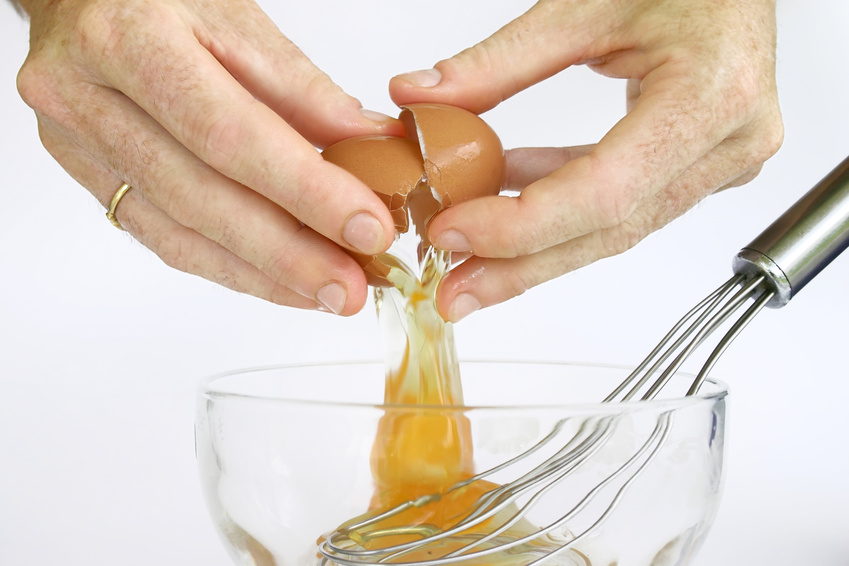
4. Combine eggs, milk, mustard and salt in a small bowl. Whisk together and set aside.

5. In a frypan, heat the oil. Sauté the leek until softened. Add the nettles in batches as they wilt.
Cook until the nettles are well-wilted (remember you need to cook them until you’ve taken out the sting.)

6. Transfer veggies to the pie plate. Pour in the egg mixture. Top with the cheese (if using).

7. Bake in the oven about 20 to 25 minutes, until the centre is golden brown. Let rest a few minutes before serving.

Kristen Yarker, MSc, RD helps Moms and Dads support their picky eaters to try new foods on their own (without being forceful or sneaky). From introducing solids through the picky eating years, she helps Moms and Dads be confident that they’re giving their kids good nutrition today… and instilling a life-long LOVE of healthy eating. Get scientific evidence-based answers to real questions from real parents (recipes too!) by signing up for her 101 Healthy Snack Ideas at: vitaminkconsulting.com

Trail Fitness by Nicole Bryan

Looking for outdoor fitness? Consider heading to the hiking trails for exercise. Try the following stretches after your next hike. As always, consult your physician before exercise.
 

Standing Figure-4 stretch:  Cross your right ankle over your left knee.  Bend forward from your hips and sit back feeling a stretch in your right leg.  Hold on to a stable object for balance. Repeat with your left ankle crossed over your right knee.

Standing Hand-to-Ankle stretch:  Bend your right leg and hold your ankle with your right hand behind your body feeling a stretch in the front of your thigh. Release, and repeat holding your left ankle with your left hand.

Standing Lunge stretch.  Step back about three feet with your right leg into a lunge position.  Push your right heel down and bend your left knee until you feel a stretch in the calf of the right leg. Release, and repeat stepping back with your left leg.
 

Standing Hamstring stretch.  Place your right foot into an object in front of you about knee-height.  Lift your chest and bend forward from your hips, until you feel a stretch in the back of the right thigh. Release, and repeat with your left foot.

Stretching after your hike is a nice transition from exercise to rest. Hold each stretch for 10-15 seconds and never stretch into pain. Add deep breathing into your stretching regime. Inhale deeply while moving into each stretch and exhale while relaxing further into the stretch.

Spinach Salmon Bake by Helen Agresti R.D.

Spinach Salmon Bake

One dish and that’s it!  This heart healthy salmon bake contains an abundance of omega-3 fatty acids and cancer fighting antioxidants.  Omega-3′s are less likely to be stored as fat due to their many important functions throughout our body.  They’re also known to ease joint pain, improve cognitive function, and decrease belly fat.  Spinach, well-known for it’s high iron content is loaded with antioxidants like vitamins A, C, and K.  The green leafy powerhouse and colorful fingerling potatoes combine to add a generous amount of heart healthy fiber.

Ingredients:
•    1 lb fingerling potatoes, washed and quartered
•    2-3 salmon filets, skinned
•    3 c baby spinach, washed
•    extra virgin olive oil
•    1/2 lemon, juiced
•    1 teaspoon rosemary, crushed
•    sea salt, to taste
•    balsamic glaze, to taste
•    orange ginger seasoning, to taste, *a little goes a long way.

Directions:

1. Heat oven to 400 degrees. Coat baking pan with no stick cooking spray.

2. Place potatoes on bottom of pan. Lightly coat with olive oil, sprinkle with rosemary and sea salt. Bake alone for 20 minutes.

3.  Remove potatoes from oven and turn oven temperature down to 350 degrees.

4.  Place spinach on top of potatoes.  Toss spinach with olive oil and sea salt.   Place salmon over spinach.  Top with lemon juice and orange ginger seasoning.

5.  Bake for 40 min or until internal temperature of salmon is 140 degrees.

Helen Agresti is a Registered Dietitian with Professional Nutrition Consulting, LLC.  She lives in Pennsylvania with her husband and 5 children.  For more Nutrition advice and healthy recipes follow her on twitter @HelenAgresti. For more information and recipes, go to www.pronutritionconsulting.com


Take your exercise outdoors! By Tera Busker

When the weather is beautiful, the last thing we want to do is be cooped up inside any longer than we have to. Step out of the gym and head out to your local park to change up the scenery for your  workout. Always consult your physician before participating in exercise. The following exercises are for those without injury concerns.

WARM UP
Walk or jog 5 minutes around the park.

WORKOUT
Beginners: 10 reps each exercise for 1-3 circuits, resting 30 seconds between exercises
Intermediate: 15 reps each exercise for 2-3 circuits, resting 15 seconds between exercises
Advanced:  20 reps for each exercise for 3 circuits, no rest between exercises or do 30 seconds of jumping jacks between exercises

EXERCISES
1. Platform Pushups
Find a platform like a bench or a step. Place your hands about shoulder width apart on the platform. Keeping the back flat, core tight and hips down, perform a pushup. Make sure the movement comes from the elbow and shoulders – not the hips.

2. Bench Step Ups
Using a bleacher or a bench, step up on to it with your left foot. Use and up, up, down, down cadence. After 30 seconds, switch and step up starting with your right leg.

3. Plank
To get into the plank position, start on elbows and knees, locking hands together. Straighten legs and raise your body so that you’re supported by the balls of your feet, with feet hip-distance apart. Face the ground, being careful not to arch your back or stick your hips in the air.

4. Walking Lunges
Walking lunges are very similar to the way walk but include an extra element, the lunge. With your right leg, lunge forward about three feet until your right thigh is parallel to the floor and your left knee is nearly touching the floor. Pause momentarily and then repeat the forward motion with your left leg. Make this exercise harder, try doing the walking lunges up a hill.

5. Bench Dips
Head back to the park bench and have a seat. Grab the edge of the bench keeping your hands close to your hips. Walk your feet forward slightly until your hips are off of the platform and your knees are at a 90 degree angle. Bending your shoulders and elbows, bring your hips straight down towards the floor. Push yourself back up.

6. Hanging Abs
This one is tough! Hang from the high monkey bars. (Your feet should not be able to touch the ground.) Pull your knees up towards your chest and then lower them back to your starting position. Be sure to keep the movement slow and controlled. This is an ab exercise, so try not to use the momentum and swing the legs.

Tera Busker is an ACE Certified Personal Trainer and owner of Fitness To Go, an exclusive In Home & Private Studio Personal Training Service based out of Roberts, WI. www.fitnesstogo.net

Is Heart Rate Training for You? By Jason Saltmarsh

Would you like to run longer and faster with less effort? Heart rate training can help you reach that goal. A heart rate monitor provides real-time biofeedback during your workouts to help you stay in the optimal training zone. Consult your physician to determine your specific target heart rate zones as they vary based on fitness goals, medications and state of health.

Determining Your Maximum and Minimum Heart Rate
To find your target heart rate zone, you’ll need to know your maximum heart rate and your resting heart rate. Then, you can determine several training zones between those two extreme values. The idea is that you use the heart rate data during your workout to stay in the intended heart rate zone. Some people choose to run by pace per mile speeds, while others by their ability to carry on a conversation. Heart rate training is based solely on BPM (beats per minute).

The American Heart Association recommends a method for identifying your maximum heart rate. Their method is to simply subtract your age from 220. For example, if you are thirty years old, you get the following: 220-30=190.

Determining your resting heart rate by taking your pulse for one minute just after waking up, or while sitting down relaxing. Athletes usually find their resting rate is around 60 BPM.

Determining Your Heart Rate Training Zones
Variety is the spice of life and the cure for ‘lazy’ running. Runners aren’t lazy, but their approach to training may be if they’re doing the same thing, at the same effort, day after day. To see improvements, you’ll need to mix things up and challenge yourself in a variety of ways.

The advantage to heart rate training is that it’s based solely on your own biofeedback. External measures such as pace per mile do not interfere with your results. For example, if you run a flat 6 mile course on a cool day at 8:00 pace, how does that compare to running 6 miles on a hilly course under a scorching sun at 8:30 pace?

Final Thoughts
Training principles remain the same no matter what method you use. A blend of long and short, easy and hard, fast and slow, and plenty of rest will keep you fit and healthy. Heart rate training offers you an exact measure of effort and gives you the certainty of knowing that you are training at your intended level of exertion.


Jason Saltmarsh is an competitive masters runner at distances ranging from 5K to the half marathon. In November 2013, he raced his first 26.2 at the iconic New York City Marathon. Jason’s goal is to share with others the benefits and joys of running, fitness and healthy living. For more information, please visit saltmarshrunning.com

5 Hidden Sources of Gluten by Gretchen Scalpi, R.D.

For people who must follow a gluten free regime for life because of a medical condition, gluten avoidance goes beyond merely choosing foods known to be gluten free.  One needs to be extra vigilant about avoiding all sources of gluten.  Unfortunately, gluten may be lurking in places that one would never imagine. Even meticulous attention to the finer details of gluten avoidance may not prevent incidental exposure to gluten from other places.

Here’s my list of hidden gluten sources which can cross contaminate safe and otherwise gluten free foods:

1. The toaster:  If your toaster was previously used for toasting wheat products, this is a source of gluten contamination.  It is impossible to clean out the inside of a toaster adequately.  Purchase a separate toaster that is used solely for the purpose of toasting gluten free breads or muffins.  Alternatively, if you have a toaster oven with a removable tray that can be thoroughly cleaned, you may use that to toast the gluten free bread.

2. Flour sifters:  The mesh screen found in flour sifters or mesh strainers are difficult to clean.  For the gluten free kitchen, these items should be replaced.

3. Wooden cutting boards, spoons, spatulas:  Wood is porous and if used with wheat products previously, small particles of gluten remain in the wood, despite cleaning.

4. Colanders are often used to drain pasta. The small holes in colanders are difficult to clean and get completely free of gluten.

5. Peanut butter, jam, or mayonnaise are just a few examples of foods that are spread on bread.  Knives that come in contact with bread and then go back into a jar will contaminate the spread.  Purchase separate jars of each, then label “gluten free” for the person who needs to avoid
gluten.

If you have been maintaining the gluten free diet for a while, yet still experience symptoms, dig a little deeper to see whether you are exposed to gluten from a “hidden” source.  In addition to the suggestions I’ve listed here, don’t forget to check your medicine cabinet, vitamin, and mineral supplements as well!

Gretchen Scalpi is a Registered Dietitian, Certified Diabetes Educator and Certified Wellcoach. She is the author of “The EVERYTHING Guide to Managing and Reversing Pre-Diabetes 2nd Ed.”, “The EVERYTHING Diabetes Cookbook 2nd Ed.”, “Virtual Grocery Store Tour: Getting The Most Nutrition Out Of Your Food Shopping”, “Pre-Diabetes: Your Second Chance At Health”, “The Quick Start Guide to Healthy Eating”, “The Quick Start Guide To Pre-Diabetes” and “Quick Start Recipes For Healthy Meals”.  Read her articles, recipes and blog at
http://www.nutritionxpert.com and learn more about her books at http://www.gretchenscalpi.com.

Walk your way to fitness! By Nicole Bryan

Walking for fitness is one of the simplest activities from which we can reap worthwhile metabolic benefits, as well as cardiovascular benefits.

Begin with a five to ten minute warm up of walking at a slow to moderate pace, followed by fast paced walking. Important points regarding walking for fitness form include:


Focus on walking heel to toe, instead of landing with a flat foot. Doing so reduces our chance of falling and allows us to use our calf muscles easier to power our body forward.

Stride out. Try to cover at least twelve inches with each stride. Also pay attention to keep right foot stride and left foot stride even.

Keep feet parallel. Keeping our feet parallel will insure lower body musculature is able to work at full power.

Knees should be pointing forward. Pay attention to not twist knees in, out or sideways.

Keep hips facing forward. To walk more efficiently don’t rotate the pelvis with each step. Instead focus on swinging legs in a forward direction.

Belly button should be held in tight. Pulling the belly button in tight should be done without holding the breath. Doing so, helps us maintain proper upright posture.

Keep hands open. Clenching our fists will only waste energy and cause us to raise our shoulders up adding tension to our neck.

Pull shoulders down and back. Pinching our shoulder blades together slightly will force our shoulders into a back and down position.

Power arms forward or back. Keeping our arms moving forward and band, not in a side to side motion is the most efficient method to maintain a fast walking pace.

Chin should be parallel to the floor. Keeping our chin parallel to the floor, instead of tilted up will ease neck tension and allow our arms to move forward and back easier.

Head should be lifted with eyes looking straight ahead. When we are looking down the entire time, the tendency is to hunch our shoulders forward and curl our back forward as well. Both of these posture positions can add strain to our lower back and neck.