January 16, 2026

Should you skip the warm-up?

Get Fit Quick Tip:

Always warm-up for your workout!

A warm-up is an essential component of your workout and should NOT be skipped, or even abbreviated. Prepare your body for exercise with 8-10 minutes of dynamic (moving your body continuously) exercise. You’ll prepare your muscles and your cardiovascular system for the increased work load of exercise. A proper warm-up is any movement of your major muscle groups aerobically. For example:

Walking. Walking outside or on the treadmill makes a great warm up for just about every activity. Start slow and build up speed.

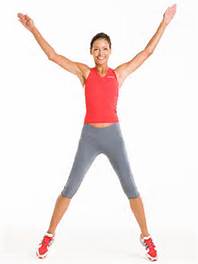
Calisthenics. Jogging, jumping jacks, hopping are all great warm up activities that move many muscles and increase our core temperature.

No load exercises. Perform your weight exercises, without weight. No load exercises are great to develop muscle memory patterns as well.

Range of motion exercises. Move each joint through it’s natural range of motion. For example, wrist circles, ankle circles or knee bending and extending. Do 5-8 reps.

*Consult your physician before beginning exercise.
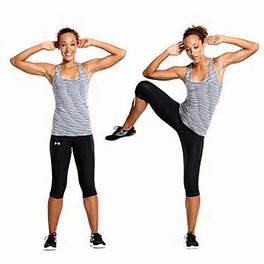


Crunch-less Abs

Get Fit Quick Tip:

Take your Abs on the go with this crunch-less ab exercise!

Begin standing. Place both hands behind your head with your elbows wide. Lift your right knee out to the side of your body and move toward your right elbow, then return to the floor. Perform 10 times. Next, lift your left knee toward your left elbow, then lower. Repeat 10 times. To progress, keep your foot up off the floor as you lift and lower your knee.


*Consult your physician before beginning exercise.

Cross-Train for Motivation

Get Fit Quick Tip:

Cross-Train once a week!

In a workout slump? Mix up your workout to keep motivation high and interest fresh. Take your favorite workout and tweak it slightly for a new challenge. Cross-training doesn’t have to be complicated. Change the angle at which you’re working muscles, and the result is your body (and your mind) has to learn something new. A slight adjustment will do. For example, love to run? Try the elliptical machine. Love to cycle? Try water jogging. Love to swim? Try running. Love the stationary bike, try walking on the treadmill.

Form a Walking for Fitness Club!

Get Fit Quick Tip:

Form a Walking Club!

Fitness is fun when others are included. And you’re less likely to skip out on your exercise when you know others are waiting for you. Add a social element to your workouts by forming a walking for fitness club. Getting started is easy. Here’s how:

Decide on a regular walking for fitness club day, time and meeting location and route.

Send an email, evite or group text inviting others to join you.

Send weekly reminders.

Through consistent exercise you’ll enjoy the many physical and psychological benefits. Here are just a few:

Regular exercise.

Build friendships.

Explore your town.

Expand your fitness horizons as you learn what other forms of fitness members enjoy.


Your Fitness: When to say WHEN

Get Fit Quick Tip:

Calling it quits.

So, you’ve had a nagging pain here, a little pinch there. How do you know when you should push through the discomfort or back off and see your doctor? Do a body scan and differentiate between pain, muscle soreness or fatigue. Pain is an acute feeling. Pain stops you in your tracks or is a low grade constant ache. Pain can take your breath away.  Here are a few variables to determine when to say when in your fitness:

Pain for more than 3 months. If you’ve had consistent pain for 3 months or longer, see your doctor.

Numbness, tingling or radiating pain. Pain that travels through your body means a call to your doctor.

Night pain. If you have pain that is waking you up at night, consult your doctor.

Loss of range of motion or mobility. Painful or limited range of motion should be a red flag.


*Always consult your doctor to determine an appropriate course of action for your individual needs.


WHY you’re not working out

Get Fit Quick Tip:

Why are you not working out?

Often skipping a workout comes from 3 areas that you’re lacking: interest, focus or time. Here are a few ideas how to get motivated again.


No interest?

Revisit childhood. What activities did you enjoy? Remember, not all exercise has to be structured to count toward your fitness. Run, jump, hop, play, bike, walk, swim, play basketball, soccer, dance…


No focus?

Do circuit training. Perform 1 minute of cardio, then perform 1 strength exercise. Repeat alternating until all sets are complete. Time will zoom by, keeping your mind and your body busy.


No time?

Split up your cardio and strength training into 5-20 minute sessions. For example, do a 20 minute walk in the morning followed by a 5 minute body weight strength routine in the evening. Find little bits of fitness to add into free moments during the day.

How to Improve Shoulder Flexibility

Get Fit Quick Tip:

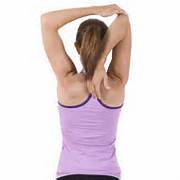
Overhead Tricep Stretch

Improve shoulder flexibility to make your daily activities easier.  You’ll also be able to maintain proper posture and alignment, therefore decreasing upper back and neck tension. Here’s how:

Lift your right arm. Reach behind your head and place your hand on the back of your neck (or upper back). Use your left hand to apply gentle pressure for more of a stretch. Hold for 10 seconds, then release. Repeat with your left arm.


*Consult your physician before beginning exercise.
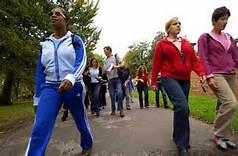
Stretch It Out

Get Fit Quick Tip:

Seated Hamstring Stretch

After your run is a great time to stretch out your lower body. Begin seated. Extend your right leg straight out in front of you. Bend your left knee and place your left foot on the inside of your right knee. Lift your chest and bend forward from your hips. Hold for 10 seconds, then release. Repeat with your left leg straight out in front of you, with your right knee bent.


*Consult your physician before beginning exercise.

 

Be Smart with your Fitness

Get Fit Quick Tip:

Be Smart with your Fitness!

Pain means stop. Pain has a very different feeling than muscle fatigue or muscle burn. Muscle fatigue is acceptable, joint pain is not. Don’t work into pain.

Dizziness should not be a part of your workout. Dizziness can be a signal that your body is not meeting its oxygen demands and intensity is too high. Decrease intensity.

Use muscles, not momentum. Swinging weights around uses momentum, not muscles. Momentum is where injuries happen. Ideally, you should be able to control the entire range of motion to overload the muscles adequately. Control the exercise for best results.


Release muscle tension with this stretch

Get Fit Quick Tip:

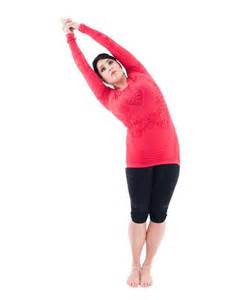
Side Bend Stretch.

Release muscle tension in your back and shoulders by doing this stretch daily. Stand up. Reach both arms straight up overhead. Lean to your right and hold for 10-20 seconds, release. Lean to your left and hold for 10-20 seconds, then release.


*Consult your physician before beginning exercise.